
Snow, Science, and a Sacred Arctic
Photos by POW Creative Alliance member Jayme Dittmar
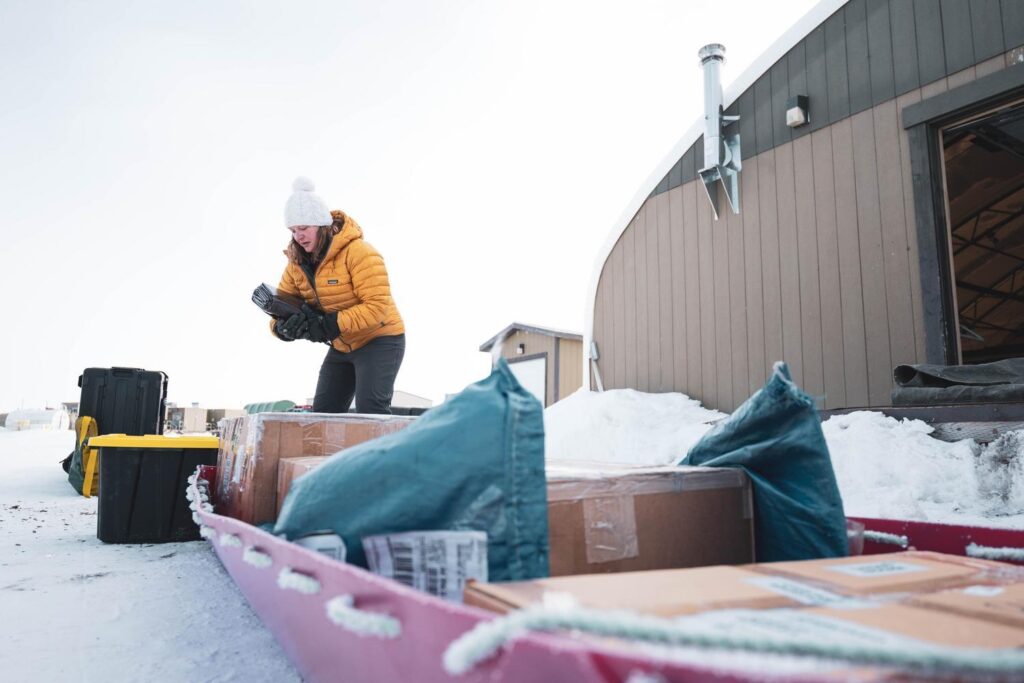
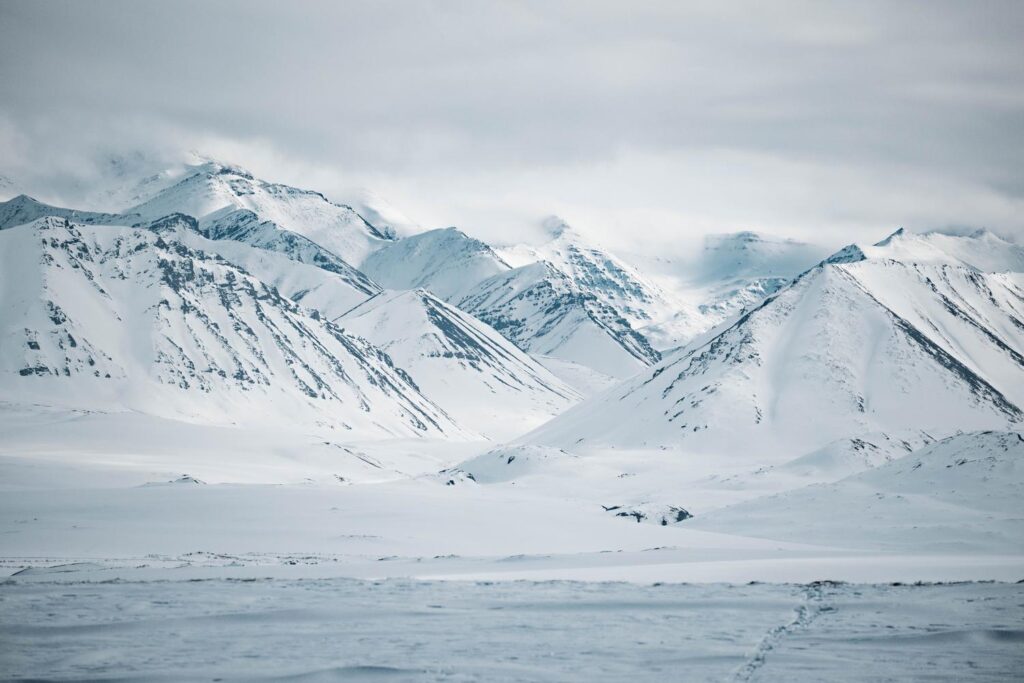
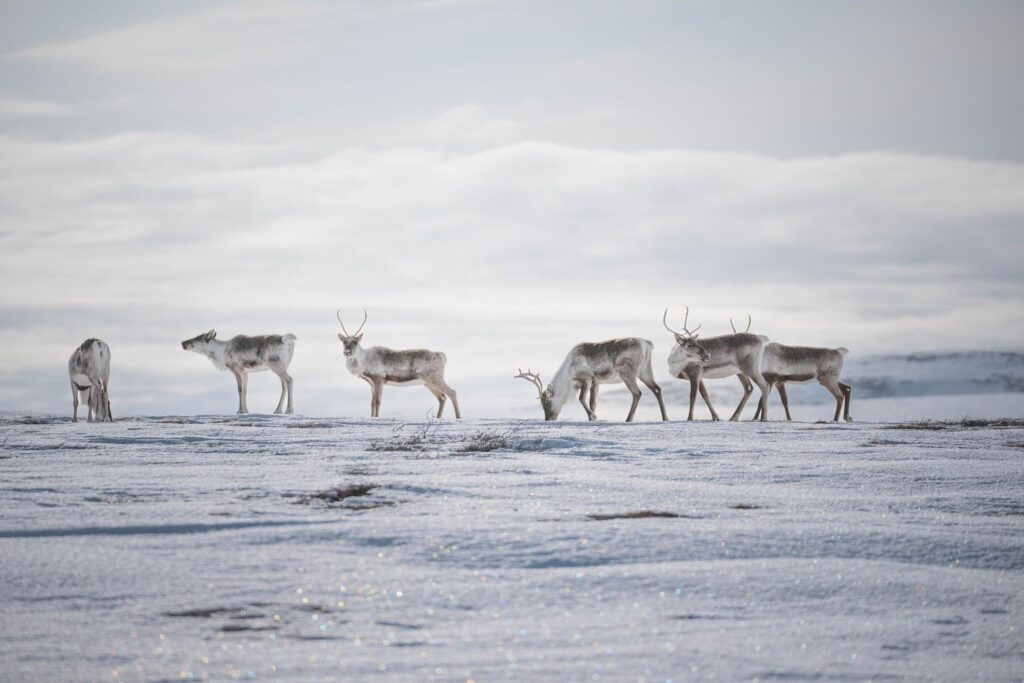
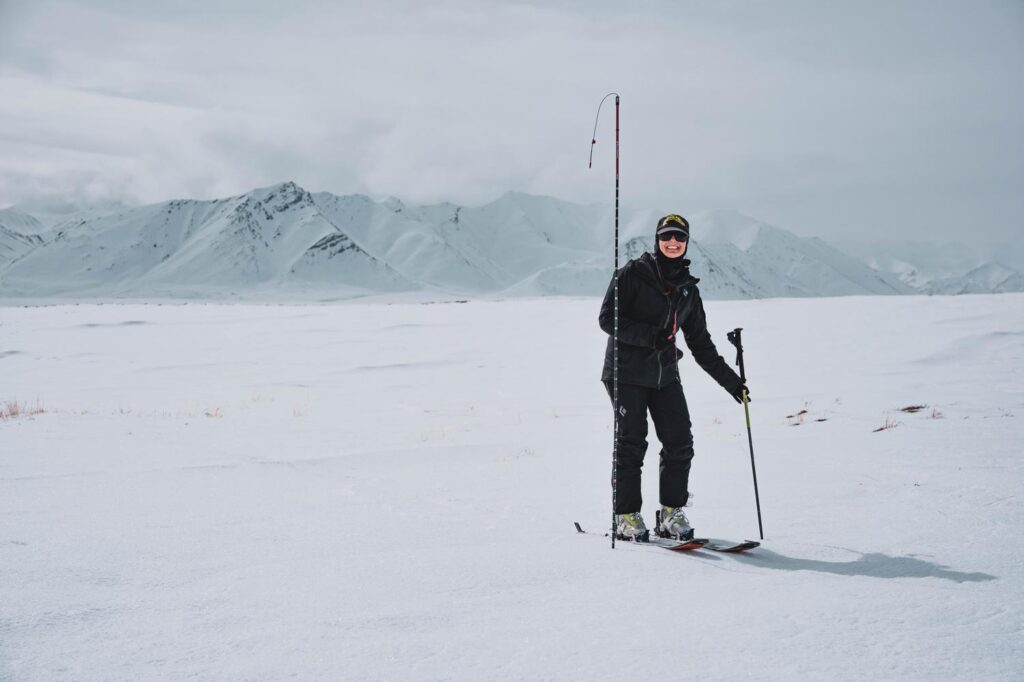
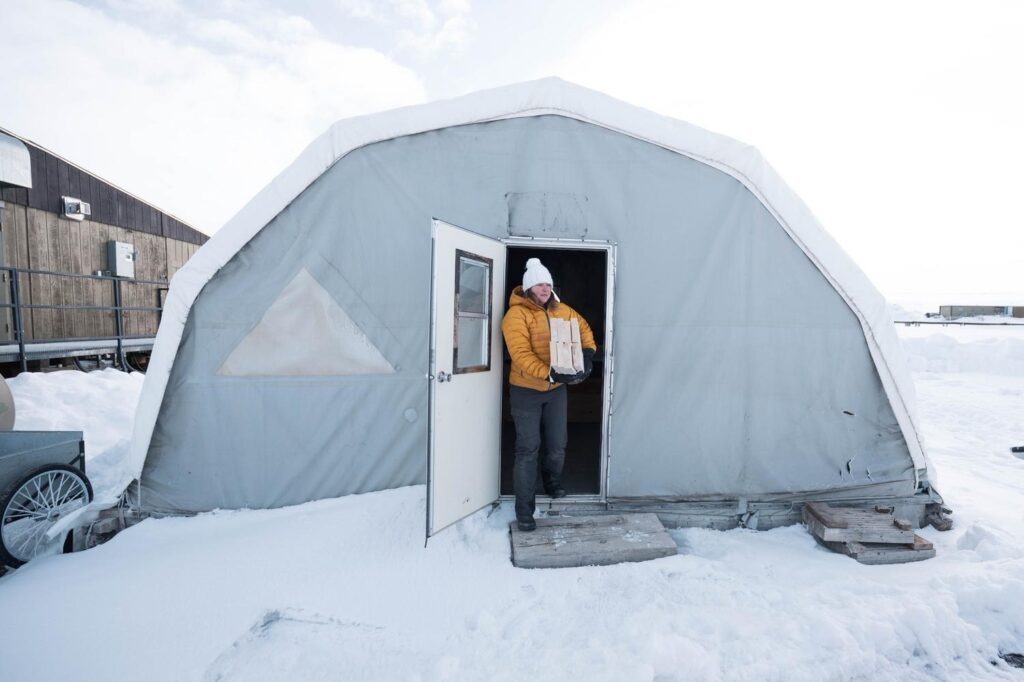
It’s a frigid morning at Toolik Field Station on Alaska’s North Slope. Hoarfrost glitters across the snow surface, and the low sun paints the tundra in soft watercolor hues. My breath clouds the air as we load up snowmachines with sleds packed full of equipment. We’re headed out to Jenny’s field site—two to a machine—crossing a vast, sparkling expanse of Arctic snow. Caribou graze nearby under the pale glow of the Brooks Range, its jagged peaks rising from the fog like ancient sentinels.
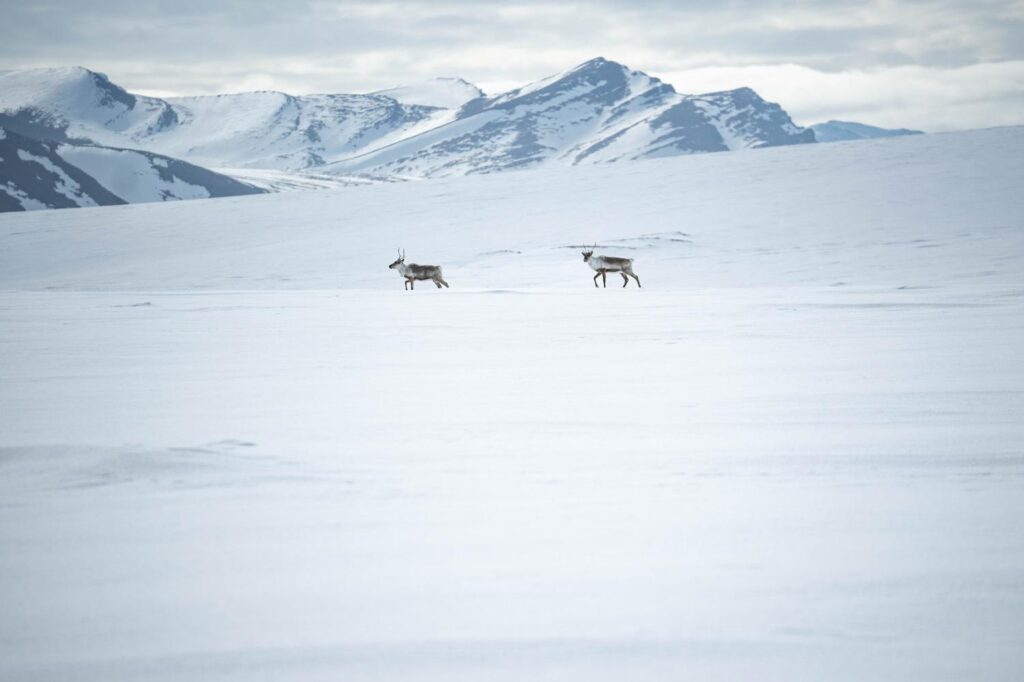
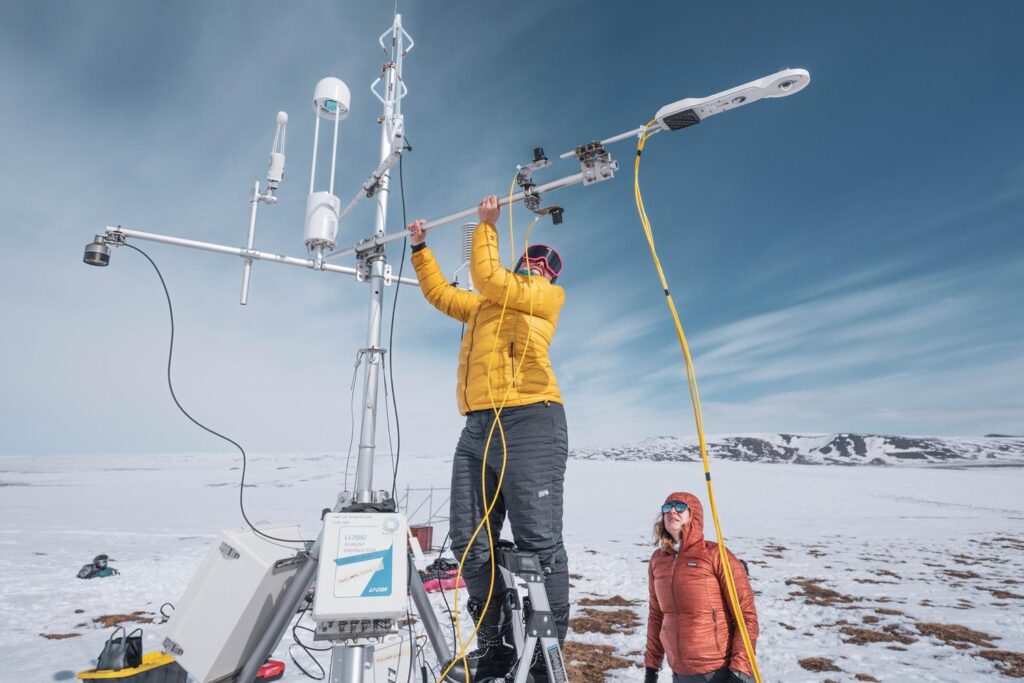
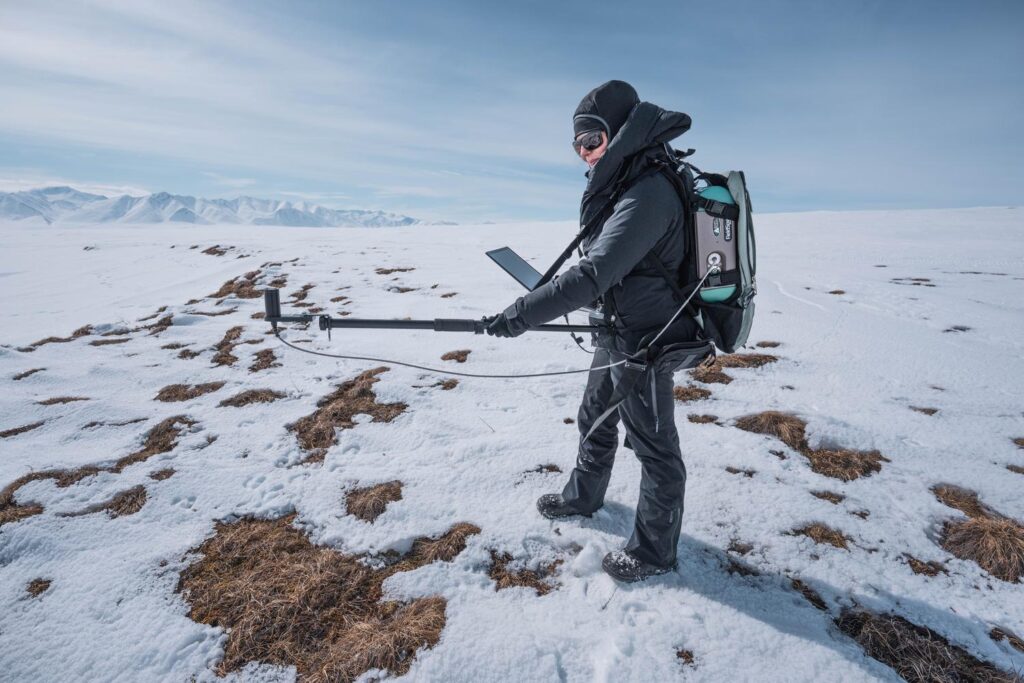
I’m here as a snow scientist, a friend, and a member of the POW Science Alliance, invited by ecologist Jenny Watts—an expert in carbon flux and fellow POW scientist—to help install a flux tower at a permafrost thaw slump, the first in the Arctic to evaluate methane and carbon dioxide emissions from an area of rapidly thawing, collapsing permafrost. Our team, including Kyle, Christina, and Kai, is here to investigate the rapidly changing Arctic, where climate change is not a future threat—it’s a daily reality.
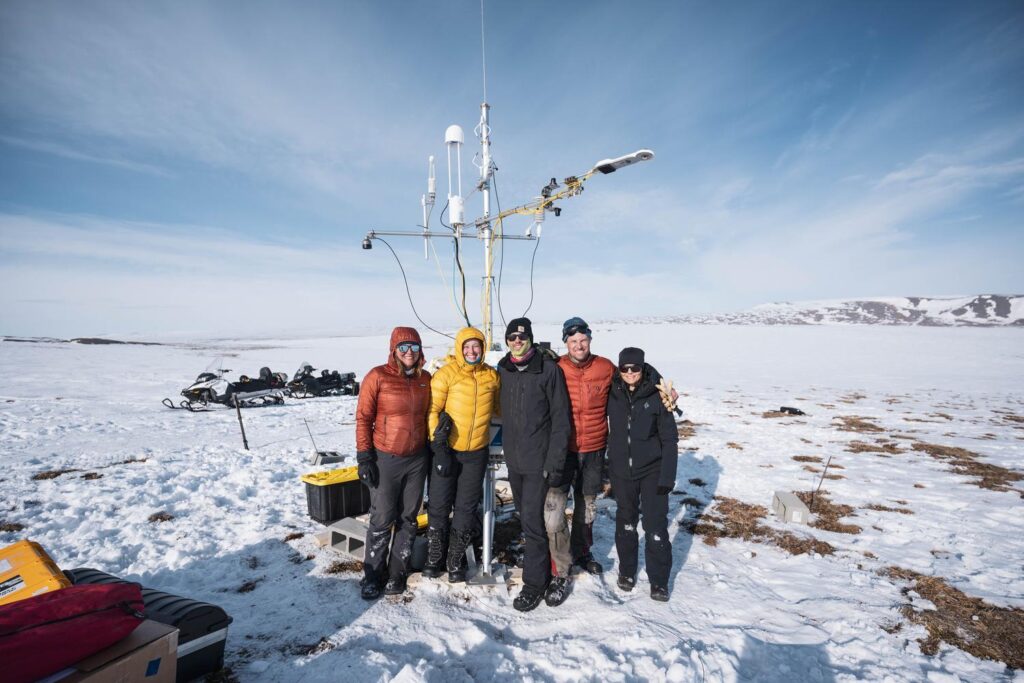
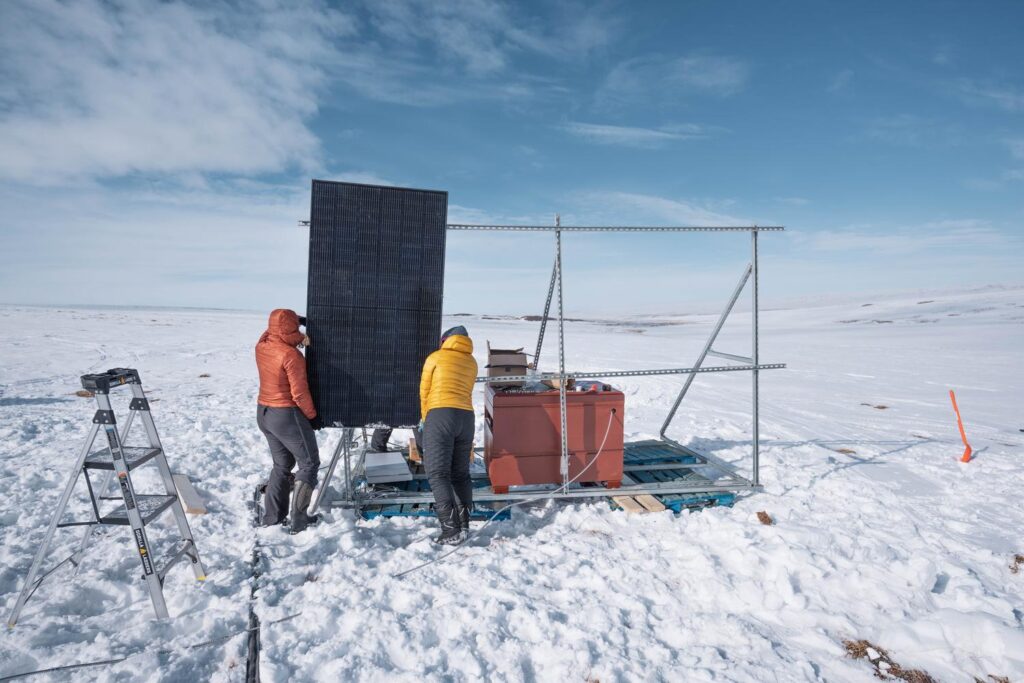
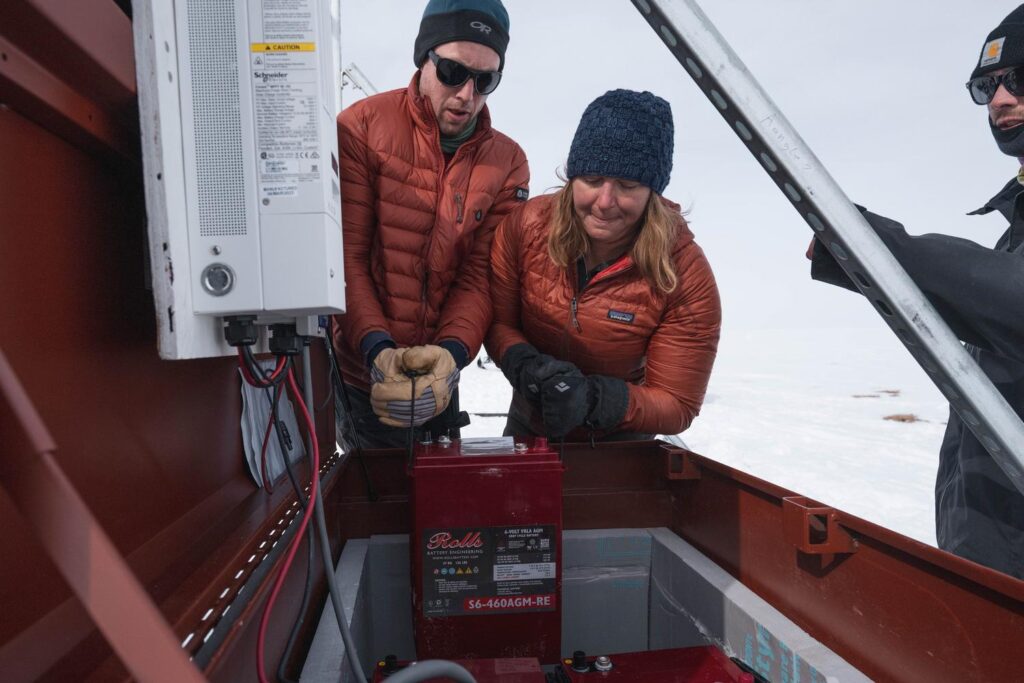
We hauled out a 15-foot-tall aluminum frame with side arms, guy-lines, cement anchors, eight deep-cell batteries (each over 100 pounds), four large solar panels, steel spikes, and a massive electrical enclosure. It’s designed to measure the invisible: carbon dioxide and methane escaping from the thawing ground. These gases, released from what was once permanently frozen soil, are potent drivers of climate change.
Thaw slumps are dramatic signs of permafrost collapse—steep, eroding features where the frozen ground loses stability, slumping downhill and exposing ancient organic material to decomposition. These sites can emit immense quantities of greenhouse gases, much more than the surrounding intact tundra. Yet global climate models rarely account for them, meaning we may be underestimating the Arctic’s contribution to future warming.
Being here forces a shift in perspective. I came thinking I’d measure snow reflectivity—its albedo—and how surface features affect Earth’s energy balance. But in just a few days, new questions surfaced. The Arctic has a way of doing that—pulling you deeper, demanding that you listen.
Back home in the western U.S., snow means water. It’s something we measure in snow-water equivalent, a vital seasonal reservoir. But here in the Arctic, snow’s importance lies not in its meltwater, but in its brightness and insulating power. Snow reflects sunlight, cooling the Earth. More snow can mean more reflectivity, more cooling. At least, that’s part of the story.
But the Arctic is never simple. As sea ice shrinks and more open ocean is exposed, the air becomes wetter. Storms carry that moisture inland, and snowfall in the Arctic has increased in some areas. On the surface, that seems like good news: deeper snow lasts longer into spring, reflects more sunlight, and slows warming. But dig beneath, and the feedbacks grow more complex—and troubling.
Snow is also a powerful insulator. In winter, it shields the ground from the deep, dry cold of Arctic nights. That might sound harmless—until you realize that insulation keeps the permafrost warmer. Curious, I dug snow pits to compare temperature profiles in shallow and deep snowpacks. What I found surprised me.
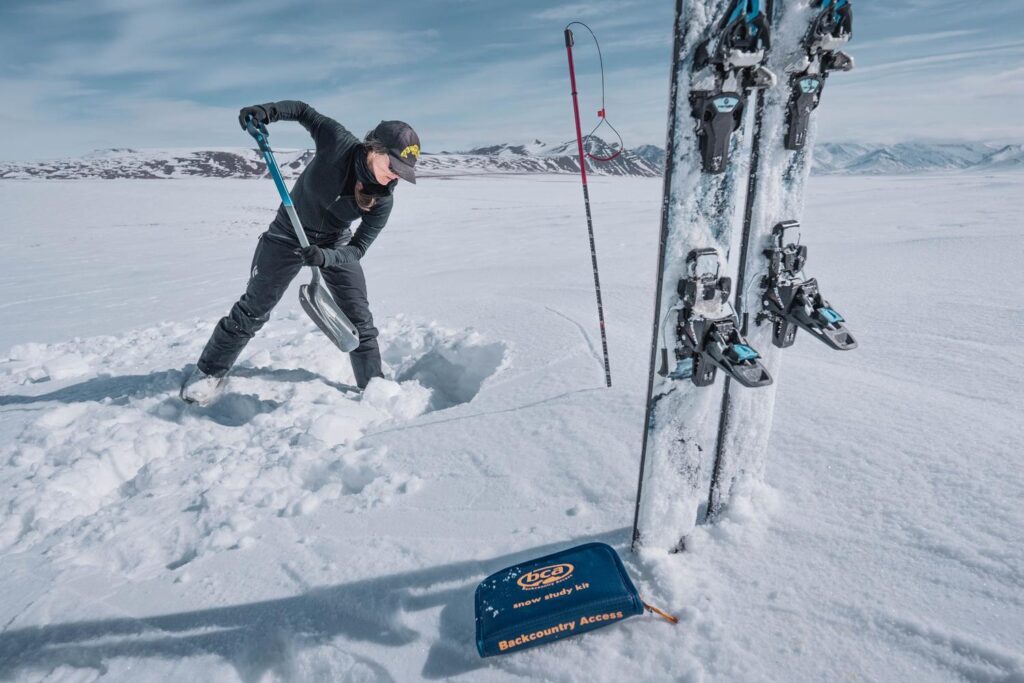
Both snowpacks had similar surface temperatures—about -3°C in early May. But beneath a drift nearly two meters deep, the snow warmed with depth: from -8°C at 35 cm to nearly -3°C just above the soil, near temperatures where microbial life may be actively releasing greenhouse gases. The shallow snowpack, only 57 cm deep, told a different story—cooling steadily to -10°C at the base, where strong, faceted depth hoar crystals had formed.
I’ve always known snow was an insulator, but I didn’t expect such a sharp contrast. That deeper snow isn’t just sitting quietly—it’s actively warming the ground, potentially accelerating permafrost thaw. And as that frozen soil melts, it releases carbon and methane into the atmosphere, fueling even more warming. It’s a classic Arctic feedback loop, hidden beneath a pristine white surface.
This landscape is beautiful and brutal, fragile and fierce. It’s changing in ways we can see and ways we can’t. From shifting sea ice and thawing ground to warming snowpacks, the Arctic is in flux—driven by global climate trends, but impacting us all.
Protecting the Arctic starts with understanding it. But science alone isn’t enough. We need action. We need advocacy. And we need voices—especially those who’ve been here, who’ve seen the magic, who’ve measured the change.
That’s why I’m proud to be part of Protect Our Winters. As scientists in the POW Alliance, we have a role to play far beyond the field. We turn data into stories. Observations into action. Research into responsibility.
The North Slope and the Arctic as a whole are sacred. It’s worth fighting for—not just for its beauty or biodiversity, but because its fate is tied to our own. What happens here matters everywhere. That’s why I’m telling this story.
Science shows us what’s happening. Advocacy gives us a path forward. Together, they give us a reason to hope—and a reason to act.
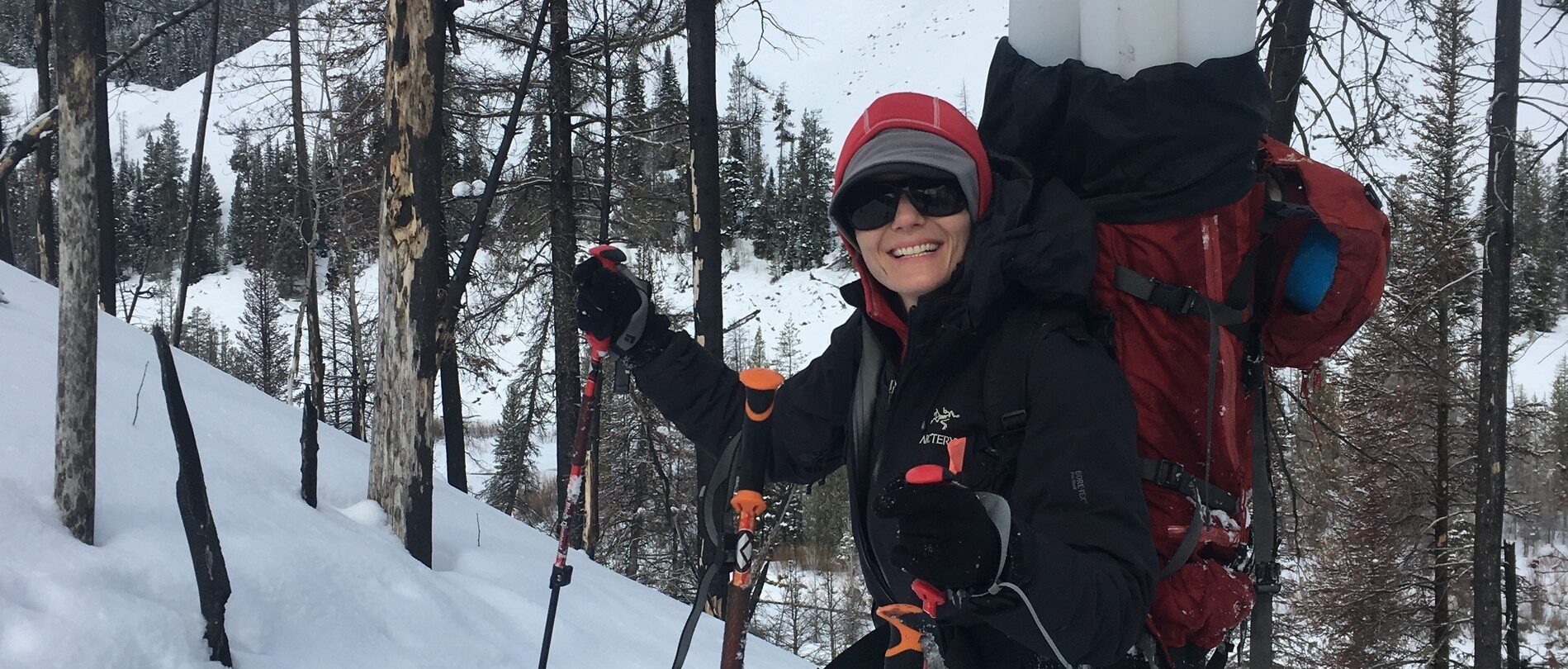
Author: Dr. Kelly Gleason
Dr. Kelly Gleason is an assistant professor of eco-hydro-climatology and director of the snow hydrology laboratory in the Department of Environmental Science and Management at Portland State University. Gleason’s research examines snow and ice processes in mountain environments, including how forest fires and climate change affect snow-water storage and watershed hydrology.
