
What’s In A Name?
Photo by Paul “Wolfe” Wilson
The federal government opened the first of five new lease sales in Alaska’s Western Arctic on March 18th.
President Warren Harding signed an executive order in 1923 setting aside a vast swath of Alaska’s North Slope as “Naval Petroleum Reserve No. 4.” Geologists first surveying the region found oil seeps along the coast at the same time our navy was converting from coal to oil. There was uncertainty about our national oil reserve, Alaska was a resource colony coming off the gold rush, the land was withdrawn from all other uses and placed in reserve.
That name has followed the land ever since. In 1976, when Congress transferred management from the Navy to the Department of the Interior, the legislature did not liberate the reserve from its identity—it simply gave it a civilian title: the National Petroleum Reserve-Alaska, or NPR-A. The name was a bureaucratic update. At over 22 million acres, this is our country’s largest single block of public land. And now, a hundred years after Harding’s executive order, that sticky name is doing real work in the world. Harding was from Ohio – the entire state is 28 million acres. Harding died shortly after the NPR-A was designated, his Presidency marred by a posthumous scandal when his Interior Secretary, Albert Bacon Fall, was found accepting bribes to push through oil development on the Navy Petroleum Reserve No. 3 in Wyoming. Controversy, it seems, is not new.
The Trump administration is now moving to lease more than 5.5 million acres of the western Arctic—including the Teshekpuk Lake wetlands, a globally critical habitat that had been protected for decades—and has mandated at least five such sales over the next ten years. When officials need to justify it, the name is right there: Congress directed “an expeditious program of competitive leasing” in the petroleum reserve. What else would you do with a petroleum reserve?
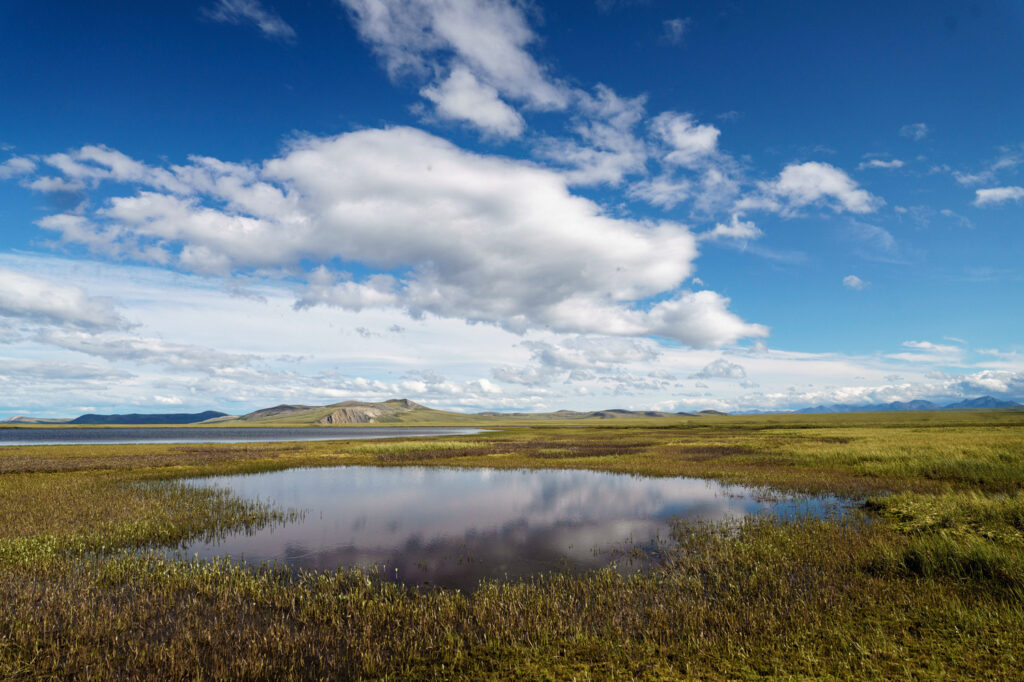
I went to the Arctic for the first time in July of 2009. I walked into Gates of the Arctic National Park from Alaska’s Dalton Highway and spent two weeks realizing all the ways I had never been outside before. Sure, I had grown up camping, climbing, backpacking, skiing, and exploring the mountains of New England and Colorado. This was different. In most of the country, wildness is the exception. In the Arctic, it is the norm.
This landscape is changing faster than anywhere else on earth as the climate warms—three to five times faster than the global average. It is also under threat like never before. A pro-development federal government, an anemic State budget, newly restricted OPEC production, and a moment of widespread social distraction are all converging on Alaska’s North Slope at once. The State wants to sell public land along the sole road corridor. The Trump administration has announced oil and gas lease sales for the Arctic National Wildlife Refuge, along with the Western Arctic. The Willow Oil project is moving into its development phase, promising an estimated 750 million barrels of oil. And a new 200-mile road to the Ambler Mining District is in the works. These are treated as separate projects. They are not.
We talk about these projects as if they are isolated decisions because we have cut up the land with political designations on our maps. “Wildlife Refuge.” “National Petroleum Reserve.” “National Park.” “National Preserve.” “Wilderness.” “State Land.” “BLM Land.” These are constructions that track moments of history, political will, and Presidents from Ohio—they do not follow lines on the land. Most people in the lower 48, “outside” as we say in Alaska, experience these designations as real demarcations of ecology, geology, and geography, because in the contiguous states those lines on the map often do track something real. Not out of necessity, but from the steady creep of progress. We have carved up America by road, ranch, suburb, bridge, and fence. Our waterways are channeled and dammed. Our forests persist only where the mountains make development too hard.
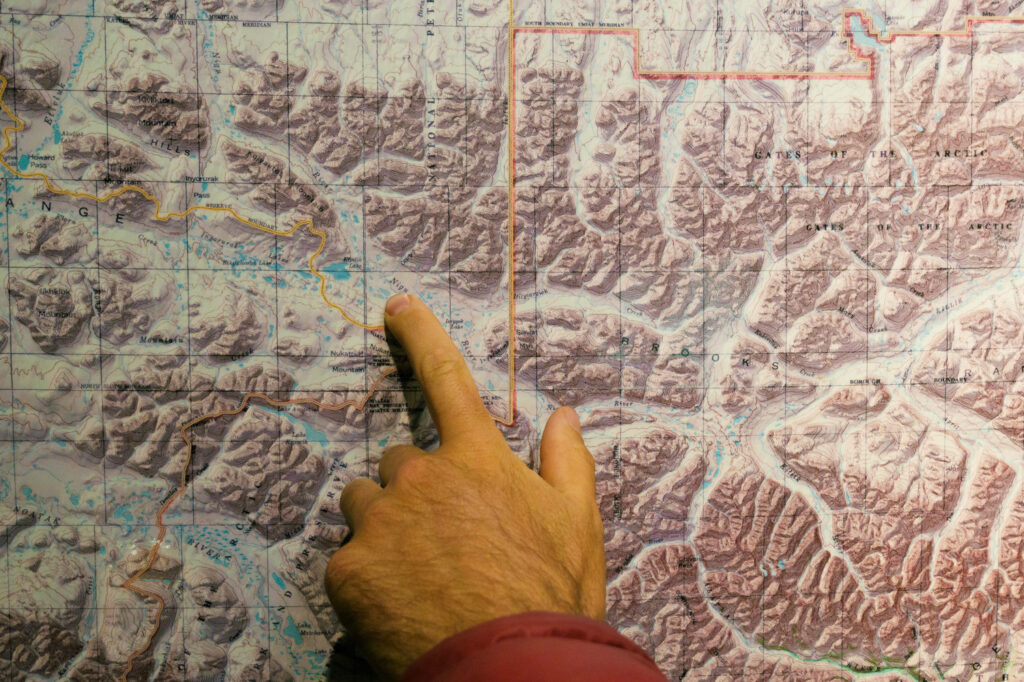
Even our national pride in those most special places set aside, hides a history of encircling these places along the way. They are shadows. We damned Hetch Hetchy to take selfies a hundred years later in Yosemite; we drowned Glen Canyon and flock to the Grand Canyon. We watched the great bison herds disappear, and the Passenger Pigeon go extinct, seeing them go but not recognizing the loss until it was too late. Alaska is different. Alaska is still another chance.
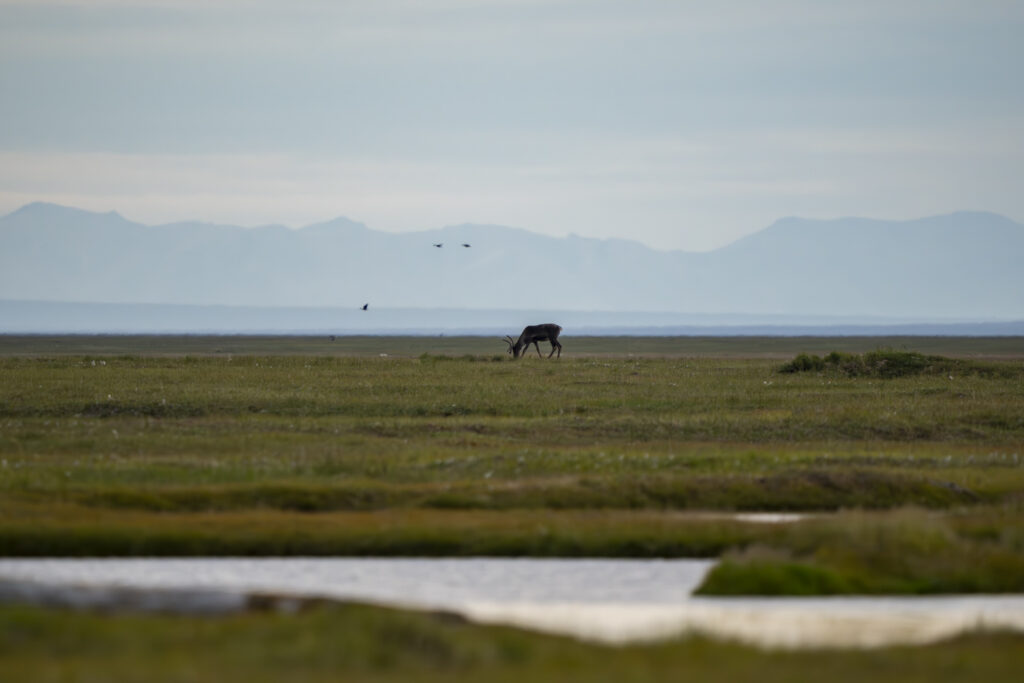
Arctic Alaska is an area the size of California, stretching from Canada in the east to the Bering Sea in the west, the Arctic Ocean to the north, and the Yukon River to the south. Only one major road cuts through this entire landscape—from Fairbanks to Prudhoe Bay, our country’s largest oilfield, which has yielded 13.5 billion barrels over the last fifty years. The population of this California in the North sits at about 10,000 people. There are half a million caribou. This is an intact ecosystem. The mountains, valleys, rivers, and great coastal plain are all connected and untrammeled.
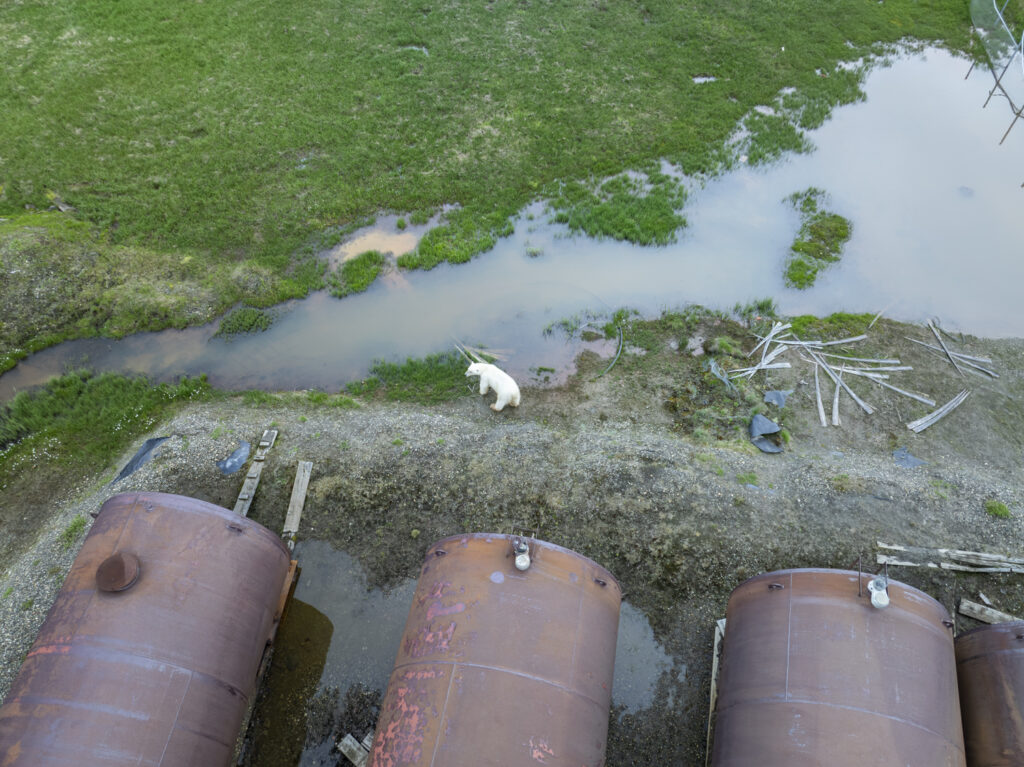
I have walked into the Arctic National Wildlife Refuge, and my feet made no note of crossing from State Land into the place “designated” as special. I have drunk untreated water from rivers in the Brooks Range. I am afraid of the grizzly bears, but more afraid of the mosquitoes. It would be surprising to run into another person over even weeks spent out on the land. The whole place is special because the whole place is the last whole place.
The NPR-A alone is home to an estimated 5.4 million aquatic birds each season, more than any other Arctic wetland on earth. Birds from six continents nest here. Birds from your backyard nest here. Teshekpuk Lake, which the current administration has now opened to leasing after decades of protection, is the primary calving ground for the Teshekpuk Lake caribou herd and the single most important molting habitat in the Arctic for migratory waterfowl. The name “petroleum reserve” describes a decision made one hundred years ago without any understanding of the place or the opportunity it holds.
Like all places, there exists something here we can use. There is oil in the western Arctic, likely a lot of it. The USGS estimates the Northern Alaska region may contain nearly half of all undiscovered recoverable oil on federal lands in the entire country. The NPR-A may hold nearly 900 million barrels of technically recoverable conventional oil. None of it is ecologically advisable to extract. All of it is more expensive per barrel than almost any other domestic source.
The gift of the Arctic today is a chance to exercise restraint. But this second chance is also our last chance as a society; it is the last whole place left. If we fully develop the Arctic, we will have been scammed by a spam call from Manifest Destiny. We will be the masters of our universe, and we will have subjugated the land into defeat as “resource,” “input,” and “property.”
This place is as fragile as each caribou calf and newborn chick in the tundra, but it has tremendous resilience in its size. That resilience only works if it stays whole. Piece by piece, lease sale by lease sale, road segment by road segment, the arithmetic changes. We cannot stop the legal machinery already in motion—five mandated NPR-A lease sales over ten years are now written into federal law. But we can change what surrounds that machinery.
Consider three things:
Make it socially unacceptable. Arctic oil is more expensive and requires more public subsidy than any other fossil fuel development in this country. This should not be a partisan issue. Nature does not care if you are red, blue, or purple. A dollar of public money spent guaranteeing the economics of Arctic drilling is a dollar not spent on a better investment.
Make the future uncertain. No oil company operates on today’s politics alone—they operate on thirty-year capital horizons. When new decision-makers are eventually in power (and there will eventually be new decision-makers), we can protect and conserve. The uncertainty of a political future gets baked into the financial breakeven of today. Our actions today can ensure the investment is expensive.
Pay attention and vote. This may seem far from the front page, crowded out by war and scandal. But our last chance at restraint is a critical juncture in the future of a livable planet. The land does not vote. We do.
A military calculation about fuel stockpiles gave this place a sticky name. In 2026, that name is the legal scaffolding for one of the largest oil lease sales in American history, offered across one of the last truly wild places on earth. The land has not changed. The name has done its work.
But names are not geology. They are not hydrology or migration routes or a midnight sunset in July. They are political instruments, constructions of our making that we can change or challenge. What cannot be recovered, after the oil is long gone and the roads are built, is the thing the name was covering. Our last whole place.

Author: Alex Lee
Alex Lee is Director of Science and Education at POW, he is also enthusiastic about winter sports and soup. Alex is an environmental philosopher and scientist, as well as an avid skier, mountaineer, fisherman, and freediver. Originally from the Northeast, Alex grew up in Boston and graduated from Dartmouth College, where he first delved into […]
