
When Winter Doesn’t Show Up: Lessons from the 25/26 Snow Season
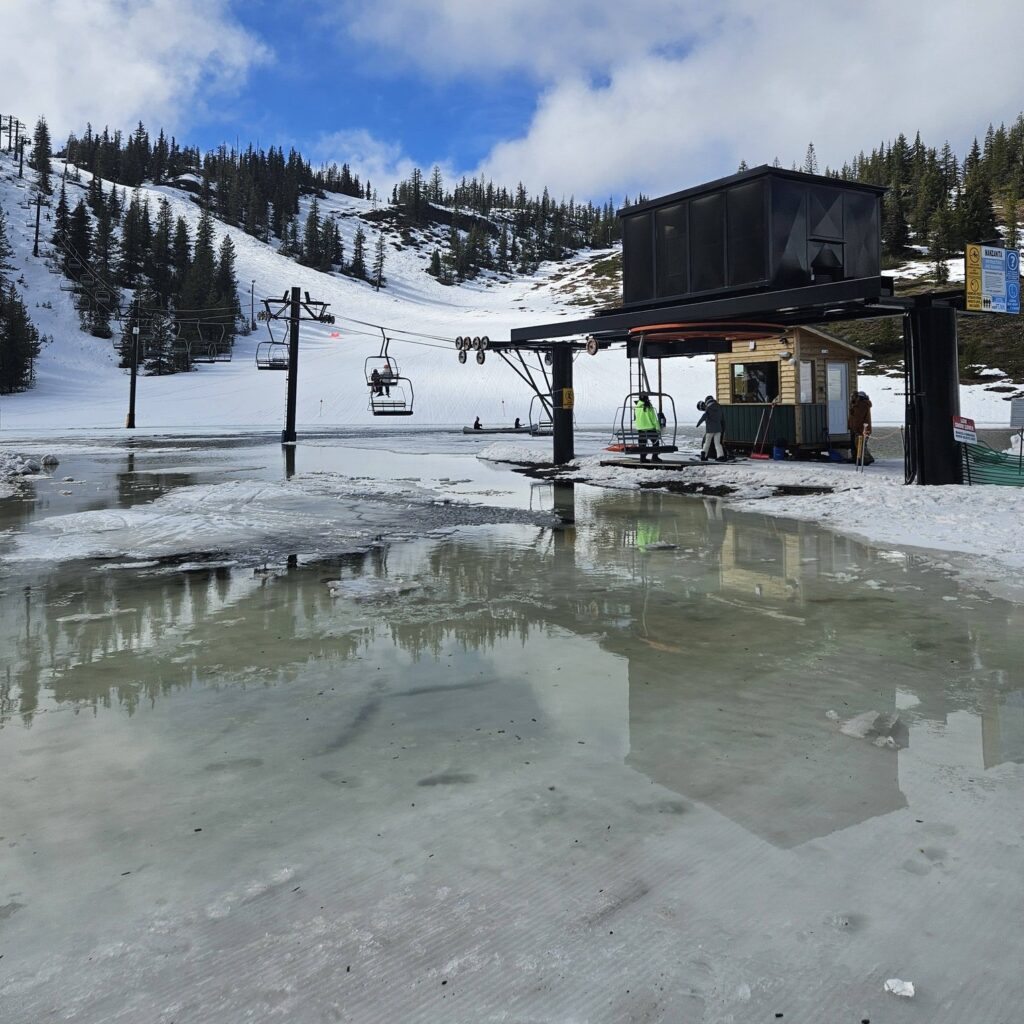
The 2025-2026 snow season in the Western United States has been a literal hot mess (FIG.1). News sources have run countless, increasingly dire, stories on the snowpack. Ski resorts have opened, paused operations, reopened, and closed early. As we speed through spring, it is a good time to look back on winter and consider how it unfolded. It is also a good time to think about what it all means for summer and to deepen our understanding of our snow and water resources.
Low Tide Out West
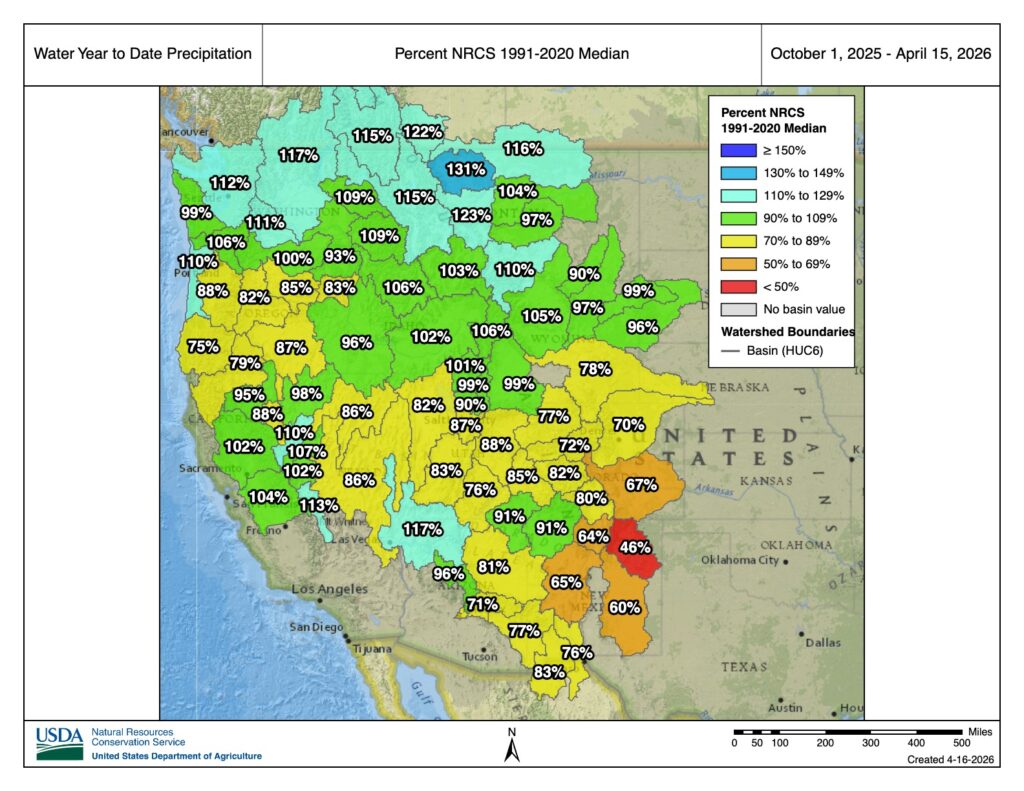
Snow has a simple recipe. Take some wet, add some cold, wax your skis/board, and enjoy! When it comes to the wet (FIG. 2), the 2025-2026 water year has been, on average, not bad.
Oregon, Utah, and Colorado ran a bit dry, while northwest Wyoming, Montana, Idaho, and Washington ran a bit wet—nothing to get too excited about. The smoking gun for the season lies in the cold, or the absence of it.
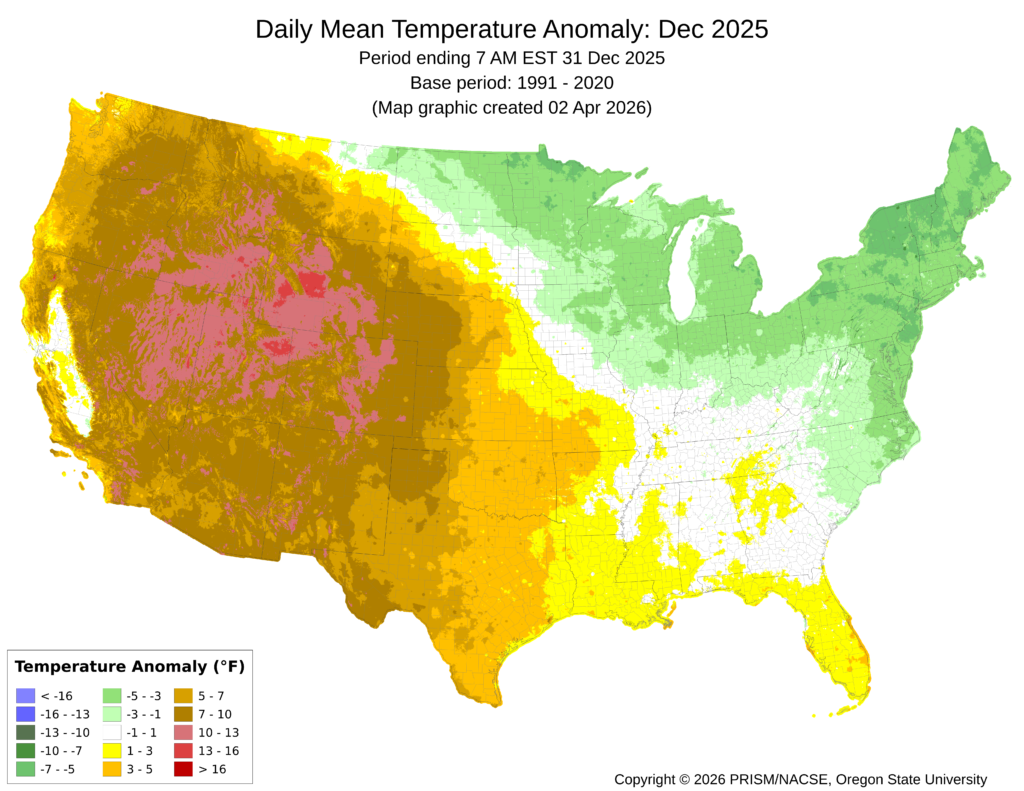
The entire season in the western United States ran warm, but December (FIG. 3) was the stuff of nightmares for ski resort operators and backcountry enthusiasts alike. The goalposts for when the season would finally take off were repeatedly moved from the New Year’s holiday to Martin Luther King Weekend, to President’s Day weekend, to, finally, spring break.
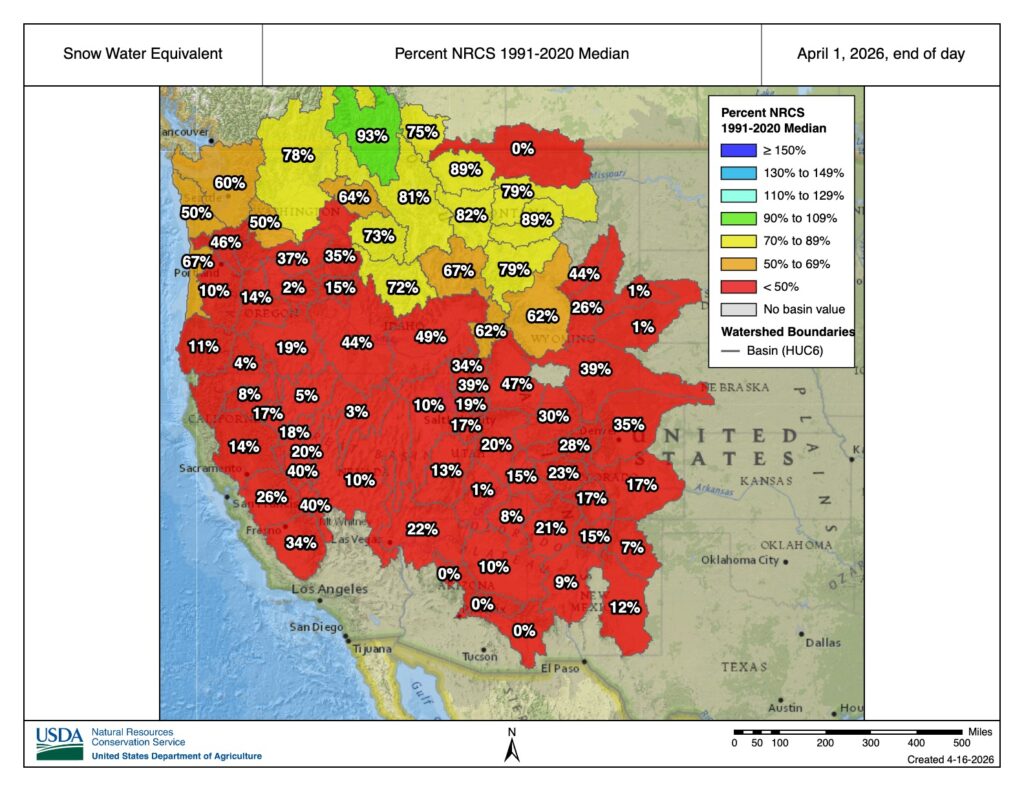
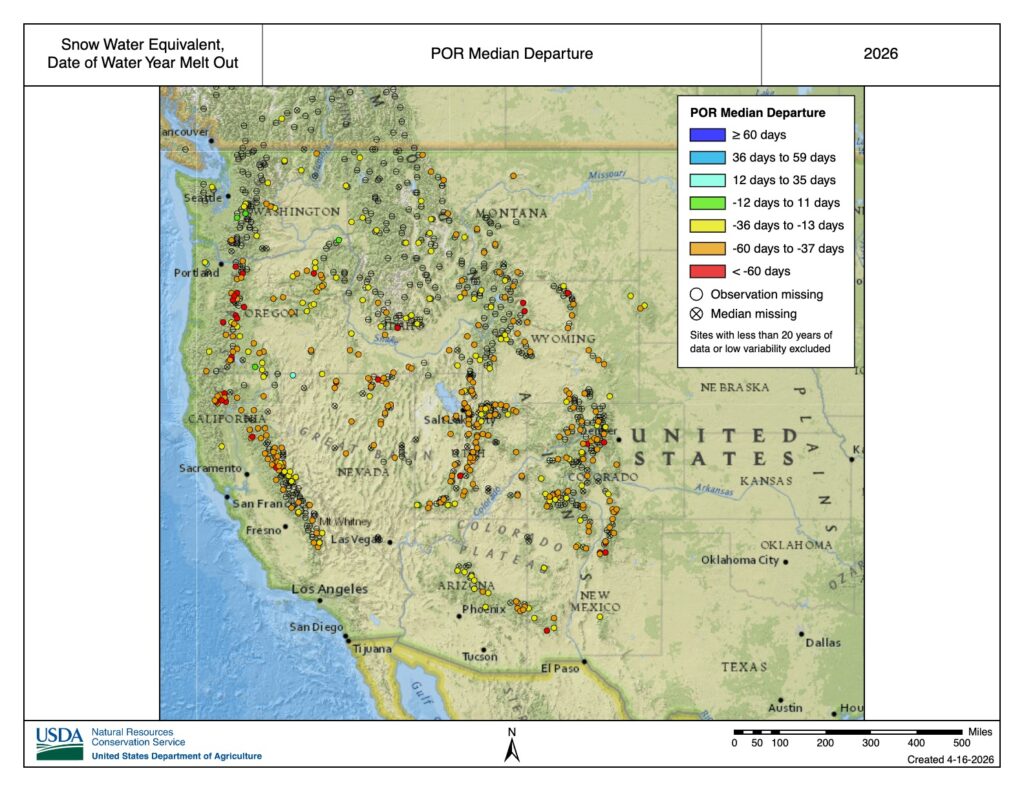
The mediocre precipitation, combined with the horrifying high temperatures, led to a predictably and exceptionally poor snow season, with April 1 (a useful benchmark for near-peak snow in many areas) values (FIG. 4) a tiny fraction of average. Many observation stations posted the worst peak values in the past 45 years. By mid-April in many locations, the snow had already vanished with ‘snow off’ dates (FIG. 5) not days or weeks, but months early.
What This Means for Our Water Supply
Let’s take a step back and think a bit about water and snow on our planet.
Since the moon is back in the news these days (shout-out to the Artemis astronauts), we can use it as a reference. If you take all of the water on Earth and package it into a sphere, it would have a diameter only 40% that of the moon’s diameter, or 10% that of the Earth’s diameter.
Of course, much of that water is ‘locked up’ as salt water or as ice or as deep groundwater that is not readily accessible. Long story short, less than one-hundredth of one percent of the water on Earth is available to support our daily needs.
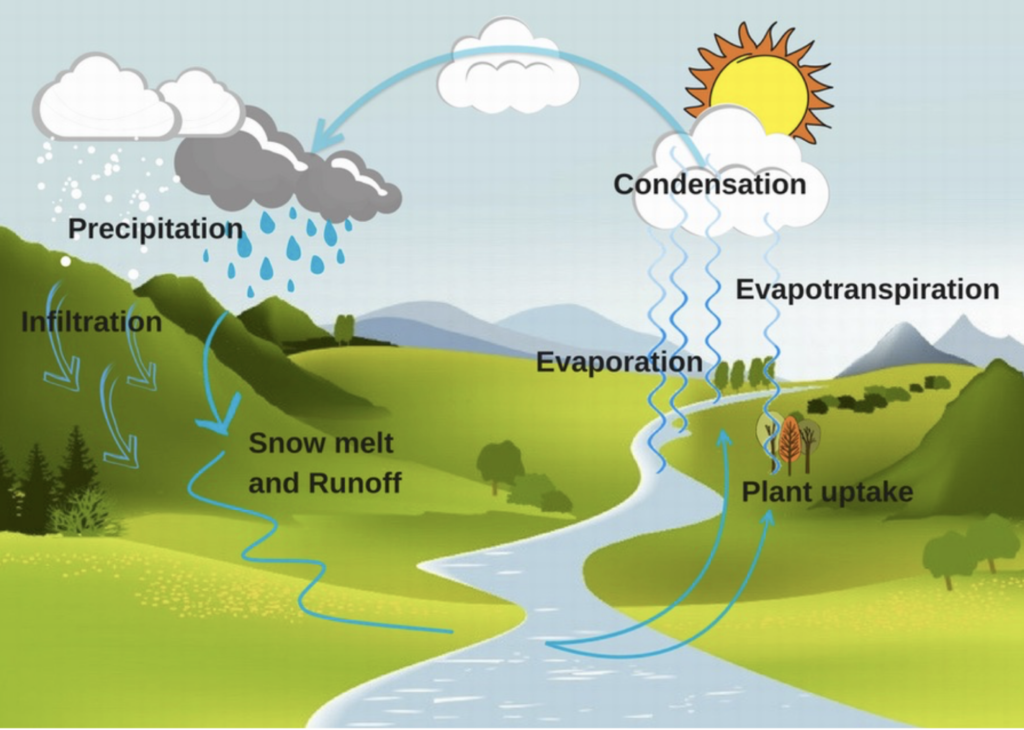
Water is constantly on the move, so it can also be useful to think about its movement from one place to another (FIG 6), such as precipitation falling from the sky to the land.
Averaged over all of Earth’s land surfaces, about one meter of rain falls per year. If you do the math, this works out to about 13,000 gallons per person, per day. Even if you like long showers, you have to admit that sounds like a lot.
Many of our challenges with water supply stem from mismatches between supply and demand. We may have a lot of water over here, but we need it over there. Or, we may have a surplus of water in the winter, but we could really use it in summer.
We have developed a remarkable network of water supply infrastructure, including canals, aqueducts, surface reservoirs, and sub-surface aquifers, to help us even out these differences. While these projects can have drawbacks in terms of fish passage and interrupting the natural flows of sediment downstream, there is no question that they help keep our taps flowing and our crops growing. The large volumes of water they hold back can be thought of as an insurance policy against a dry year or a series of dry years.
Why We Need Winter
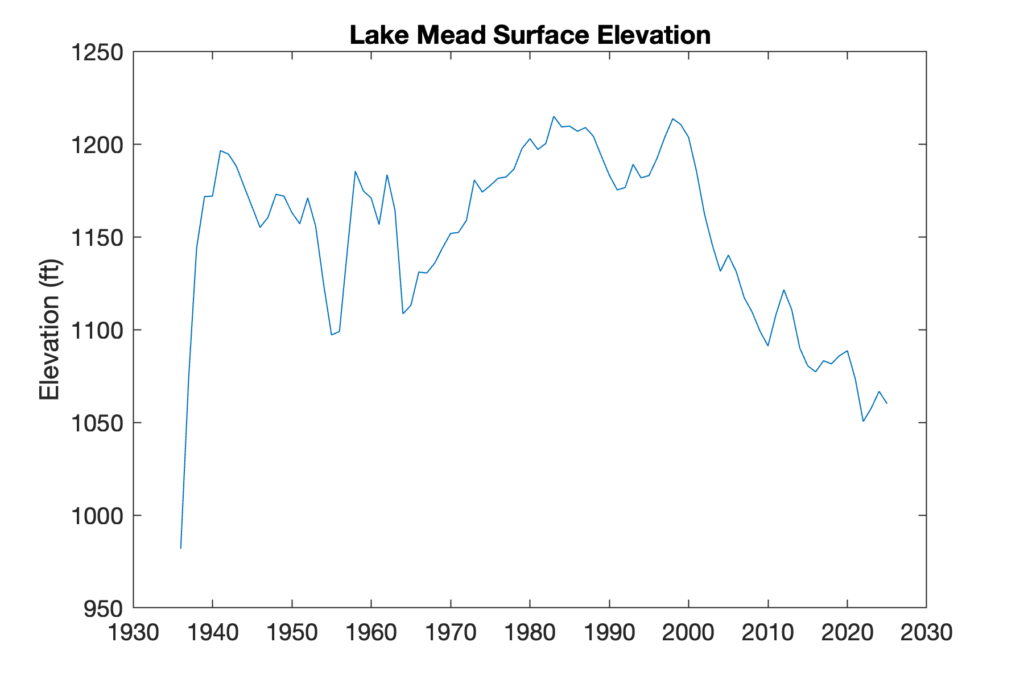
There is a limit to this, however, which is best illustrated by the Colorado River Basin. Years of consecutive dry conditions have led to steadily declining elevations in Lake Mead (FIG. 7) and increasingly urgent conversations about how to allocate runoff in the basin among the very long list of users, including municipalities and farmers in both the upper- and lower-basin states.
The superpower of snow in this conversation is that our seasonal snowpack is a very large additional reservoir for our surface water resources. As winter progresses, the snowpack holds back and stores water. This water is then slowly released throughout late spring and early summer.
This lag between precipitation and runoff had endless benefits. It helps reduce the likelihood of flooding and yields a long stretch of cool stream temperatures, appreciated by many aquatic species. The greatest thing about this snow reservoir is that, because it is widely distributed across the landscape, it treads lightly and reduces its impact.
By some estimates, the amount of water stored as snow in the contiguous United States at its peak (usually in early April) is about five times that stored in Lake Mead. So, there is no question that snow has an important seat at the table when it comes to water resources planning.
Cheers to a Glass Half Full
To circle back to the 2025-2026 snow season, it is clear that many people experienced feelings ranging from disappointment to grief to anger. It is important to acknowledge all of those feelings as real and legitimate. While it can feel, at times, a bit superficial to complain about fewer powder days, it is undeniably true that snow and cold are elemental, primal, and essential to us all.
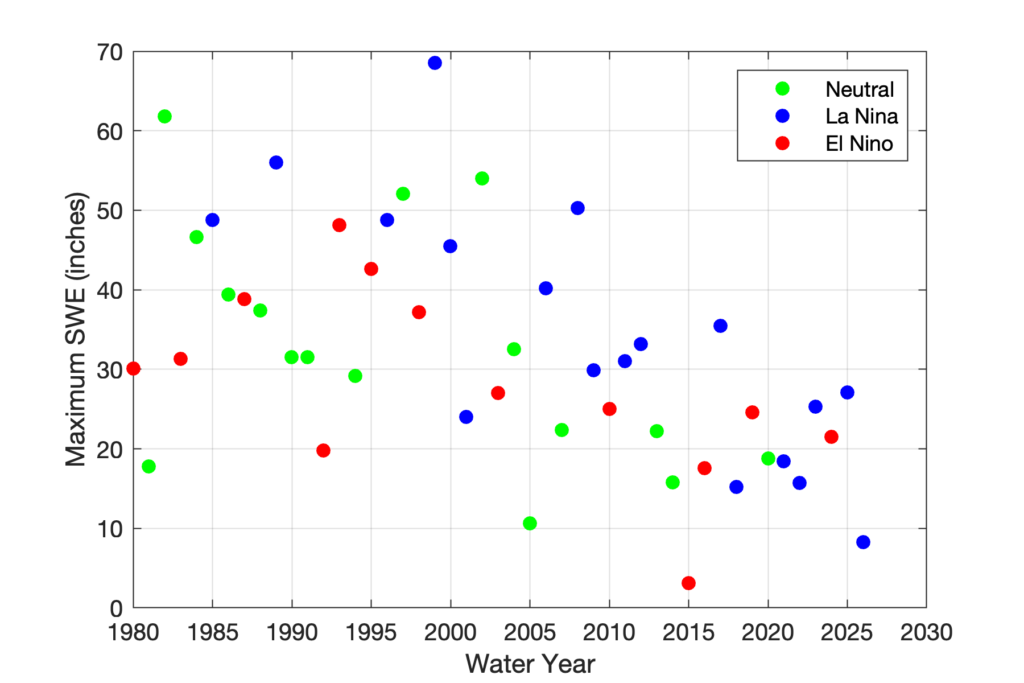
It is also critical to note that snow is unpredictable and highly variable across many different time scales. Playing the long game (FIG 8), most of us are aware that snow, both in terms of how much we get and how long it sticks around, is dwindling in many areas, and this should concern us all.
What complicates our understanding, and the general public’s understanding, of snow and winter is that massive variations from one year to the next are riding on top of these long-term trends. Call it feast or famine, boom or bust, whatever you like, the reality is that a lean year can be followed by one for the record books. Remember, the glass is not half empty, it is half full. And, if we’re lucky, next year it’ll be half full of snow, and not water.

Author: Dr. David Hill
David Hill is a professor at Oregon State University and a National Geographic Explorer. He has degrees in aerospace engineering (UIUC) and civil and environmental engineering (UC Berkeley). For over 25 years, he has studied how water behaves from snowy mountain headwaters to the coast. He collaborates with other scientists interested in water’s response to […]
