
Fire on the Ground
Wildfire, targeted grazing, and the changing ecology of Southern California
Photography by Liam Pickhardt
For millennia, the landscapes of Southern California have been shaped by movement.
Animals moved constantly across what is now California in response to water, forage, drought, predation, and seasonality. Native grasses were grazed, trampled, and redistributed across hillsides long before modern fire suppression, urban development, or fuel management plans existed. Vegetation did not simply accumulate uninterrupted year after year. Landscapes changed through cycles of consumption, regrowth, heat, and migration.
Fire moved through these systems too, not with the scale or intensity now associated with modern megafires, but as part of an ecology shaped by interruption and variability. Movement prevented stillness and grazing prevented uniformity.
Today, much of Southern California exists inside a very different reality. Hotter temperatures, prolonged drought, invasive annual grasses, and decades of accumulated vegetation have transformed wildfire from an occasional ecological force into a structural condition shaping daily life across the region. Smoke, evacuation, trail closures, insurance instability, and catastrophic burns now define much of the public relationship with landscape.
Across these same hillsides, another form of movement has quietly reemerged as part of the region’s climate adaptation strategy: bands of sheep and goats moving steadily through dry grass before fire season arrives.
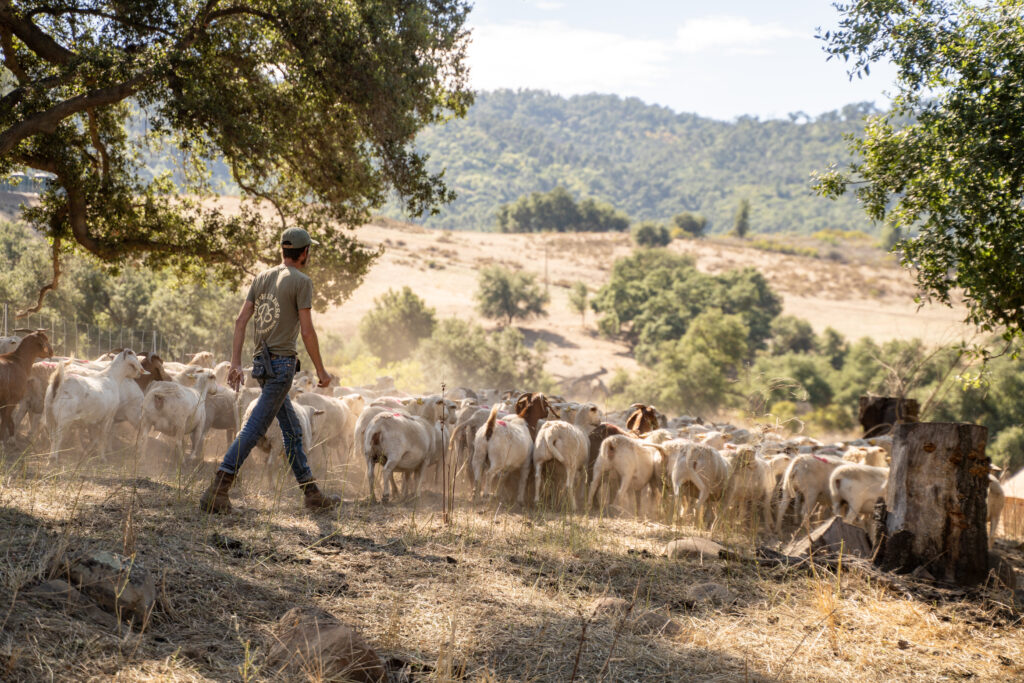
The rotational grazing pattern that the Shepherdess team follows helps to remove invasive plant species in an effort to create more space for native plants to thrive.
I first learned Southern California on foot as a trail runner. In the early years of my ultra running life, winters were my season for leaving Wisconsin. For most of the year I was tied closely to farm work and family life, but winter opened a temporary window where movement became possible again. My family and I would travel west, chasing warmth, open trails, and landscapes that felt radically different from the frozen Midwest. If I wanted mountains, long climbs, dry trails, and real vertical gain, I had to leave Wisconsin and go looking for them.
Southern California became one of those places. The Santa Monica Mountains and Los Padres National Forest played a significant role in shaping the runner I became. For someone coming from the Midwest, where elevation arrives in subtle glacial folds rather than long exposed ridgelines, being able to move from sea level into mountains approaching nine thousand feet felt profound. I devoured long fire roads, steep canyon climbs, dry ridge traverses, and technical descents through chaparral landscapes that felt entirely foreign to me at the time.
The trails carried a kind of psychological exposure I was not used to. There were soft oaks in the valleys and exposed ridgelines with little cover. Coming from Wisconsin, where forests often enclosed the trail and winter landscapes felt sheltered beneath snow and trees, Southern California felt startlingly open. Even in winter, the terrain invited a different awareness. Distances seemed larger, horizons stretched farther, and the landscape offered few places to hide. The mountains felt both expansive and exposed, demanding a kind of attention that was as mental as it was physical.
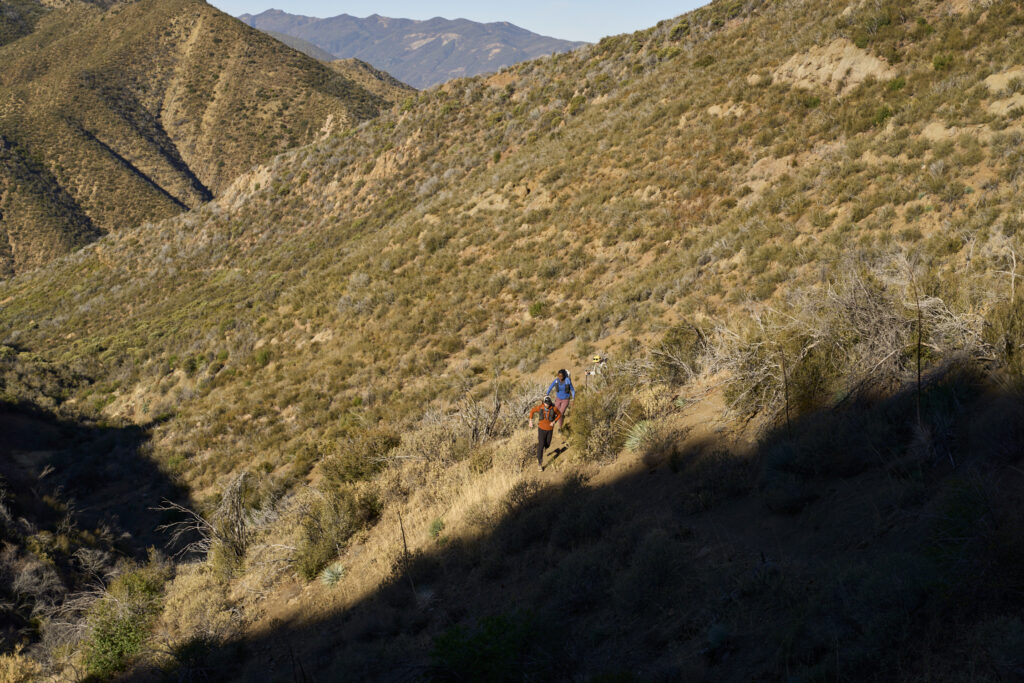
POW Run Alliance members Luke Nelson and Peyton Thomas run through some of the steep and rugged terrain in the
Los Padres National Forest just outside of Ojai, California.
At the time, I understood these landscapes mostly through physical effort. I thought about vertical gain, hydration, heat management, pacing, and distance. I thought about the strange mental challenge of long climbs where every switchback looked nearly identical to the last. The mountains felt ancient and permanent to me then, almost invincible in their scale and dryness.
What I did not understand at the time was that the grass brushing against my legs each winter was also fuel. Canyon winds that offered relief on exposed ridgelines could also drive catastrophic fire behavior, and landscapes that felt expansive and stable were already becoming increasingly volatile under the combined pressures of drought, invasive vegetation, rising temperatures, and expanding development.
Now, it is impossible for me to move through Southern California without seeing wildfire embedded into the terrain itself. The relationship between recreation and landscape has changed alongside the climate. Trails close for months or years after major burns. Hillsides reopen blackened and unstable. Entire ecosystems reorganize themselves after fire and subsequent flooding. Outdoor culture in California increasingly exists within the realities of ecological instability, whether it chooses to acknowledge it or not.
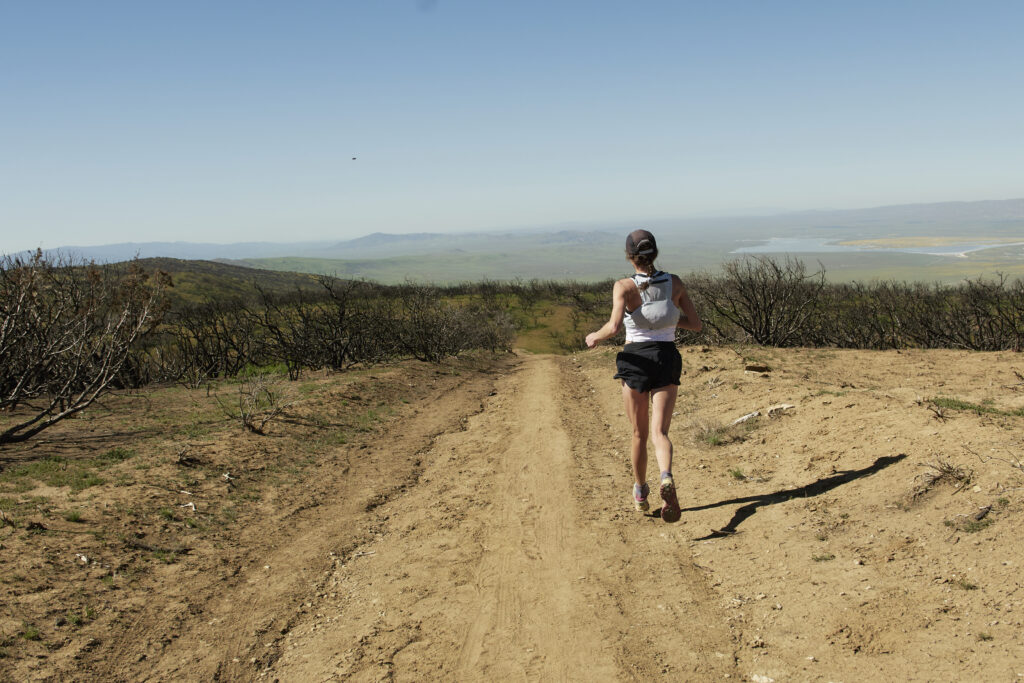
Emily Cornell runs along Caliente Ridge Trail in Carrizo Plain National Monument half a year
after the Madre Fire — the largest wildfire in California in 2025 — started.
The same landscapes that attract runners, hikers, cyclists, horseback riders, birdwatchers, and millions of outdoor recreation visitors each year are also landscapes carrying immense wildfire risk beneath their beauty. Across California, wildfire is no longer shaping only forests and chaparral ecosystems. It is reshaping insurance systems, housing policy, recreation access, public infrastructure, and the political future of the state itself.
According to NOAA, climate change driven by hotter temperatures, prolonged drought, and increasingly dry atmospheric conditions has become a major driver in the growing severity and extent of wildfire across the western United States. But wildfire itself is also feeding back into the climate system. Smoke carries enormous amounts of carbon into the atmosphere. Forests and grasslands that once stored carbon become unstable after repeated burns. Hillsides stripped by fire erode more easily during storms and floods. The cycle becomes increasingly difficult to separate: climate change intensifies wildfire, and wildfire intensifies climate instability in return.
Those pressures are increasingly changing the way California governs itself. Updated fire hazard maps, insurance withdrawals from fire-prone regions, new defensible space regulations, and debates around prescribed fire and fuel reduction now shape regional politics as much as drought and water policy once did. Wildfire adaptation is no longer a niche environmental conversation in California. It has become a structural question about how communities continue to live within increasingly volatile landscapes.
When I arrived in Ojai to interview shepherd and prescribed grazing practitioner Cole Bush, cold rain moved steadily across the valley after months of dry conditions. Inside Cole’s home, we sat on a couch layered with sheepskins while listening to the weather move across the windows. Outside, the hills surrounding the valley shifted between muted green and gray beneath the storm.
“We are in a brittle environment,” Cole told me. “Semi-arid Mediterranean. We only get rain during a short period of the year. Then it’s dry, dry, dry, and then wet, wet, wet, but only for a short period of time.”
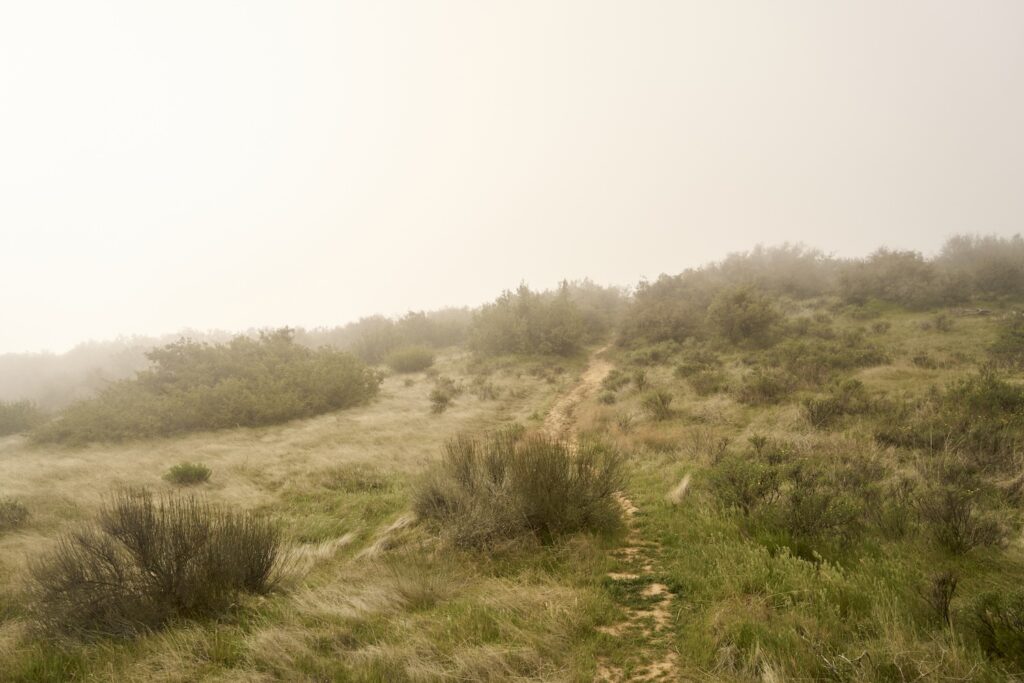
Caliente Ridge Trail in Carrizo Plain National Monument before recent fire activity.
Cole described a landscape defined by variability. Oak savannas and coastal scrub ecosystems exist close to one of the country’s largest national forests. Wildlife corridors increasingly interrupted by development. Migratory patterns shifting as both climate and human settlement reshape the region. Even the eucalyptus trees surrounding Ojai, introduced generations ago as building material, now occupy an uncertain ecological identity within the changing landscape.
“At what point does something become native to a place?” she asked. “The eucalyptus here are probably very different now than the eucalyptus where they originated.” The question lingered beyond the trees themselves. Southern California is a landscape where nearly everything now feels unsettled: climate, ecology, water, development, migration, and fire.
Cole moved back to Ojai just days before the COVID shutdown after years spent working in Northern California. The Thomas Fire, which devastated Ventura County in 2017, had already reshaped the region’s understanding of wildfire and public land.
“I decided it was time to come back to the landscapes that I know,” she told me. “Southern California is that for me.” During the isolation of the pandemic, Cole built what would become Grazing School of the West and The Shepherdess Land and Livestock, using sheep and goats for ecosystem services and wildfire fuel reduction throughout the region. But the work, as she described it, extends far beyond simple vegetation management.
“The animals are the conduit to our deeper relationship with the land,” she said.
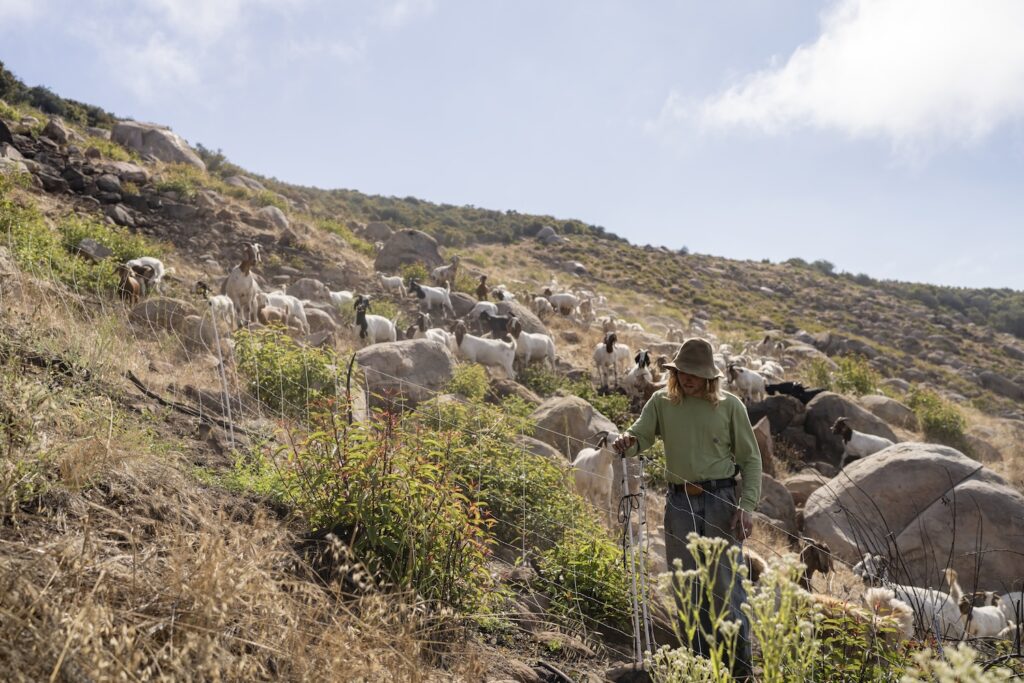
Corban Fairbanks closes the portable fencing he uses to control the grazing patterns of the animals he oversees.
In Cole’s work, the simplistic public imagination many people hold about grazing is far more complex. The work is highly observational and deeply physical. Shepherds are constantly watching where animals cluster, how aggressively they graze certain species, how quickly they move through sections of vegetation, and how the terrain itself shapes their behavior.
Goats and sheep serve different ecological functions across the landscape. Goats are browsers, preferring shrubs, woody vegetation, and low tree branches in the same way deer often forage. Sheep operate more as grazers, moving with their heads down through grasses and lower-growing forage. Together, they allow shepherds to tailor grazing strategies to specific vegetation types and fuel conditions.
“Goats are browsers and sheep are grazers,” Cole explained. “Together, sheep and goats are a really cool combo punch because we’re able to use a prescription of these different species. Based on the vegetation, we can decide: do we put sheep, goats, or both in?”
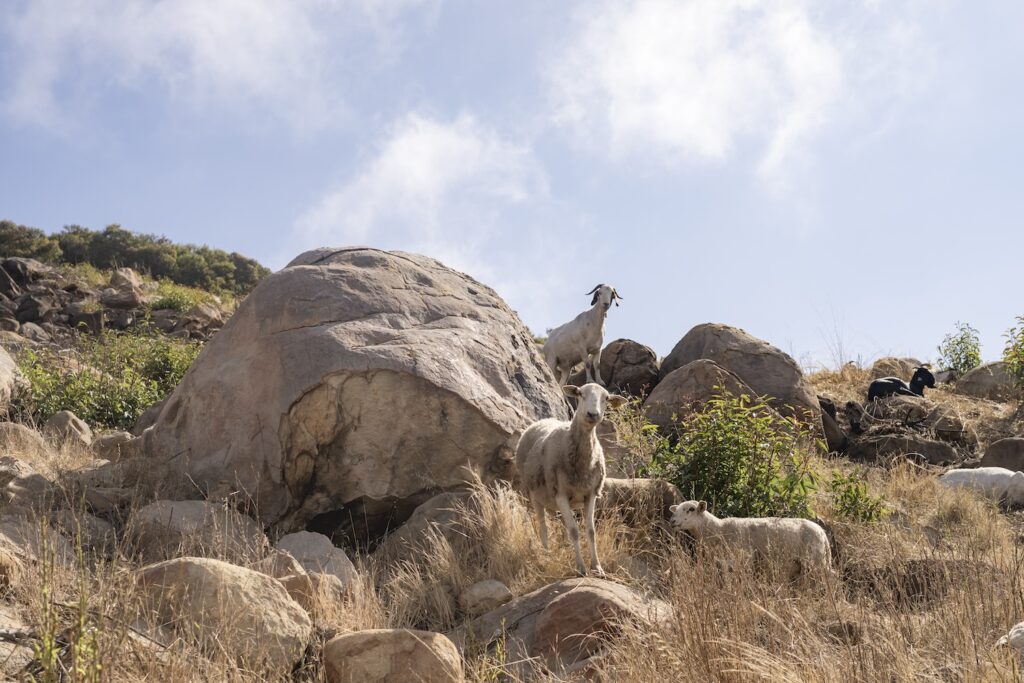
Grazing with a combination of sheep and goats helps suppress fire fuel and promotes the growth of native plants and grasses that retain water and build more fire resilient communities. The animals can climb through steep and technical terrain with extreme
efficiency.
In a region increasingly defined by the interaction between invasive grasses, drought, and wildfire, prescribed grazing offers one way to influence those conditions before ignition ever occurs.
The animals are also uniquely suited for the urban-wildland interface where much of Southern California’s wildfire risk exists. Sheep and goats can move through steep terrain, utility corridors, and suburban edges where machinery is difficult or ecologically disruptive. They require far less water than cattle and can be moved more safely through populated areas. “We move animals down suburban streets,” Cole told me. “That would be pretty tricky with cattle.”
The work itself is known as prescribed grazing, an intentionally designed form of land stewardship that operates similarly to prescribed fire. “We use a prescriptive approach that takes into consideration all of the variables a landscape reveals,” Cole explained. “We start with the goal. Why are the animals here? What is the land trying to tell us?”
Before any animals enter a landscape, Cole evaluates vegetation density, erosion, water movement, soil compaction, invasive species pressure, topography, wildlife corridors, and fire risk. The goal is not simply to remove fuel, but to understand the broader ecological condition underneath it.
“We don’t want to just treat the symptom of a landscape that is out of balance,” she said. “We want to look at the systemic cause of dysfunction.” That long-term perspective shapes the entire rhythm of the work. Shepherds organize their days around the biological cycles of the animals themselves: grazing, resting, rumination, water, heat, and recovery. Watching the sheep closely means learning when to stop.
“A good shepherd notices when the animals need a break,” Cole told me. “Animals have taught me how to stop and rest.”
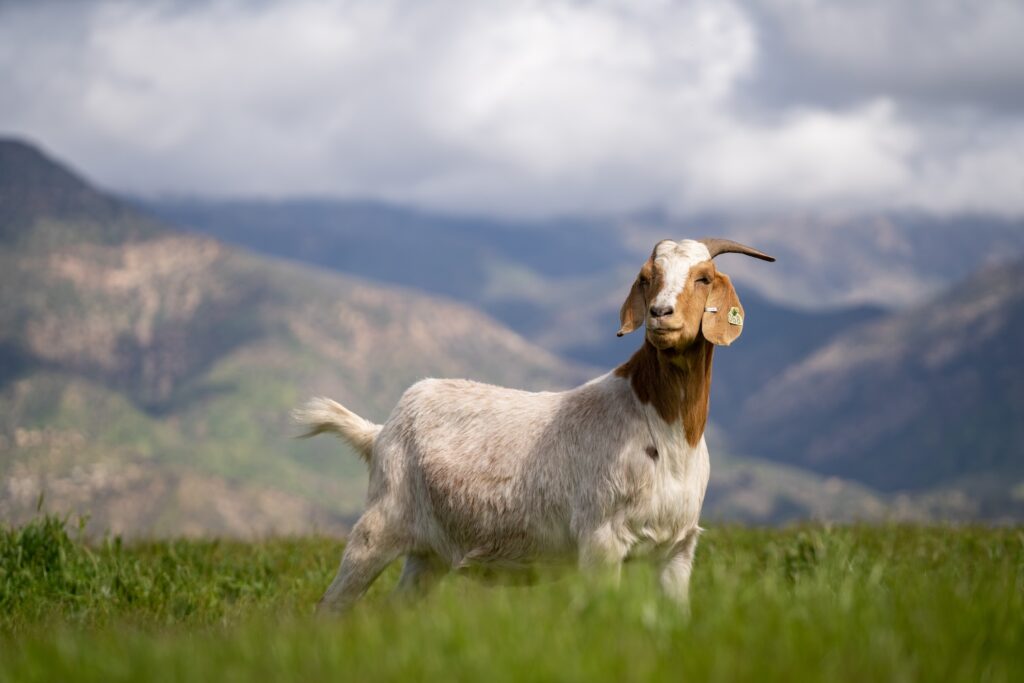
A goat from Shepherdess Land and Livestock Co.’s herd looks around for a spot to graze. Cole Bush describes goats as browsers,
making them a really efficient asset for targeted grazing efforts.
That relationship between animal behavior and human behavior became one of the most unexpected dimensions of learning about animal intelligence, especially as someone whose own relationship to land has often come through endurance sports. Cole spoke often not just about grazing, but about communication, nervous systems, and what animals reveal about ways of being in the world. “They just know inherently already inside their bodies what they need to do,” she said. “It’s a listening more than a thinking.”
The longer we spoke, the more the work began to feel less like vegetation management and more like a form of ecological attentiveness. The shepherd’s role was not domination or control, but observation, response, and rhythm. That philosophy would become critically important during the Los Angeles fires in January 2025.
“I’ve never experienced anything quite like the LA fires,” Cole told me. “I’m still recovering.”
When the fires erupted, social media quickly became an improvised emergency communication network. Cole saw a message posted online from someone offering trailer support for evacuations and immediately realized that her own equipment and experience might fill a critical gap.
“I have a unique skill set that a lot of people don’t have,” she said. “Working with animals in high-stress situations.”
Within hours, requests for help began flooding in. Cole organized a loose network of local horse owners, trailers, and volunteers before eventually helping form what became the Ojai Herd and Horse Network, a rapidly assembled evacuation support system for livestock and large animals displaced by the fires.
One of the most intense evacuations came during the Kenneth Fire in the hills near Agoura. A woman called Cole in distress, explaining that sheep stranded on a steep hillside behind the property could not be evacuated safely.
When Cole arrived, helicopters moved overhead while roads filled with smoke, emergency traffic, and residents trying to flee. The sheep were semi-feral and difficult to handle. There was little infrastructure for moving them safely and very little time.
“It was only experienced shepherds who could get those sheep off that mountain slow and steady and calm,” Cole said. “You only generally have one shot at approaching animals and moving them calmly. All it takes is one getting freaked out and everybody else gets freaked out.”
The evacuation required precision, patience, and restraint under extreme pressure. Cole and another shepherd moved the animals gradually, applying subtle directional pressure before stepping back and allowing the flock to respond together. Loudness or panic would have escalated the situation immediately.
“It’s a dance,” she said. The same principles that shaped prescribed grazing shaped the evacuation itself: calmness, observation, rhythm, body language, restraint. “We don’t use our voices loud,” Cole explained. “We move calmly.”
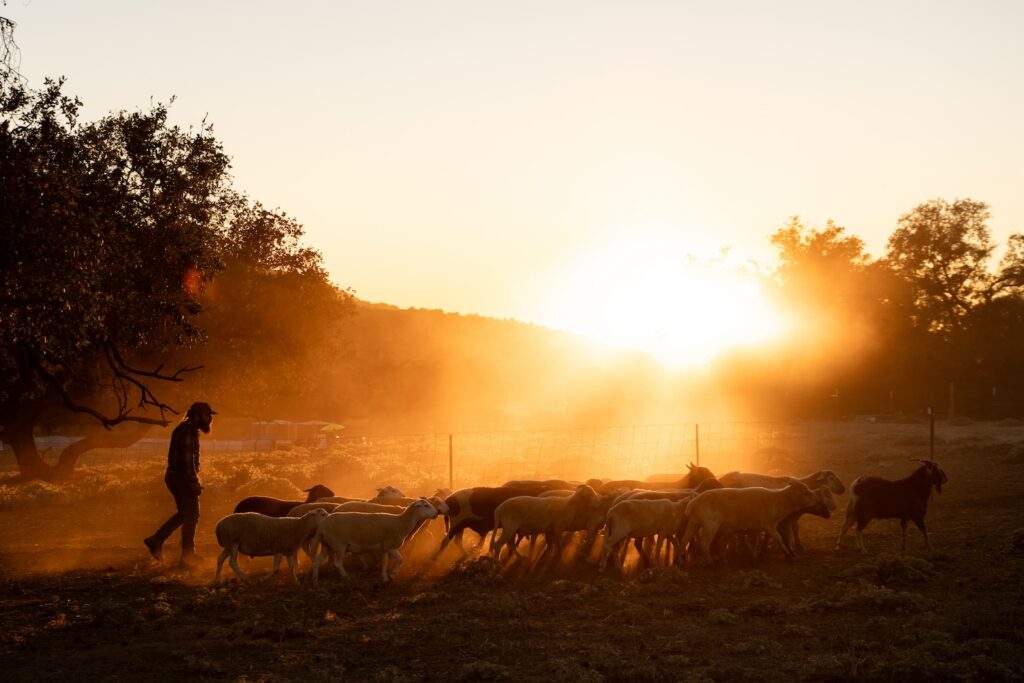
Dylan Boeken pushes a herd of sheep and goats toward a new grazing area in Ojai, California.
Driving away from the fire zone afterward, Cole described entering a strange emotional silence before the exhaustion and emotional weight of the experience fully arrived. “It was like the moment before a child starts crying after they fall,” she said. “That silence where you know the emotion is about to come.”
The aftermath of the fires continued to ripple outward months later. Cole continued caring for animals displaced during the evacuations, including sheep that had not been shorn for years and arrived requiring immediate care. But the experience also clarified something deeper for her about the role of shepherding itself in modern California.
“The modern shepherd is a form of activism,” she said.
Ojai-based photographer and filmmaker Liam Pickhardt has spent years documenting movement across Western landscapes shaped by recreation, labor, and environmental change, from surf communities and ranchlands to endurance athletes and working public lands.
Through both his photography and his years as a trail runner, Liam has watched the relationship between land stewardship and recreation become increasingly visible across Southern California.
“You have to give natural landscapes the opportunity to thrive,” he told me. “Properly managed grazing patterns help do that by pushing back invasive plants and allowing resilient native plants to strongly root across landscapes.”
When we began discussing this story together, we kept returning to the same realization: movement itself connected every layer of the issue. Animals move through landscapes. Fire moves through fuel. People move through trails, communities, and evacuation routes. Even climate change increasingly reveals itself through shifting patterns of movement, from smoke traveling hundreds of miles to fire seasons stretching longer each year.
Liam’s photography often lingers in the tension between beauty and instability that now defines much of modern California. His images move through drought-stressed hillsides, burn scars, grazing animals, and recreation corridors that still carry the visual mythology of the American West while existing under mounting ecological pressure. In his work, the landscape can feel expansive and cinematic one moment, then visibly fragile the next, revealing how climate change has begun to alter not only the land itself, but the way people move through and understand it.
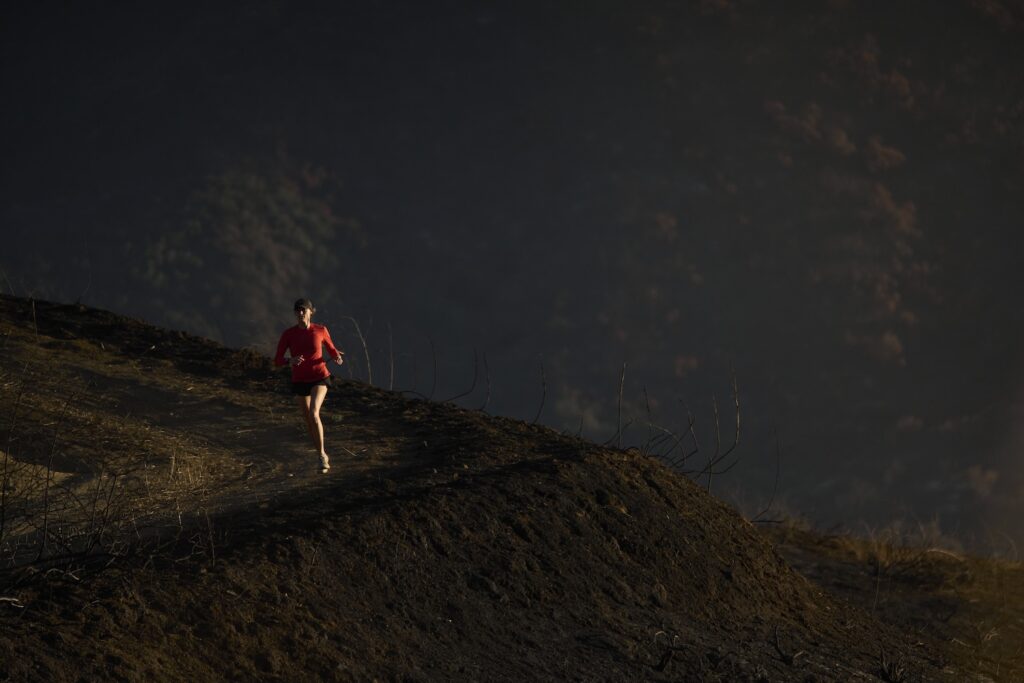
Emily Cornell runs along a fire road put in to help fight the 2026 Sandy Fire in Ventura County, California.
“There’s a tendency to separate outdoor culture from land stewardship,” Liam told me. “But the trails people run on and the open spaces people recreate in require active management now. They don’t just stay intact on their own anymore.”
For Liam, the connection feels particularly visible through trail running. Trail runners move through landscapes at a scale that reveals details many visitors never notice: subtle shifts in vegetation, erosion patterns after storms, the return of native species, or the spread of invasive grasses across a hillside. That intimacy creates a relationship with place that is rooted not only in recreation, but in observation.
“Trail runners interact with landscapes on a very intimate level, often finding the nuances in landscapes that more general observers do not always pick up on,” Liam said. “That intimate connection can really only be compared to the intimate relationships that animals have with a landscape. There is a love and reliance on the land that teeters on a symbiotic relationship. A lot can be learned about the health, resiliency, and transformation of land through the observation of trail runners and animals alike.”
The comparison may seem unusual at first, but it echoes the central theme that emerged throughout reporting this story: movement creates relationship. Shepherds learn landscapes through the movement of animals. Trail runners learn them through repeated passage across ridgelines, canyons, and fire roads. As Liam described it, both develop a familiarity with landscape that comes not from observation alone, but from dependence, repetition, and care. Both become attentive to change over time.
That separation between recreation and stewardship increasingly feels impossible to maintain in California. For years, outdoor culture often framed landscapes primarily as places of escape, freedom, and personal challenge. But climate change has begun collapsing the illusion that recreation exists separately from the ecological realities underneath it.
You cannot move through Southern California now without encountering the effects of wildfire. Burn scars remain etched into hillsides for years, while trails and recreation corridors close repeatedly due to fire, erosion, and post-fire flooding. Entire seasons become shaped by smoke, heat, and air quality alerts. What once felt permanent in California increasingly reveals itself as unstable, forcing both residents and recreation communities to reconsider their relationship with landscapes now defined as much by climate volatility as by beauty or escape.
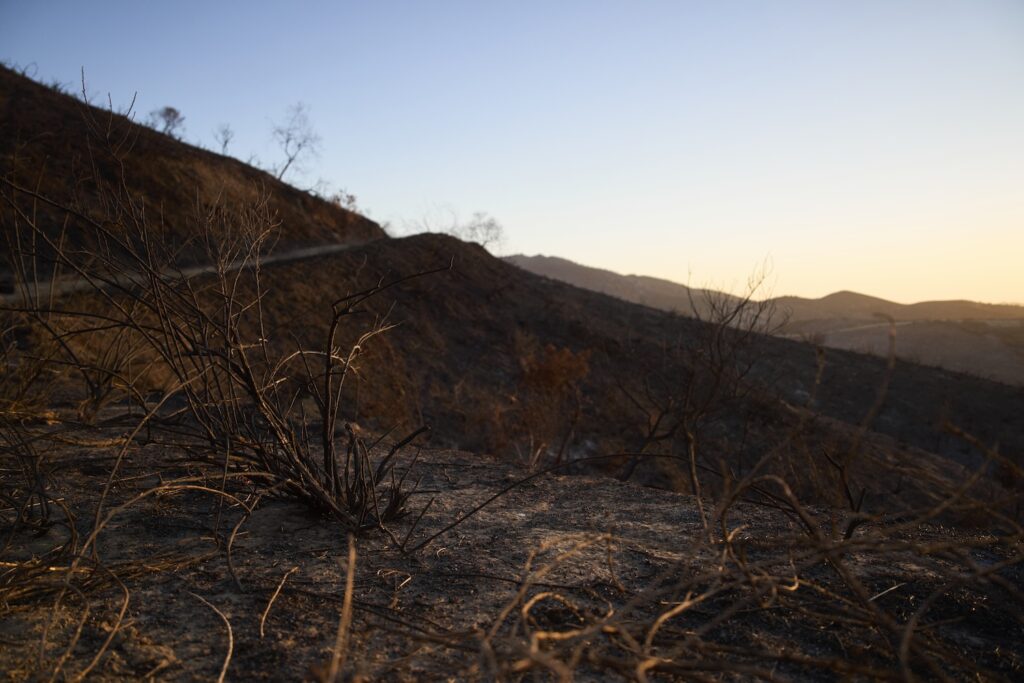
Plant remains after the 2026 Sandy Fire in Ventura County, California.
That changing relationship also raises questions about responsibility. “As much as I would love to say, ‘leave it to nature,’ we as humans must delicately advocate for the health of our landscapes if we want to keep recreating and living in the various communities we call home,” Liam said.
The idea echoes a larger shift occurring across California, where stewardship is increasingly viewed not as an optional conservation activity but as part of what it means to live and recreate in fire-prone landscapes.
In Ojai, wildfire adaptation has increasingly become part of community identity itself. For Liam, those connections are especially visible in Ojai, where recreation, working lands, and wildfire risk exist side by side.
“The Ojai Valley is unique,” he said. “The town sits in a bowl surrounded by open and wild spaces. With bottlenecks at all entry and exit points, the area could be susceptible to a fire disaster.”
Over the years, Liam has watched local organizations, ranchers, public agencies, and community groups increasingly focus on wildfire resilience as a defining challenge for the region.
Kalli O’Connor, Assistant Director of the Ojai Valley Fire Safe Council, described the shift less as an emergency response and more as a long-term process of cultural adaptation. Communities are beginning to understand that wildfire resilience cannot rely solely on suppression after ignition occurs. It requires visible stewardship long before disaster begins.
That stewardship takes many forms: prescribed fire, defensible space, fuel breaks, ecological restoration, public education, and targeted grazing. No single strategy functions as a complete solution. Wildfire adaptation in California increasingly depends on layered systems working together across agencies, landowners, conservation groups, and local communities.
For Kalli, one of the most important changes has been public awareness itself. Wildfire is no longer viewed as an occasional disaster that arrives from outside a community. Increasingly, residents are recognizing it as an ongoing reality that shapes how people build, maintain, and inhabit fire-prone landscapes. Preparedness becomes less about reacting to an emergency and more about cultivating relationships with the places people call home.
Cole’s perspective returns to a similar idea from a different direction. While prescribed grazing can reduce fuel loads and improve ecological function, she is wary of framing climate adaptation around individual heroes or singular solutions. “It’s not my story,” she told me quietly near the end of our afternoon together. “It’s our story.”
In the aftermath of the fires, national media attention arrived quickly around the evacuation efforts. But Cole spoke less about recognition than about community, mentorship, and trying to create pathways for others to enter the work.
“How do I lead from the back like a shepherd?” she asked. “How do I quietly help shepherd a movement instead of standing in front of it?” That question feels larger than grazing itself.
Southern California will continue to burn. Southern California will continue to burn. That reality is already embedded in the region’s future. Yet across the hillsides above Malibu, Ventura, and Ojai, new forms of stewardship are emerging around the realities of fire. Shepherds move animals through fuel-heavy terrain before ignition occurs, community organizations work to rebuild public understanding around preparedness and adaptation, and recreation communities are being forced into a different relationship with the landscapes they love. Movement through trails, mountains, and open space increasingly carries an awareness of the labor required to keep those places inhabitable at all.
Because landscapes are shaped by what moves through them. And right now, across Southern California, sheep and goats are helping shape what comes next.
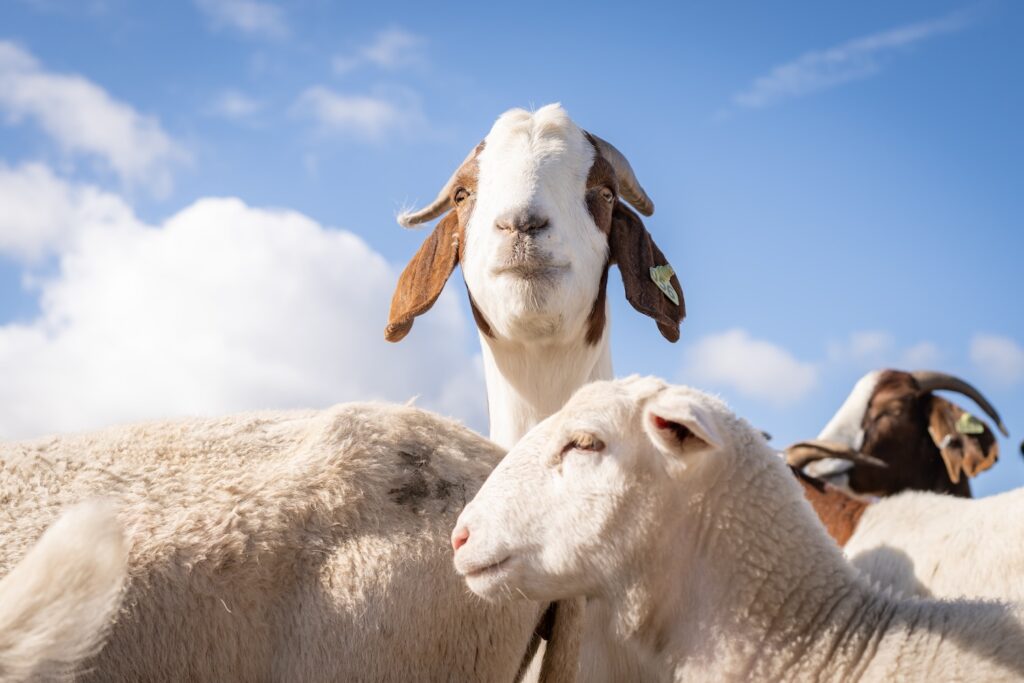
Animals from Shepherdess Land and Livestock Co. on assignment to help make Ventura County and the Ojai Valley a more fire
resilient community.

Author: Jonnah Perkins
Jonnah Perkins is a trail runner, writer, and photographer based in southwest Wisconsin. She found trail running after the birth of her first child and was soon podiuming ultra-distance races across the country. Perkins is also an organic farmer and has been working alongside her family for over a decade. Through her work in agriculture, […]
