
Investigating Antarctica’s Frozen Edge
Photos by POW Science Alliance member Dr. Ali Banwell
At the bottom of the world, a scientist is trying to answer one of the most consequential questions of our time: how long can Antarctica’s ice hold on?
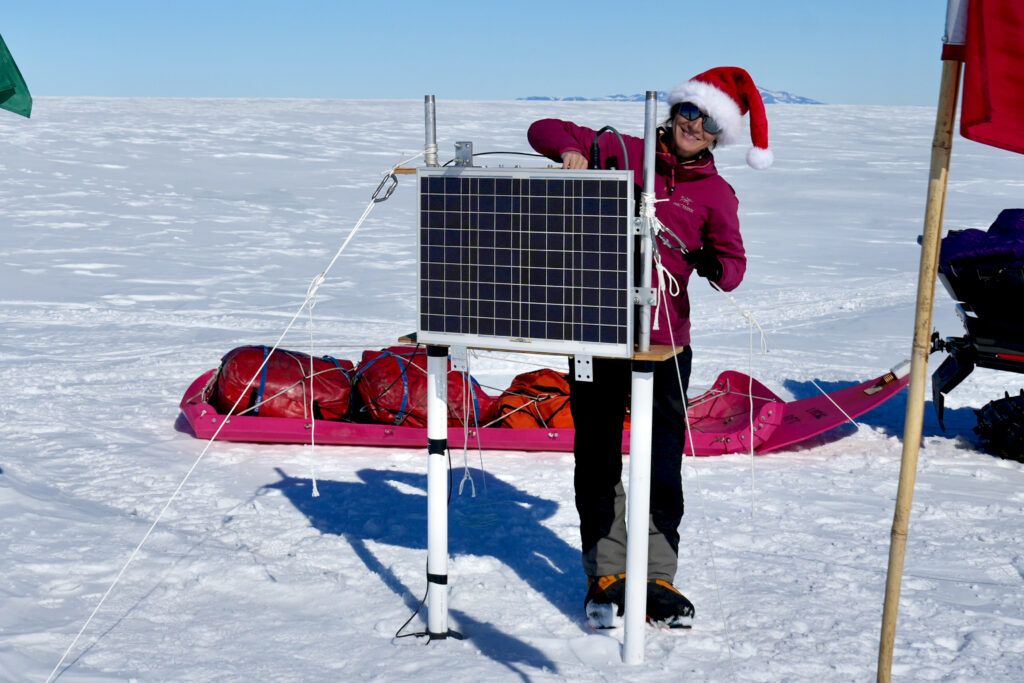
POW Science Alliance member Dr. Ali Banwell, a Research Scientist at the University of Colorado Boulder and Professor in Glaciology at Northumbria University, has spent the past field season on Antarctica’s McMurdo Ice Shelf. While there, she was planting instruments, navigating crevasses, and watching emperor penguins molt in the perpetual summer sun, studying the ice and the fate of the coastlines around the globe.
To understand why glaciologists lose sleep over Antarctica, it starts with one statistic. “If the entire Antarctic Ice Sheet were to melt, it would raise global sea levels by around 190 feet,” Ali explains.
While that scenario is a stretch, the mechanisms that could set it in motion are already happening, which is what makes her research so urgent.
Ice shelves hold back the Antarctic ice sheets, vast floating extensions of glacial ice that ring roughly 75% of the continent. “Ice shelves which buttress (or ‘hold back’) the glaciers flowing into the ocean,” Ali says. “Without these ice shelves, ice on land would flow more rapidly into the ocean, accelerating sea-level rise.” They are, in essence, Antarctica’s last line of defense.
Ice shelves are fragile. They crack, thin, and collapse, and scientists are racing to understand what makes some more vulnerable than others. The McMurdo Ice Shelf, near the U.S. research station on Ross Island, is a particularly fascinating and puzzling place to study this question. Ice shelves are generally expected to flow outward and toward open water, but here, something different is happening.
“Instead of simply flowing out to sea, parts of the ice shelf are actually being pushed into areas of land,” Ali explains. “This compression causes the ice to crumple into features known as ice shelf rumples, which are wave-like ridges that can stretch across the ice surface. In some cases, the ice within these rumples can even buckle and fracture.”
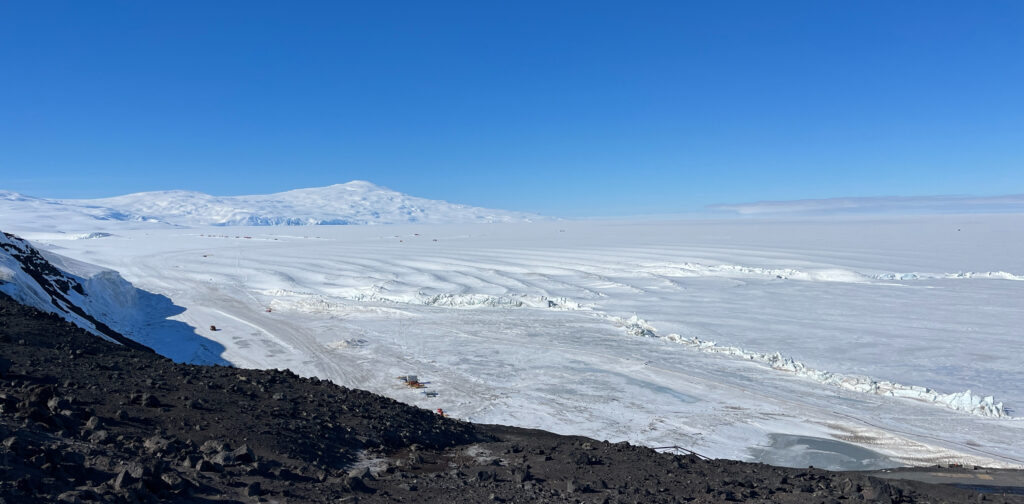
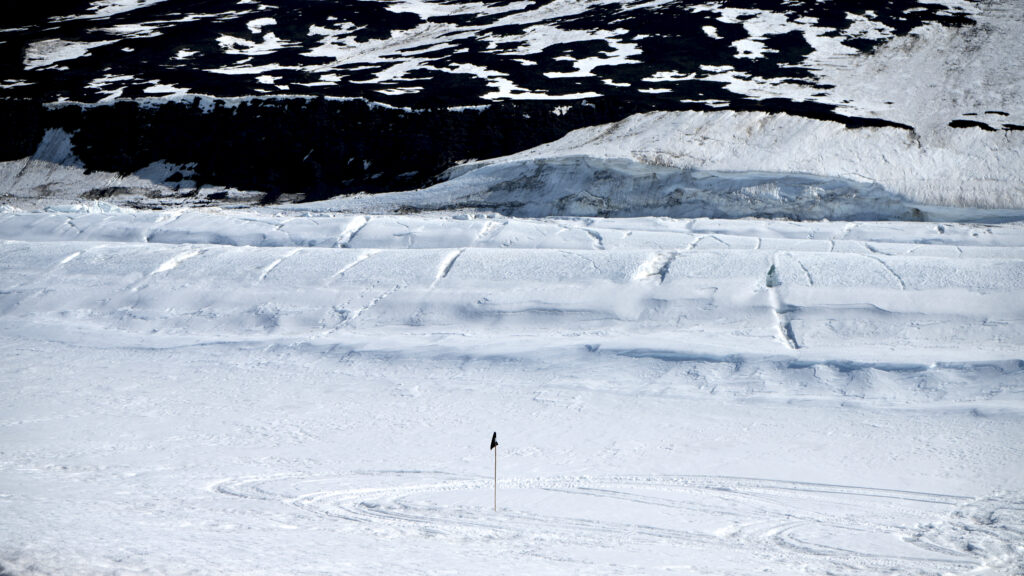
The central question driving her NSF-funded research is deceptively simple to ask but extraordinarily difficult to answer: “Do these rumples help hold the ice shelf together, or do they make it more vulnerable to breaking apart?”
“The answer matters because ice shelves play a critical role in slowing the flow of glaciers on land into the ocean, where their ice will contribute to sea level rise,” Ali explains.
Six Weeks on the Ice
Ali led a team of four onto the ice shelf for six weeks, traveling out each day by snowmobile across a landscape she describes as “vast, remote, and at times almost otherworldly.”
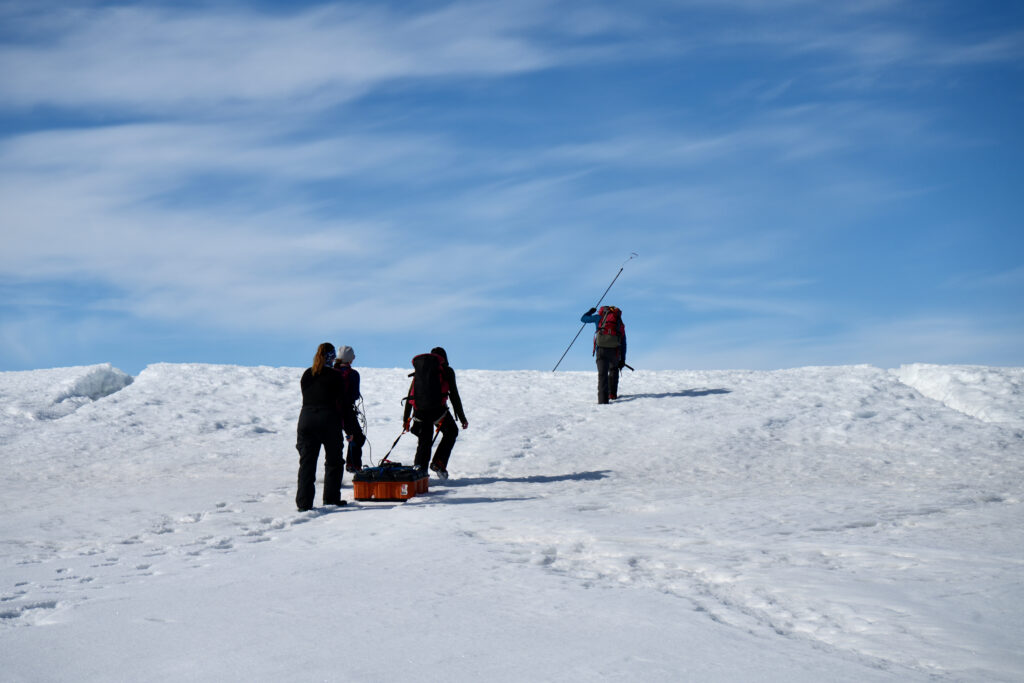
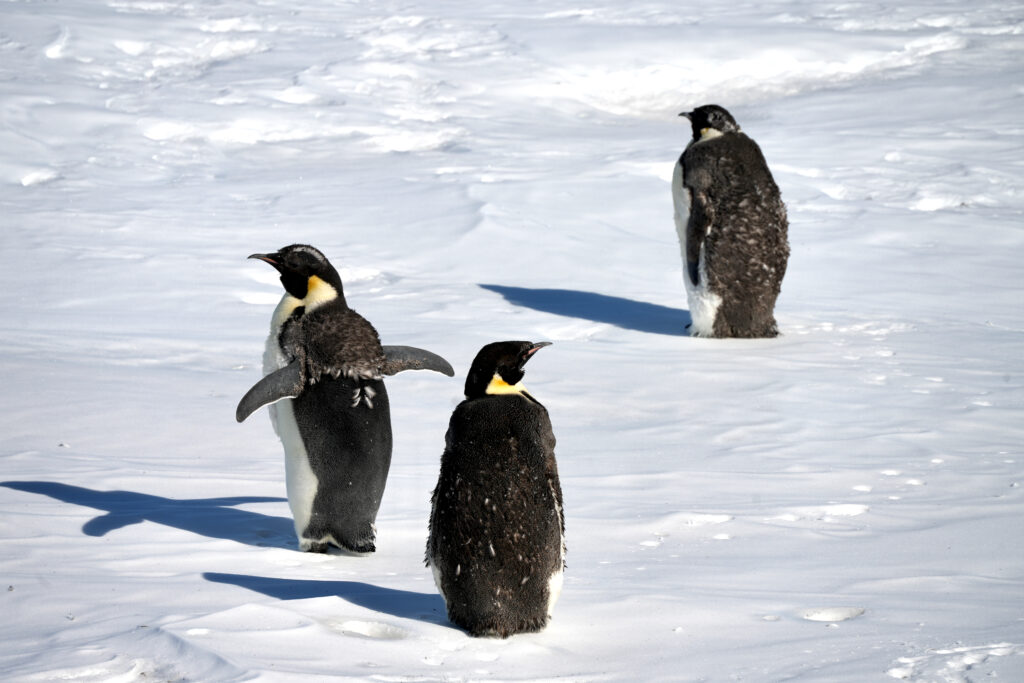
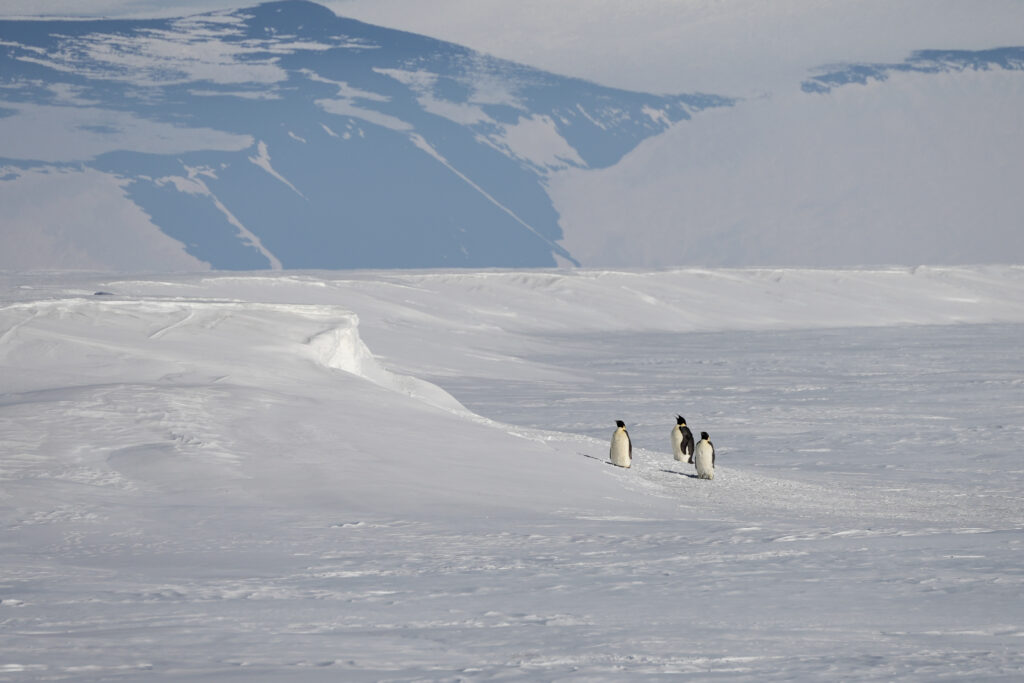
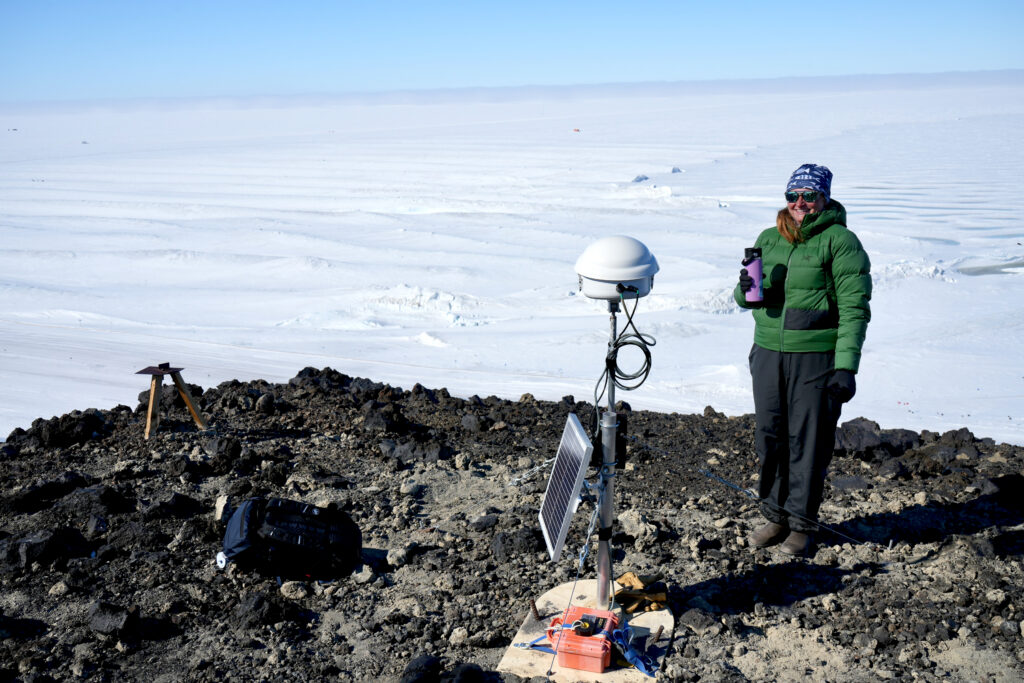
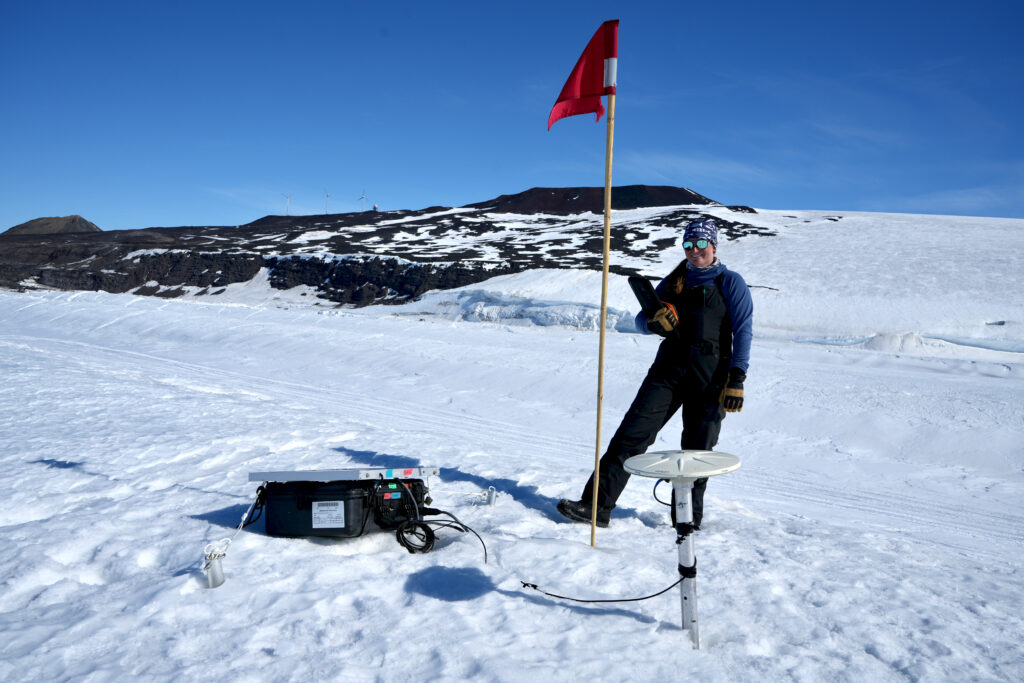
The team built a network of instruments across the rumple zone, including seismometers to detect cracking within the ice, GPS units precise to the centimeter to track movement, radar systems to measure ice thickness and internal deformation, and weather stations to capture atmospheric data. Cameras were positioned to take images every 30 minutes, creating a continuous visual record long after the team departed. Three emperor penguins mid-molt and disinclined to move became near-daily companions near the field site, offering the team an unusually close look at one of the continent’s most iconic animals.
“All of these instruments are still out there now, quietly collecting data through the Antarctic winter,” Ali says. “We’ll return next season to retrieve them and to start piecing together what they can tell us about the future stability of Antarctica’s ice shelves.”
Even before that data arrives, the field season has already delivered some striking early observations. “The glacier ice was moving faster than we had expected, on average, about one to two feet per day,” Ali notes. “That might not sound like much, but over time it adds up, and it’s a reminder of how dynamic these ice shelves really are.”
The season also brought unexpected warmth. “This was the warmest of the seven summers I’ve worked in Antarctica,” she says. As snow melted away earlier than usual, it exposed something unsettling beneath. “We found a far more fractured ice surface. The team encountered more crevasses than anticipated, a sobering reminder of why mountaineering training is an essential part of working here.”
The Big Picture
When Ali and her team return next season, they’ll bring back months of continuous data, including seismic signals, GPS tracks, radar images, temperature logs, and half-hourly photographs, all captured during one of the most extreme winters on Earth. Cross-referenced with satellite observations, this dataset could fundamentally sharpen our understanding of how ice shelves behave under stress.
“As global temperatures continue to rise, melting around Antarctica’s edges is expected to increase, making ice-shelf break-up events more frequent,” Ali warns. “This will allow more ice from the continent to flow into the ocean, accelerating global sea-level rise.” Current projections put that rise at roughly one to three feet over the next century, enough to displace tens of millions of people living in low-lying coastal regions around the world.
One to two feet of ice movement per day. One to three feet of sea rise per century. In Antarctica, even the smallest numbers carry enormous weight, and the scientists willing to go there, drill into the cold, and listen to the ice are the ones helping the rest of us understand just how much is at stake.
The Scientists:
Allie Berry (PhD student) – University of Maine
Alison Banwell (PI) – University of Colorado Boulder/Northumbria University, UK
Ryan Cassotto (Co-PI) – University of Colorado Boulder/University of Maine
Michela Savignano (PhD student) – University of Colorado Boulder

Author: Stacie Sullivan
Stacie always knew she wanted to pursue a career in the ski industry from a young age, having first clicked into skis at the age of 4 and writing her 8th grade career project on being a professional skier. While her dreams of becoming a professional athlete didn’t quite pan out the way she planned at […]
