
Meet Your POW Chapter Field Organizers
Photo by Anastasia Wilde
Think advocacy is just for policy wonks? Meet the powder-loving field organizers running POW’s Chapter Program, proving otherwise.
They’re at home on the river and at the town council meeting, fired up about adrenaline sports and letters to the editor. Protecting the places we love means showing up for both. That’s the idea behind POW’s Chapter Program: a grassroots network connecting mountain and coastal communities to advocacy year-round.
Meet the people making it happen on the ground, and find out why your first town council meeting is way less scary than it sounds.
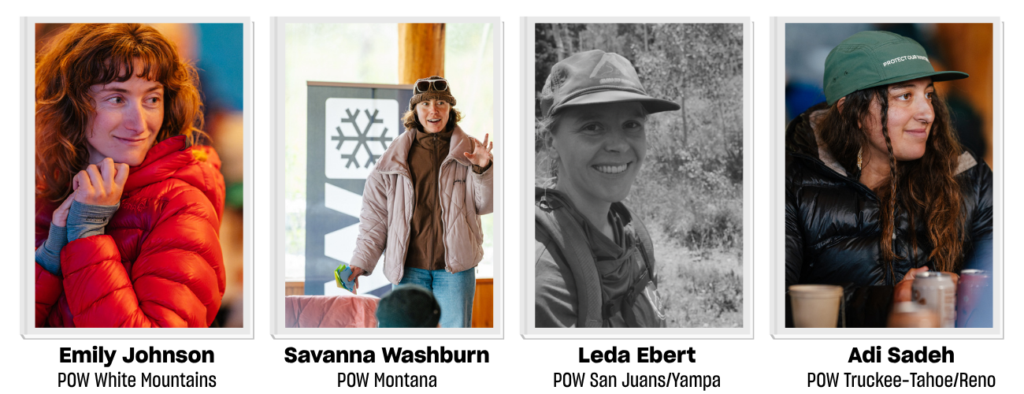
To start off, tell us about you! Where are you from? What are your hobbies? Why are you stoked to be a field organizer?
Emily Johnson (White Mountains): I’m originally from Farmington, ME and moved to the White Mountains of New Hampshire with my family at age 7. I was so lucky to grow up with snowy winters, parents who took me skiing every weekend, and woods access from my backdoor. I have loved skiing, snowboarding, and hiking for as long as I can remember, and now I spend a lot of time mountain biking and bikepacking, too. I also like to craft, bake, and snuggle my dog on the days when I’m indoors.
It is a privilege to be a community organizer and play a role in building the collective power of the many to take on the outsized power of the few, especially in the name of protecting ecosystems we all love and rely on.
Savanna (MT): I am (mostly) a lifelong Montanan, where I grew up in the Gallatin Valley. I have always been in awe of the American West’s wide-open spaces and tight-knit communities. Like most kids who call Montana home, I grew up with an appetite for skiing, skinned knees, and lying about the size of the fish I caught.
I am passionate about connecting people to the policies that impact their lives, their landscapes, and their ability to recreate. We all deserve a seat at the table and should have a voice in shaping a future that affords us clean water, clean air, and a healthy planet.
Leda (SW CO/Yampa): I was born and raised on the Western Slope of Colorado. I loved growing up in the diversity of this geography, and enjoyed undergraduate study in the Midwest and a few seasons of work in Utah, but the Western Slope feels like a great place to call home. My hobbies include distance and trail running, social dancing, snowboarding (and dabbling in splitboarding), backpacking, and gardening.
I’m stoked to be an organizer for POW because it brings together two of the most important things in my opinion: climate action and building resilient communities.
Adi (Truckee-Tahoe/Reno): I grew up in Colorado, where snowboarding, hiking, and exploring the outdoors sparked my love for the natural world. After studying Geography at the University of Colorado Boulder and getting involved in environmental and civic organizing, I eventually settled in Truckee, California, where I combined my passion for ecology with advocacy through conservation work and climate action in the outdoor industry.
I’m stoked to be a field organizer because it brings together everything I care about—protecting the places we love, building community, and empowering people to take action. When I’m not working, you can usually find me snowboarding, surfing, camping, or biking!
What’s your “why” in one or two sentences?
Emily (White Mountains): My relationship with the outdoors has brought me joy, healing, inspiration, comfort, and growth. I believe clean air, clean water, and a healthy planet is a fundamental right we should all enjoy.
Savanna (MT): My ‘why’ is a numbers game. I feel stronger in numbers, and I think you probably do too. When people come together around a shared purpose, even seemingly impossible challenges become solvable. That’s why I believe movement building is the antidote to apathy.
Leda (SW CO/Yampa): I’ve always been drawn to the intersection between human and environmental work. I feel humans are part of the outdoor world, and the joy and challenge of thinking about how to promote a sustainable dynamic within that relationship is my overarching “why”.
Adi (Truckee-Tahoe/Reno): My why is fighting for a future where the climate crisis no longer threatens our lives, our communities, or the ecosystems we depend on. I believe the path to that future is through grassroots organizing and movement building, because when people come together to build collective power, we can confront the systems driving the climate crisis and create a just, resilient world where everyone can thrive.
What’s a moment outdoors that made you realize you wanted to fight for the places we love?
Emily (White Mountains): I can recall a whole collection of moments that call me to this fight–quiet ones sitting alone by a river and joyful ones whooping with friends against loud gusts of wind on a high summit. These moments and places are too valuable not to fight for.
Savanna (MT): I was afforded a childhood that was colored by the outdoors. I spent summer afternoons fishing on banks, lazy days counting bugs, and was on skis before I could walk. I spent most summers with my grandparents, who had a cabin 30 minutes outside of Yellowstone National Park. My lifetime of access to wild places has given me a sense of wonder, belonging, and perspective. So rather than a specific moment to point back to, I point forward to a future where wild places can continue to inspire childhoods to come.
Leda (SW CO/Yampa): In high school, I attended a semester school where I spent a lot of time outside in the foothills of the Sierra Nevada. Learning about the systems threatening our environment, wildlife, and biodiversity was eye-opening. Seeing firsthand the beauty of healthy ecosystems that sustain the world instilled in me a deep sense of responsibility to protect the places I love.
Adi (Truckee-Tahoe/Reno): Ever since I was young, I’ve always been engaged in community organizing and civic engagement. From my first lobbying trip to D.C. in high school, to conservation work, youth voter engagement, and immigration justice work in college, to tackling climate change with POW, this work has always been a deep part of my purpose.
I don’t know if there was one specific moment for me. I just feel incredibly grateful that I grew up with access to nature and learned from a young age that our connection with the land is sacred. I’ve always known that, in our current system, we have to fight to protect the places we love.
Why do you think local advocacy matters as much as the big national fights?
Emily (White Mountains): Big national fights are just that–so large in scale and scope that it’s easier for your voice to be drowned out. Local advocacy presents real opportunities for small communities to find common ground and improve their day-to-day lives. Making a difference in your community can be really empowering, and it is so important in advocacy for people to realize their power.
Savanna (MT): National fights get all of the attention. Local fights not so much. But chances are, local decisions have a much larger impact on your day-to-day life. Decisions made at the state, county, and city level can mean the difference between how much affordable housing is built in your community, how often streets are cleared of snow, and even how much funding your local library gets. The fights that plague news headlines aren’t necessarily the ones that will decide your rent.
Local advocacy is where our voting power can stretch the furthest. Local elections are plagued by low voter turnout, meaning elections can be won or lost by the thinnest of margins. Writing letters to the editor, making public comments at council meetings, or just educating your peers on issues can be the difference in electing someone or passing policies that you see yourself reflected in.
Leda (SW CO/Yampa): What I find most exciting about local advocacy is two-fold: First, it’s based around what’s in your backyard. It can be hard to track what’s happening on a national or even state level, and hard to feel like your actions or voice will make a difference, but it’s easy to stay plugged in and engaged on what’s local and directly relates to your community.
Second, local advocacy often occurs at a scale where outcomes hinge on small margins, which makes impact very possible. Rural electric coop elections are sometimes won or lost by 8 votes. Clean energy can either be approved or denied based on who turns out to make public comment. Relatively small actions can have a huge impact on local issues and outcomes that have a larger impact than your local community, but the change starts with friends and neighbors working together to build an engaged community.
Adi (Truckee-Tahoe/Reno): Local advocacy is where real change begins because every movement starts within a community before it grows into something larger. While national campaigns are essential, lasting progress is built through grassroots organizing that strengthens local communities and creates momentum for broader change. Actions like writing letters to the editor, speaking at city council meetings, and organizing neighbors amplify community voices and hold local leaders accountable. Because local officials are often more accessible than national leaders, people have a greater opportunity to influence decisions that directly affect their lives. By building power at the local level, we strengthen civic engagement, inspire other communities to act, and lay the foundation for transformative social and political change.
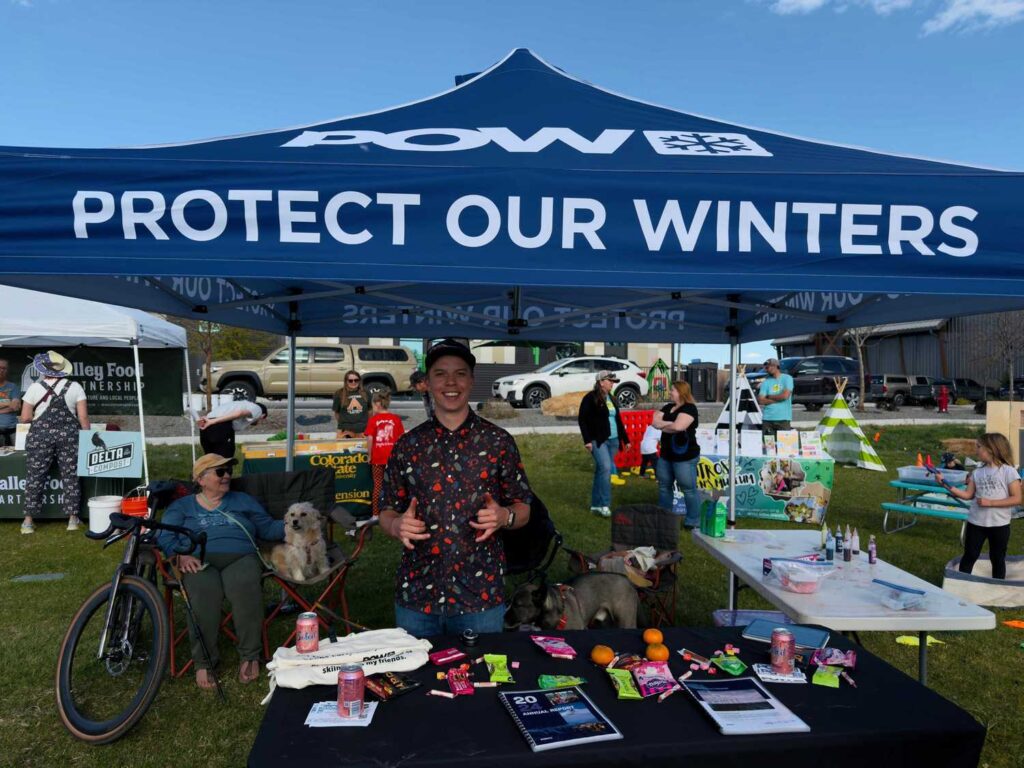
What’s a local win (big or small) your chapter has helped make happen?
Emily (White Mountains): Earlier this year, our sister organization, POW Action Fund, helped Laurel Boivin–a NH native with over 30 years of experience at the intersection of energy, environmental policy and compliance, community relations, and communications–win election to the NH Electric Coop’s Board of Directors. As a woman working in energy and the environment, Laurel brings a new perspective to the Board, and it’s a huge win for NH!
Savanna (MT): As I mentioned before, local advocacy is one of our most important tools for shaping our everyday realities. One of those everyday realities is our electric bill. This year marks NorthWestern Energy’s latest attempt to update its IRP, a long-term energy planning document that outlines how NWE will generate and supply electricity over the next 20 years.
NorthWestern’s unveiled plan misses the mark. It continues to favor gas, coal, and nuclear over affordable wind and solar, despite the company’s pledge to reach net-zero emissions by 2050. By ignoring clean, low-cost energy and storage, NorthWestern is locking customers into higher bills for decades.
This summer, I worked with the Bozeman chapter to host a community bike ride where we rode for an hour, found a creek to dip our toes in, and then gathered to write public comment on the IPR. Getting folks engaged with a highly technical planning document that has huge repercussions for Montana’s energy future was a win in my book.
Since then, chapter members have attended Public Service Commission hearings, submitted written comments, and encouraged others to speak up about Montana’s energy future. It’s a reminder that local wins don’t always look like passing a bill or stopping a project. Sometimes, they look like helping your neighbors realize they have a voice.
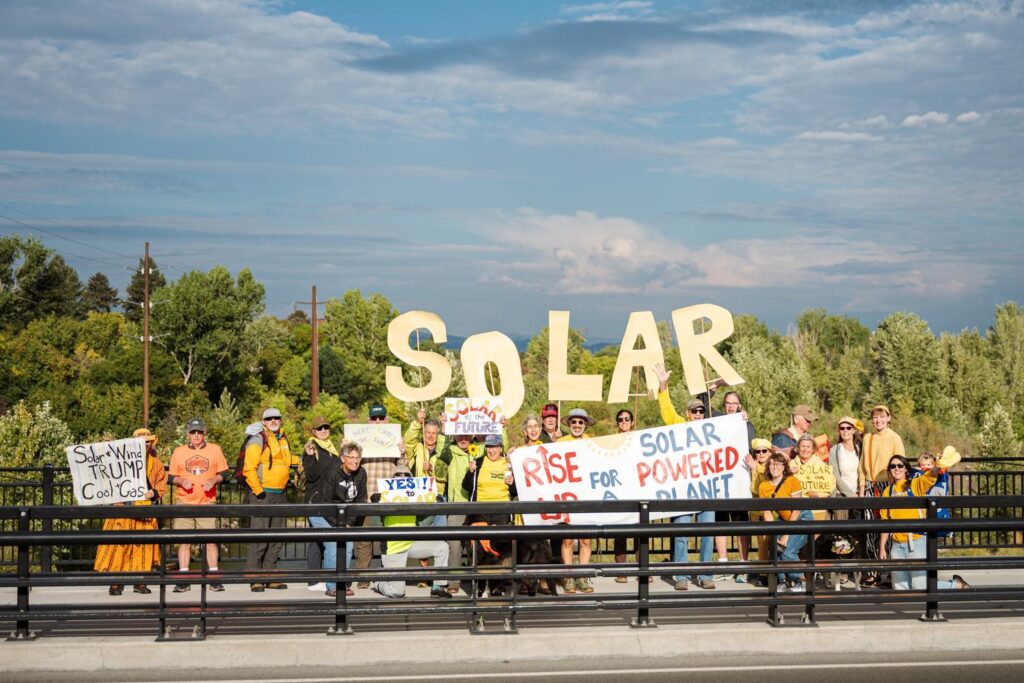
Leda (SW CO/Yampa): Early in 2026, the moratorium on battery energy storage systems (BESS) was lifted in La Plata County. I credit this win in part to several locals who made or submitted public comments in favor of lifting the moratorium, which is a meaningful start the presence of POW chapters on the Western slope.
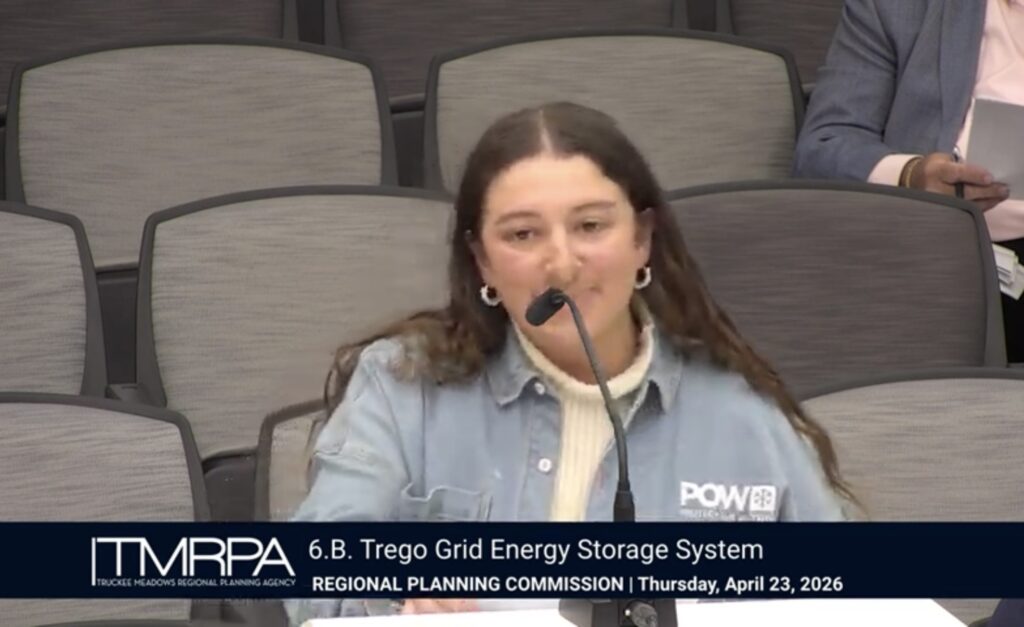
Adi (Truckee-Tahoe/Reno): POW Reno’s main focus this year has been building what we need! We have centered our work on clean energy to meet our decarbonization goals. I’m proud to share that we had a big win in April, advancing 200 MW of battery storage onto the grid by advocating for the TregoGrid project, which passed!
POW Tahoe’s main focus this year is shifting who decides. Election season is right around the corner, and we are working on increasing voter turnout in CD3. This has a huge impact at the local level, driving change federally!
If you could get one policymaker to spend a day doing your sport with you, who would it be and what would you want them to see?
Emily (White Mountains): Maybe I’d take a certain Texan Senator who accepts the highest bribes from the fossil fuel industry into the mountains and let him be moved to tears by the beautiful, magical, life-giving spaces he’s selling out, but I’d probably much rather go skiing with AOC and strategize to win the Green New Deal.
Savanna (MT): I’d choose Jeanette Rankin. As the first woman elected to Congress and a lifelong Montanan, she understood that courage often means standing alone for what you believe is right.
I would take her huckleberry picking and spend a lazy summer day with stained hands and burrs caught on our clothes. I’d want her to experience the quiet beauty of the landscapes that so many of us are working to protect and to see firsthand how climate change is affecting our forests.
More than anything, I think she’d appreciate that today’s outdoor advocates are carrying forward the same belief she championed: that ordinary everyday people have the power and responsibility to shape the future.
Leda (SW CO/Yampa): I would love to go for a trail run (aka power hike) with Bernie Sanders. I admire his advocacy, which has taken environmental justice and meaningful climate action into account. Given what’s happening at the federal level, I would want to explore Bears Ears National Monument with Bernie and hear his thoughts on how we can effectively advocate for the protection of such an incredible place.
Adi (Truckee-Tahoe/Reno): Alexandria Ocasio-Cortez & Zohran Mamdani! I would definitely take them snowboarding in Tahoe and, of course, take them to the lake and a local brewery afterward. It would be the best day ever to be able to chat with these two and share some adventure time.
What’s the easiest first step for someone who wants to get involved with your chapter?
Emily (White Mountains): Sign up on POW Connected to join your local chapter HERE! We post updates and info on when and where our chapter meets. Or please email me at [email protected] with any questions.
Savanna (MT): Sign up on POW Connected and join your local chapter HERE! We post updates and info on when and where our chapter meets. Or please email me at [email protected] with any questions, and I can get you up to speed on our chapter happenings.
Leda (SW CO/Yampa): Come to a monthly meeting! The POW San Juan Chapter meets in Durango, and the POW Yampa Valley Chapter alternates between Zoom and in-person meetings in Steamboat Springs. Attending a chapter meeting is a very low-key way to learn more, meet other folks involved, and ask any questions you may have. You can also sign up to join your local chapter on POW Connected HERE, or email me at [email protected] with any questions.
Adi (Truckee-Tahoe/Reno): Sign up on POW Connected and join POW Tahoe or POW Reno HERE! We post updates and chapter meetings there. You can also join us in Truckee or Reno at one of our chapter meetings! Feel free to even shoot me an email: [email protected].
What upcoming work are you most excited about in your chapter?
Emily (White Mountains): New England’s chapter program is just getting started, and I’m looking forward to our FIRST POW White Mountains Chapter meeting this September 8! It will be a lovely opportunity for folks in my community to learn more about POW, meet like-minded neighbors, and discuss plans to talk to voters in NH’s CD1 this fall (which I’m also excited about).
Savanna (MT): Midterms are upon us, meaning that our chapters will be hitting the ground running! I’m especially excited about helping more people get involved in civic life this fall. We’ll also create opportunities for our community to learn about the issues affecting our public lands and climate, connect with one another, and participate in our democracy in meaningful ways.
Leda (SW CO/Yampa): I’m really stoked about chapters growing and volunteers stepping up to leadership roles. I’m looking forward to working closely with POW volunteers in leadership positions to make the chapters successful, impactful, community-oriented outlets and places for outdoor enthusiasts to work towards our shared goals.
Two specific projects I’m excited for chapters to work on are the clean energy projects in Montezuma and Routt counties. Between both projects, almost 500 MW of clean energy is on the line, and I think chapters turning out to make public comment or submit letters to the editor could have a huge impact on the outcomes.
Adi (Truckee-Tahoe/Reno): This is a BIG year for us! It’s a midterm election year, and I couldn’t be more excited to do this work. I love the energy, momentum, and all-out sprint that comes with election season, and I’m deeply passionate about turning people out to vote.
This is a critical moment for our country, and we need to give it everything we’ve got. Real change starts locally. We organize, build movements, and engage our communities—and those efforts create a ripple effect that grows into meaningful change at the state and federal levels. It all starts here!
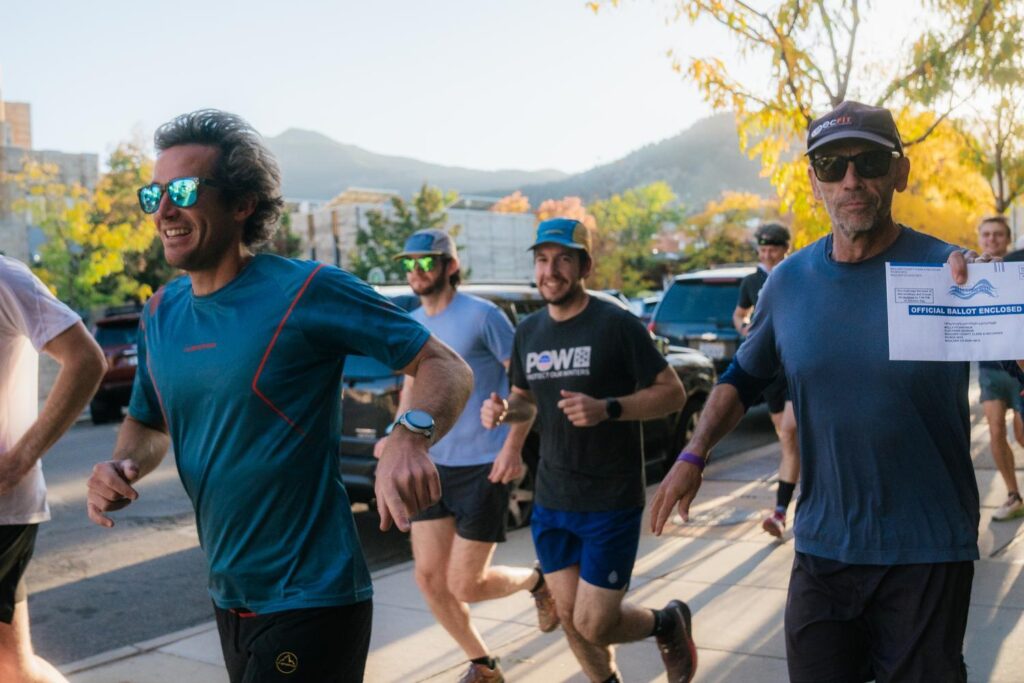
Any advice for someone nervous about attending their first town council meeting or advocacy event?
Emily (White Mountains): You don’t have to be an expert to be an advocate! The most powerful and influential tool you already have in your advocacy tool belt is your story. Sharing why you care moves other people to care, and that’s the goal here.
Savanna (MT): I get nervous too, and that’s okay. Making public comment or speaking on behalf of an organization can feel intimidating. The good news is that civic engagement is like a muscle; the more you use it, the stronger and more natural it becomes.
Like anything worthwhile, advocacy comes with a learning curve. You don’t have to be an expert to get started; you just have to show up. Most importantly, you won’t be doing it alone. POW’s advocacy is built on community. Whether you’re attending your first council meeting, writing your first letter to the editor, or giving public comment for the first time, there will always be someone to help you prepare, answer questions, and cheer you on.
Leda (SW CO/Yampa): Just showing up to things is sometimes the biggest first step. You don’t have to be an expert or know everything on a topic to show up to a county commissioner meeting or write a comment about what matters to you in your community. It’s easy to think that if you don’t know enough or have never done something, you shouldn’t get involved because there’s the risk of making a mistake or feeling out of place. This couldn’t be further from the truth. Making your voice heard can be as simple as writing a two-minute public comment about what you value, and it can make a difference. You don’t have to be an expert, or devote hours, it’s ok to be nervous and unsure, but show up anyway! And it always helps to bring a friend :).
Adi (Truckee-Tahoe/Reno): You don’t need any experience, just show up! Taking that first step is often the hardest part, but you’ll have access to training, resources, and a supportive community every step of the way. We’re building this movement together, and we’re here to empower you with the tools and support to create meaningful change.
