
In Steward·ship, Luc Milam and his wooden boat, Holiday, pay it forward across Maine’s wild islands
Photos courtesy of Luke Kaneb
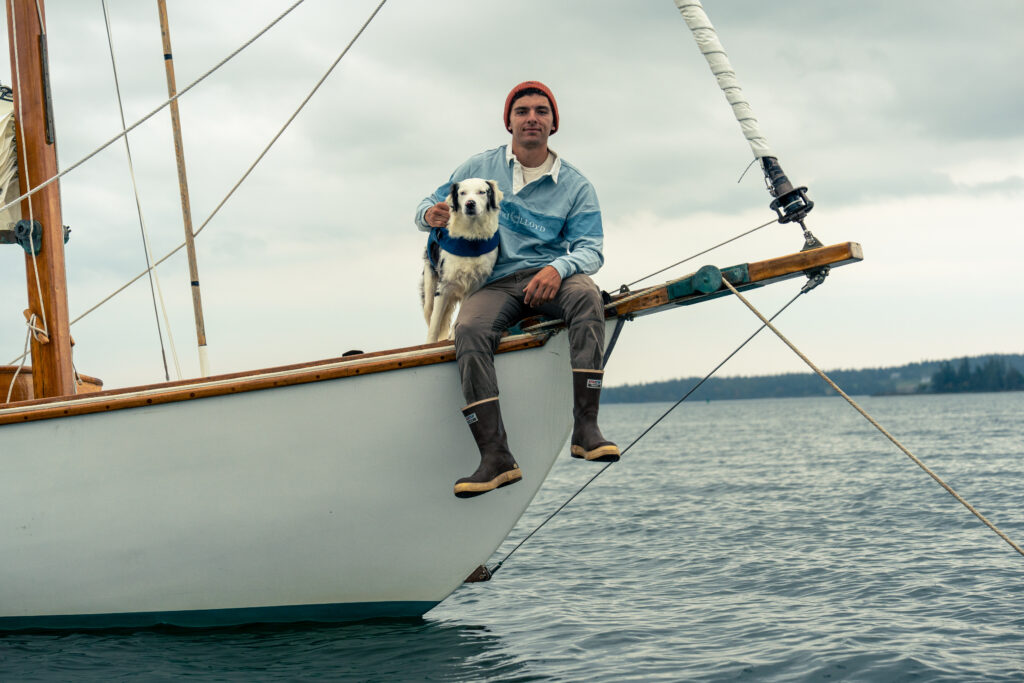
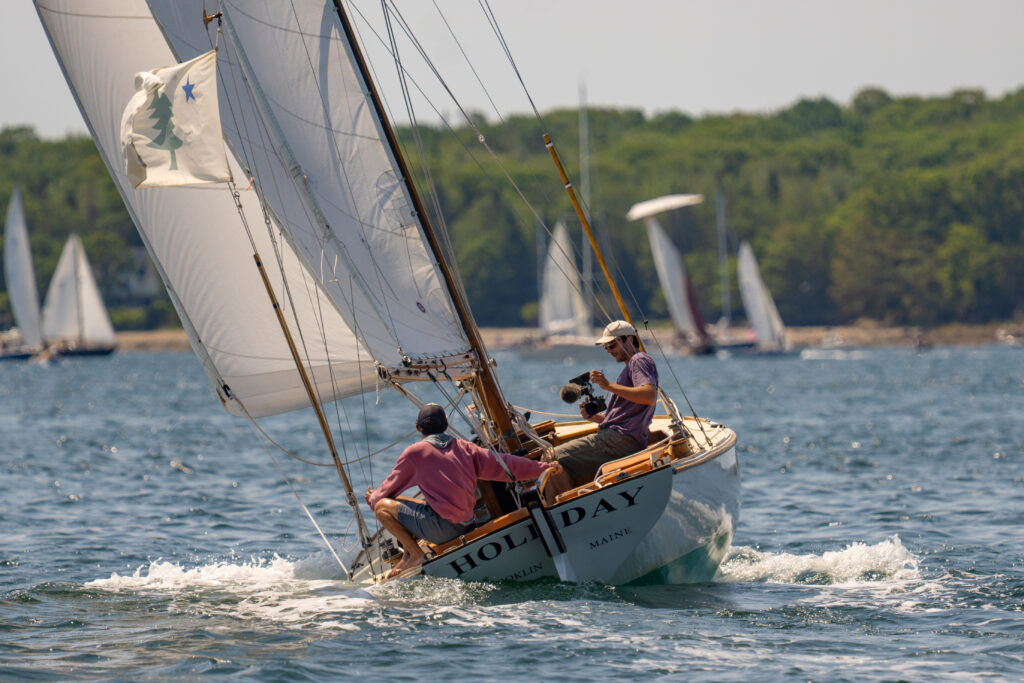
Steward·ship, a new film from POW Creative Alliance member Luke Kaneb and sailor Luc Milam, is about showing up and caring for the people, places, and things around you so future generations can enjoy them. The film stars Milam and his wooden ship, Holiday, as they practice stewardship across Maine’s wild islands.
The ability to experience and enjoy truly wild spaces isn’t a given. It’s a privilege. And as with anything worth spending time doing, the experience is that much sweeter when earned. For Luc and Holiday, keeping the boat in tip-top shape, day in and day out, year-round, translates well to Luc’s passion for looking out for Maine’s islands that bring him so much joy. You get back what you put in, and that ethos is the foundation for the film.
POW caught up with Kaneb and Milam to talk about the film’s motivations and how the duo hopes viewers will receive the message.
How did you first come across Luke and Holiday, and how did the idea for the film come about?
Luke K: Luke was a mutual friend of a few of my friends. He was interested in doing a trip and filming it. I was more interested in filming him. He was sanding down an old wooden boat in the middle of winter on a Friday or Saturday night, and I think that’s what interested me. I like people who do stuff, and that’s what got me interested in the story.
What’s the background of you and Holiday, and how did you end up with this boat?
Luc M: The origin story starts with this schooner, this 130-foot-long ship that sails around the coast of Maine. I was living out in Washington State, doing the dirtbag van life thing, and I wanted to go to Alaska. They shut the borders down [during COVID], so I shot back on a whim to hop on this schooner. What hooked me is that I got to fall in love with this place, but then, time after time, I watched other people fall in love with it too. I fell in love with Maine, and then with sailing in Maine.
I bought a small fiberglass boat on an “I bet you won’t” dare from a friend, and I realized what was missing was the wood and the wooden boats. I saw this boat, Holiday, on Facebook Marketplace, of all places, and messaged the guy and was just like, “I can’t afford it, but it’s a beautiful boat, and he kind of just said, ‘Let’s chat.’” You know, he saw a young person looking at a wooden boat.. and, yeah, long story short, we hashed out a way to pay it off over time, and I just paid it off a few months ago. The only way I afforded it was by living on board in the summertime and being completely committed. It’s a lot of sacrifice, but it’s also giving me 10x what I put into it.
What are your personal relationships to Maine? What does Maine mean to you now?
Luke K: My uncle lived on an island in Maine when I was growing up, so my relationship to Maine was visiting him and sailing with him on a small wooden sailboat. He just passed last week, unfortunately. My whole intro to this world of Maine and sailing is a testament to him. I noticed how many people up here have something they really work on outside of their job. Everybody has a craft and is really working with their hands. It’s got this grit to it that you tend to find more in the North Woods.
Luc M: The grit is definitely what intrigued me, because as people, we’re all feeling like we live in a superficial day and age. The coolest part is that you meet these old salts around here, and they’re not living the way they’re living because it’s cool; it’s just what they do. They’re passionate about it, and they look out for their neighbors. I had no idea that Maine had over 4,000 islands and an amazing coast. I came off a finance path and a business track where it was super calculated. Up here, it wasn’t thought out. It was day-to-day; it just made sense. It felt like a natural fit.
How does being a steward for Holiday translate to being a steward for Maine’s islands and the community around you? How do you go from caring for one thing to caring for a place and its people?
Luc M: This isn’t a film about a wooden boat. It’s a film about an ethos and this idea that Holiday is a metaphor: I take care of her, and then she gives back to me these incredible experiences. It’s all interconnected. Maine is special because it has all these beautiful islands and all these beautiful people. You can’t care for just one thing, because it’s a connected system. The more you take care of something, the more you see other things that need care. If I derive this much pleasure from taking care of this boat, how much will I derive from taking care of that island? You’re not just a tourist in this place. You find a way to belong, and that’s by getting after it and leaving your mark.
What would you advise someone to do first if they want to become a steward of a place? How do they start taking care of something?
Luc M: There is a leap of faith part of it. I didn’t reckon with the fact that I didn’t know how to sail until I was by myself sailing this boat home. In hindsight, that part was calculated. It starts with a leap of faith, in a way, but on a smaller scale: volunteering. It’s such a rewarding thing to work with these organizations, to drop this idea that all your time has to be paid for, and to be part of something bigger. I don’t work on this boat because it makes me money. Boats don’t make you money. It’s taking care of it for fulfillment and the community you build around it. When you’re out in these islands working with people, the sense of camaraderie and the shared sense of strength in numbers is a pretty addicting thing.
What role does mentorship play in the film?
Luke K: A lot of it’s generational and gets passed down. Luc didn’t grow up sailing. He didn’t know boats when he was a kid. But you can still step into community, and there are so many willing people to pass on knowledge and experience, like Maynard, especially for crafts that are not going to be around forever. It takes people with general interest, like Luc, to step up and ask for it. From preservation of the coast to preservation of the craft of wooden boats, it’s all within the same ethos.
Luc M: Maynard Bray is 93 years old now, and still sailing solo, still taking care of boats. He is as pure a steward as possible. He worked with Mystic Seaport, a big organization down in Connecticut preserving these boats, and he spent his whole life doing that. Arguably, that’s what keeps him going. It gives him a sense of purpose like no other. He’s not 93 and lying in bed. He’s 93, and you think he’s about 60, and he’s still spry as can be. This guy left such an amazing mark on the community around him by being a steward.
How can volunteering and caring for your local community or places help ease anxiety about bigger world problems like climate change?
Luke K: I remember a quote I once saw: “If you want to change the world, go home and love your family.” That concept speaks to starting small, in your backyard, and moving outward from there. I used to look at what inspired me: these crazy, amazing people in National Geographic. But what actually interested me was the people doing stuff in my backyard, making effective change in a place that’s really dear to my heart. That’s all we can do: tidy our own backyards up and take care of them so that it spreads outward from there.
Luc M: I don’t think that picking up a lobster buoy off a beach is going to solve climate change, and you’re not fooling yourself like that. But if everyone did the equivalent of picking up a lobster buoy, the strength in numbers and the amount of impact a lot of people can have is unbelievable. How do you make young people motivated to do this stuff? We’re all drawn by money and material goods right now. How do you make cleaning up the beach, or whatever your equivalent is, cool? Show you can derive a lot of joy in it. At the end of the day, we’re hedonistic creatures looking for joy. Make these things enjoyable. Then a handful more young people, the next generation, carry the torch.
