
The EPA Has Stopped Doing Its Job
Photo by Donny O’Neill
The Environmental Protection Agency (EPA) was built on a straightforward promise: to protect human health and the environment. For decades, it fulfilled that mandate through the Clean Air Act, the Clean Water Act, and the science-backed rules that gave both laws their legal grounding. Over the past year, that promise has been broken methodically, rule by rule.
At Protect Our Winters, we represent the Outdoor State — the 181 million Americans who recreate outside and care deeply about clean air, a stable climate, and the future of our planet. Backed by a science alliance, professional athletes, creatives, and major outdoor brands, we advocate for the communities whose livelihoods, health, and way of life are directly threatened by climate change. What is happening at the EPA threatens everything we stand for.
The backbone is gone
Eliminating the Endangerment Finding
The EPA overturned the Endangerment Finding, the legal foundation that authorized the agency to regulate greenhouse gas emissions under the Clean Air Act. Without it, there is no clear federal obligation to address climate pollution from power plants, vehicles, or heavy industry.
It’s the equivalent of dropping into a wind-loaded slope after ignoring every red flag. These actions would topple nearly all federal climate protection, and it’s happening at a time when the world is dangerously close to surpassing the 1.5°C warming threshold. This is a line scientists say we cannot afford to cross.
What’s in the air and water
Weakened rules, more toxic pollution
Beyond climate, additional rollbacks have dismantled protections against pollution with immediate, measurable consequences. The EPA weakened limits on mercury, arsenic, and other air toxics from coal plants. It rolled back rules on wastewater discharge, narrowed the legal definition of protected waterways, and granted dozens of coal plants exemptions from the standards still in effect. The result is increased contamination of the air and water communities depend on, and stronger links to asthma, heart disease, and lasting ecosystem damage.
For those of us who live, work, and recreate outdoors, these risks are deeply personal. The $1.1 trillion outdoor recreation economy, which supports over 5 million jobs, depends on clean air, a healthy snowpack, and stable seasons. Today, outdoor athletes and communities are already contending with wildfire closures, disappearing snow, and unbreathable air. Vermont alone has lost 22% of its snow days in the last two decades. Cities like Denver, Salt Lake City, and L.A. are seeing more high-smog days, leading to canceled outdoor activities and economic losses for local businesses. Weakening pollution rules only accelerates these losses.
No rules without enforcement
Letting polluters off the hook
Rules without enforcement are suggestions. The EPA has dramatically reduced inspections, cut penalties, and expanded the use of “enforcement discretion,” a mechanism that allows polluters to avoid consequences entirely. When the agency tasked with holding polluters accountable gives them a pass, the burden falls on the communities.
Politics replaces evidence
Sidelining science
Independent scientific advisory boards have been weakened or eliminated. Climate science skeptics have been recruited into advisory roles. Researchers and policymakers have lost the tools and databases they relied on, including EJScreen, the key pollution-mapping tool used by environmental justice advocates. When science is sidelined, decisions are made by politics rather than evidence, and the public bears the risk.
We’re heading to DC
Taken together, these aren’t a series of isolated policy adjustments. They represent a systematic dismantling of the agency’s core function to protect human health and the environment. The EPA was never supposed to be a friend of industry; it was built to regulate it. Restoring that role will require public attention, political will, and a clear-eyed accounting of what has already been lost.
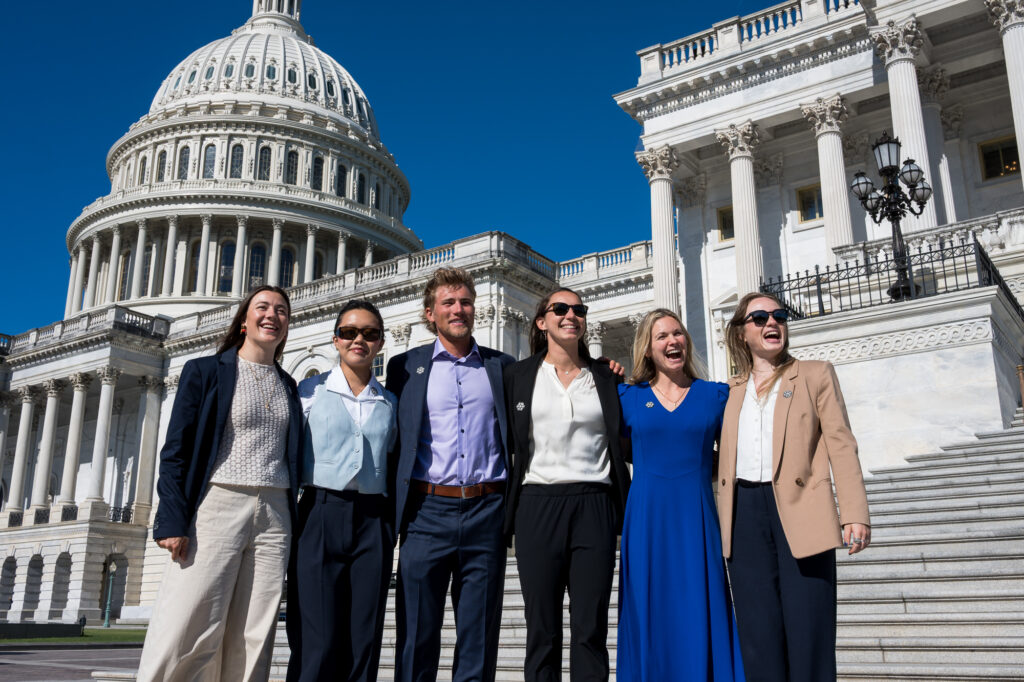
POW’s sister organization, POW Action Fund, will be heading to Washington, D.C., later this month to hold lawmakers accountable and ask them to make sure the EPA upholds its responsibility to protect clean air, clean water, and a livable future.
Running list of deregulatory actions
Rescinded the Endangerment Finding
Greenhouse gas rules for power plants rollback
Emissions from coal and gas plant rollback
Vehicle emissions standards rollback
Social Cost of Carbon use eliminated
Mercury and Air Toxics Standards (MATS) rollback
Reduced limits on mercury, arsenic, lead, and other toxic pollutants from coal plants.
Granted exemptions for dozens of coal plants from pollution rules
Allowed older plants to bypass air quality standards
Rolled back cross-state air pollution (“Good Neighbor”) rule
Weakened ozone (smog) standards
Rolled back hazardous air pollutant rules
Rolled back ethylene oxide (EtO) emissions limits
Wastewater pollution limits for coal plants rollback
Repealed limits on toxic wastewater discharge
Narrowed definition of “Waters of the United States” (WOTUS)
Weakened Clean Water Act Section 401 authority
Extended compliance deadlines for water pollution rules
Expanded allowable wastewater discharge uses
Declared “energy emergency” to keep coal plants operating
Required continued operation of aging coal plants
Reduced permitting requirements under New Source Review (NSR)
Reduced inspections, monitoring, and enforcement actions
Expanded “enforcement discretion” and exemptions for industry
Dismantled emissions monitoring infrastructure
Massive EPA budget cuts (~50%+)
Dismantled scientific research arms
Limited use of scientific studies in policymaking
Recruited climate science skeptics into advisory roles
Limited use of climate and pollution data tools
Shut down EPA Office of Environmental Justice
Eliminated environmental justice grants and programs
Removed EJScreen (key pollution mapping tool)
Framed EPA mission around deregulation and industry support
Staff reductions and loss of institutional expertise
Stacked leadership with industry-affiliated personnel

Author: Stacie Sullivan
Stacie always knew she wanted to pursue a career in the ski industry from a young age, having first clicked into skis at the age of 4 and writing her 8th grade career project on being a professional skier. While her dreams of becoming a professional athlete didn’t quite pan out the way she planned at […]
