
Fly Fishing, Coastal Advocacy, Climate Solutions: Behind the Scenes of New Blue View
Photos by Creative Alliance member Liam Gallagher
Before sunrise on a chilly September morning in the rapidly warming Gulf of Maine, two fly fishermen—one from Washington and one local—float over tidal flats in a small skiff. On this day, the tide is lowest at dawn, making it the best time to fish. A glassy sea reflects tall pines on the shore as the sky gradually brightens.
It’s a peaceful moment before the two embark on another packed day of climate conversations. Their first meet-up is with an oyster farmer whose operation is based on the very tidal flat where they’ve been casting. Before long, they dive into oyster science, learning that the bivalves can filter up to forty or fifty gallons of water each day, and discussing how beneficial this species is for people and the planet.
The fisherman from afar is filmmaker and POW Creative Alliance member Liam Gallagher. He’s capturing the first light on the fishing line, the oyster farm’s bounty, and the dialogue that unfolds for New Blue View: a new five-part film series supported by POW and 11th Hour Racing. The local is Captain Kyle Schaefer, an outfitter who lives and works on the Gulf of Maine. Kyle, naturally gregarious and a connector, is the protagonist of New Blue View.
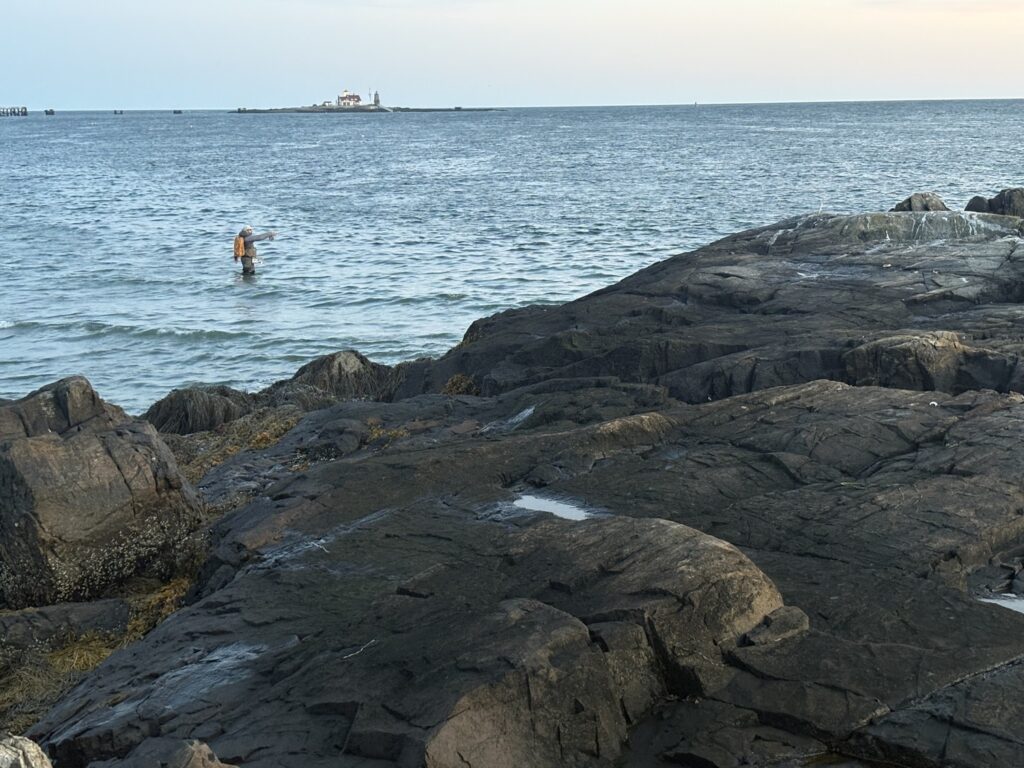
Scientists at the Gulf of Maine Research Institute say the Gulf of Maine, which stretches from Cape Cod up to New Brunswick and Nova Scotia, is warming faster than 97% of the world’s oceans. Kyle has been fishing here since he was a kid, and he’s witnessed this warming firsthand. From early on, he says, he was always “fascinated by what lives in our waters. It felt like a mystery right here on earth. That’s really what drew me to be a fisherman, an angler, in the first place: the opportunity to explore what’s right under your nose.”
Now, running his guiding business in line with his values, Kyle builds community, asks questions, and strives to learn as much as possible about the science and advocacy behind the warming waters. Fly fishing, he says, led him to start, “learning an enormous amount about our ecosystem, our water quality.” He asks: “What are we up against? Where are places we can make change and improve habitat?”
An urge to explore also propelled Liam to connect with Kyle and travel east for six very busy days of bringing New Blue View to life. The two fly fishermen became fast friends through their shared passions. “That’s the baseline… the beauty of these pursuits—either fishing, or surfing, or snowboarding—you come into these situations with something in common that makes it easy to connect with people, and that was part of why the whole [New Blue View project] started. I know if I’m going to go fishing with somebody, we’ll probably get along.”
During twelve-hour days, the two traveled (mostly by skiff!) between people, places, and organizations that could tell stories of climate solutions in the warming Gulf of Maine. They spoke with anglers, oyster farmers, scientists, chefs and restaurant owners, estuary experts, river conservationists, and plenty more solution-oriented folks. The series showcases examples of innovation, resilience, and visions of a sustainable future for marine ecosystems.
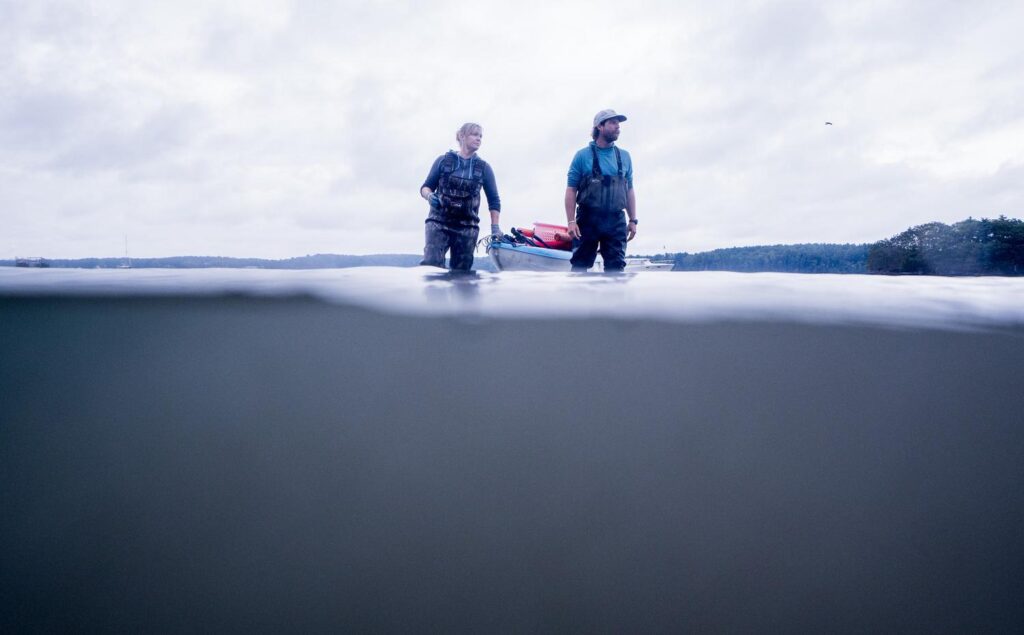
In the face of such deep climate problems, everyone featured—Kyle and Liam included—takes a pragmatic, can-do approach. It reflects Maine and New England as a whole. As Melissa Paly, a Great Bay-Piscataqua Water Keeper with the Conservation Law Foundation, says in episode four, “What we need to do here is not rocket science. We know what the problems are and we know how to fix them. We are making headway; that is the good news.” This is a story of power to the people.
When asked what he hopes viewers take from New Blue View, Liam’s ideas come quickly: volunteer to do citizen science. Collect data; be out in the world. Support oyster farmers—eat oysters! Look at a restaurant menu and ask where the fish are from. Eat local seafood that supports a local fishery. Support river restoration organizations, even if it’s just signing a petition. If you’re a recreational angler, find an organization that’s helping protect the species you fish for and donate ten dollars a month, or sign up to volunteer. The list goes on.
“Keep in mind this big connection between upriver and downriver, or upriver and the ocean, and know it’s all one and the same,” Liam says, “…I think everyone’s got a skillset they can volunteer to these [climate] fights, and it’s just a matter of doing the thing you’re really good at and seeing how it can help the bigger cause.”
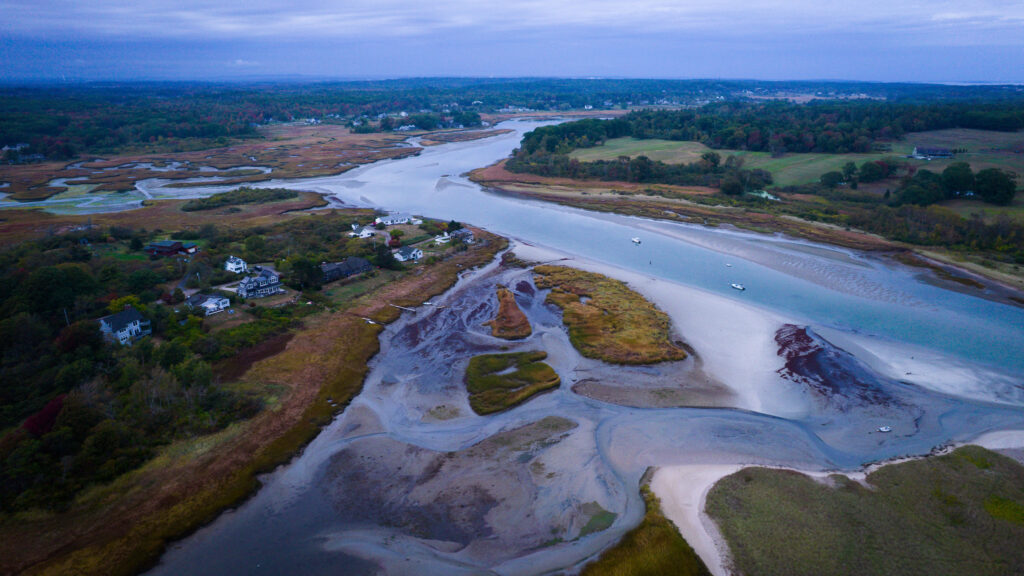
New Blue View gives us a multitude of examples, and each one connects to another—the web of advocacy and action is dense. For one, Chef Jeremy Sewall, a fourth-generation lobsterman, has become a restaurant owner who sources from local fishermen and happens to be from the same town Kyle lives in. Upstream, when conservationists remove dams, river herring can travel freely and carry nutrients between salt and fresh water. The fish bring people to the river, where these new folks can become champions of the species and the waters. On land, Kyle credits his mentors with inspiring him to join the American Saltwater Guides Association, which hosts in-person events that give new anglers tools to learn and engage in science-based advocacy—the more the merrier.
“Tend to your own garden, especially when issues feel big and out of our control,” Liam says, “…concentrate on the dirt or the water that’s at your feet, and then that has a ripple effect.”
New Blue View both documents the ripples one community is making and catalyzes viewers from far and wide to create their own ripples and connections—check it out.
Author: Emma Mary Murray
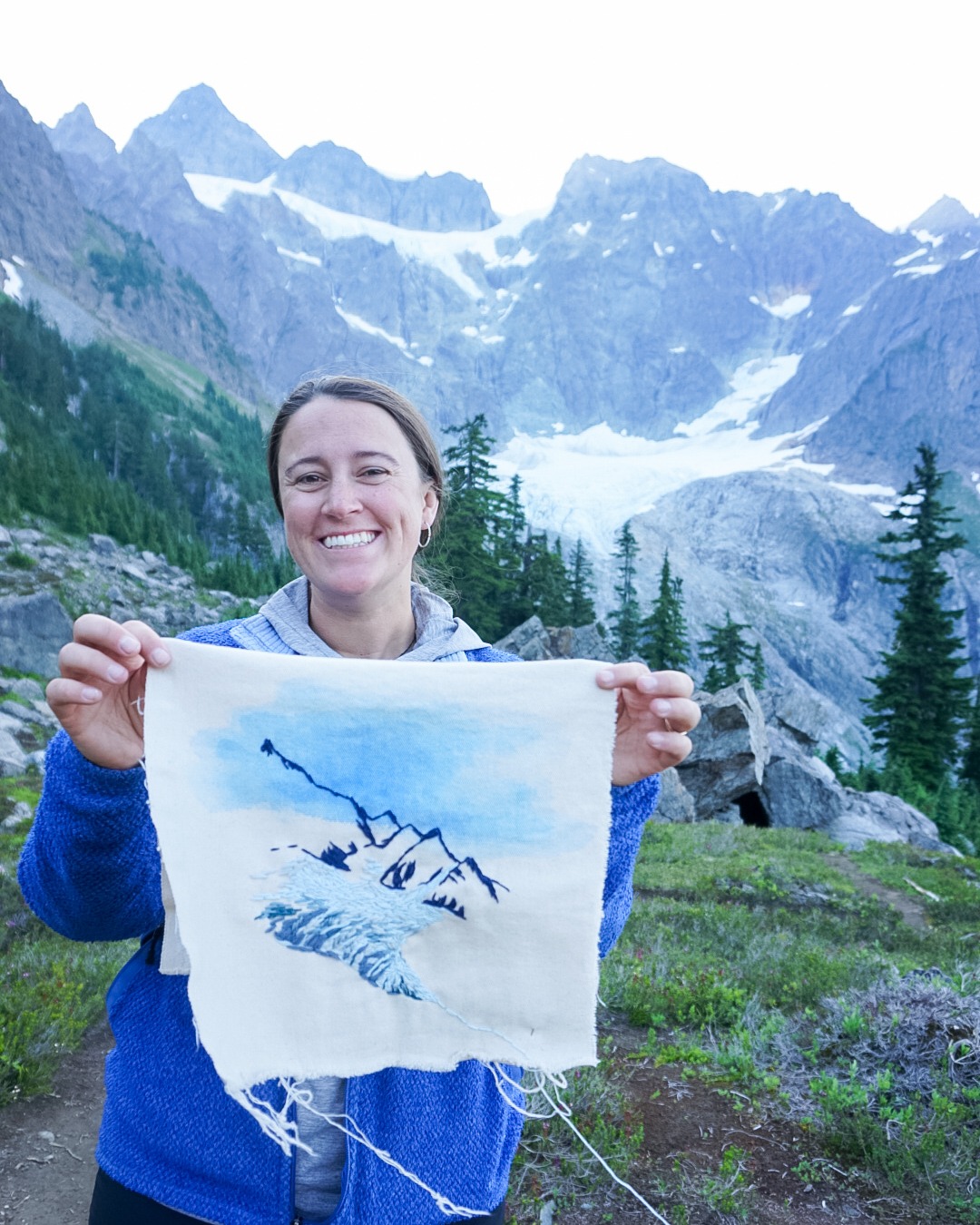
Emma Mary Murray is an environmental artist, writer, and teacher currently living on Mount Desert Island in Maine after spending many years chasing peaks in the Rocky Mountain West. Emma began embroidering the ecosystems around her seven years ago and has found the medium a perfect counterpart to fast or physically-intensive pursuits like climbing, skiing, […]
