
The Truth (and a Few Lies) About Offshore Wind
Photos by POW Creative Alliance member Dan Holz
A new POW-supported film out this month attempts to get to the bottom of why offshore wind power is so controversial.
Depending on what you read, offshore wind turbines are either a national security threat that kills whales and other marine life, or one of the smartest clean energy solutions we have right now. So, which is it? POW Creative Alliance member Dan Holz, a filmmaker based in Washington state, is releasing a new short film called “Beyond the Horizon,” which aims to separate fact from fiction about offshore wind. “Beyond the Horizon” is now streaming online and will be shown at environmental film festivals.
The Trump Administration has called offshore wind a national security risk and has tried to stop offshore wind projects. “I’m not much of a windmill person,” President Trump said in a January 2026 meeting with oil and gas executives. “I can proudly say … that we have not approved one windmill since I’ve been in office. And we’re going to keep it that way. My goal is to not let any windmill be built. They’re losers. They lose money. They destroy your landscape … They kill your birds. They’re all made in China.”
We called up Holz to find out if any of that is true. “I saw how controversial offshore wind was, and I was like, ‘why? What is the argument here?’” Holz says. “I started making this film, and it became this onion of learning, with so many complicated layers.”
Myth Versus Reality
First up, whale deaths. Opponents of offshore wind say installing wind turbines in the ocean is killing whales. You know what Holz found is actually killing the whales? “What’s really happening is the water is warming, and that’s bringing the path of migrating whales and porpoises into shallower channels, so they’re getting hit by shipping container ships,” Holz says. “Fishing gear entanglement is the other leading cause of whale deaths in New England.” Scientists have been studying the increase in whale deaths off the eastern seaboard since 2016 and, according to NOAA Fisheries, they have found no known links between large whale deaths and offshore wind activities.
Turbines have also been accused of being loud and disruptive. “Sound mitigation wasn’t put into effect when they first started installation, but now, regulations stipulate strict underwater noise ceilings that have mitigated over 80 percent of the sound,” Holz says. “You can’t hear turbine installation that’s occurring miles from shore, and it’s virtually silent underwater because of this technology that’s been put into place.” Those in the fishing industry often oppose offshore wind because of its impact on marine life and fisheries, but science shows the two industries can coexist.
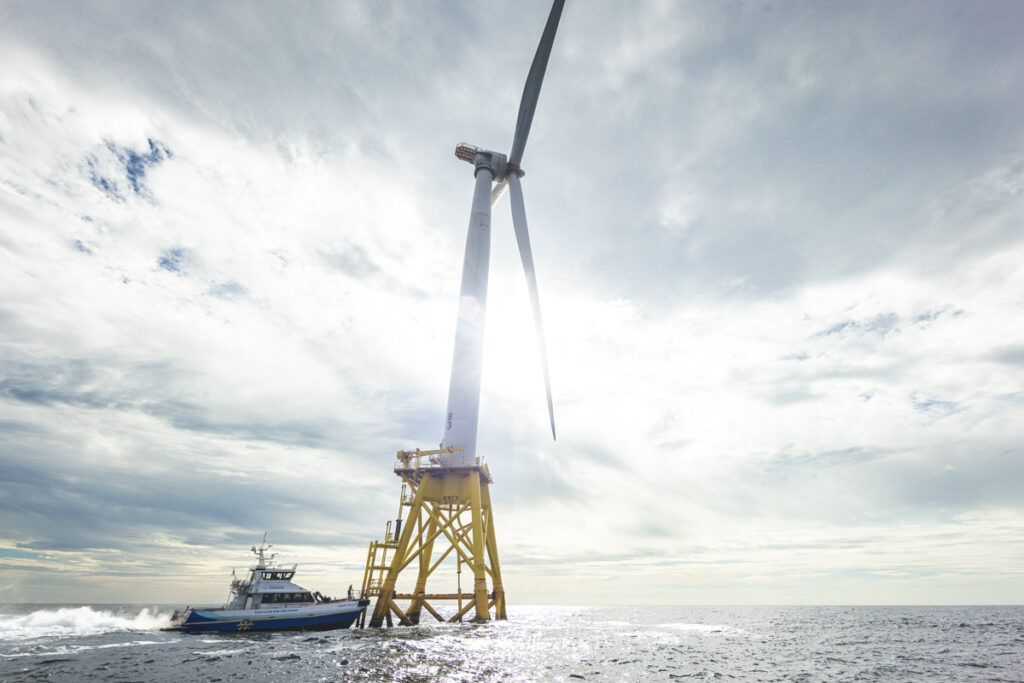
Most of America’s existing turbines are made right here on U.S. soil. Over 500 U.S. manufacturing facilities are currently building wind turbine components, including blades, towers, and generators, as well as turbine assembly. As for national security concerns, wind turbines can interfere with radar, but the U.S. Department of Defense and Department of Energy are working on this.
“It’s imperative that people look past the disinformation that’s out there,” Holz says. “People need to do their own research, look at the science, and find out what’s true.”
The Energy Potential of Offshore Wind
So, how much energy can we actually generate from offshore wind? In the U.S., about 44 federal leases for offshore wind projects currently have the capacity to generate 73,000 MW of energy, enough to power over 21 million homes and create 18,000 jobs in the industry.
Although countries like China and many in Europe have been developing offshore wind for years, it’s relatively new in the U.S. The first commercial offshore wind project in the U.S. was the Block Island Wind Farm, which opened in 2016 with five turbines off the coast of Rhode Island. Several others have been added since, in state waters off the coasts of Virginia and New York.
But that’s just a fraction of what we could be producing. According to the American Clean Power Association, the U.S. has the potential to develop over 4,200 GW of offshore wind in federal waters, which would be more than three times the current demand for energy in this country. (Currently, on-land wind turbines in the U.S.—mostly in landlocked states—generate about 10.5 percent of America’s electricity.)
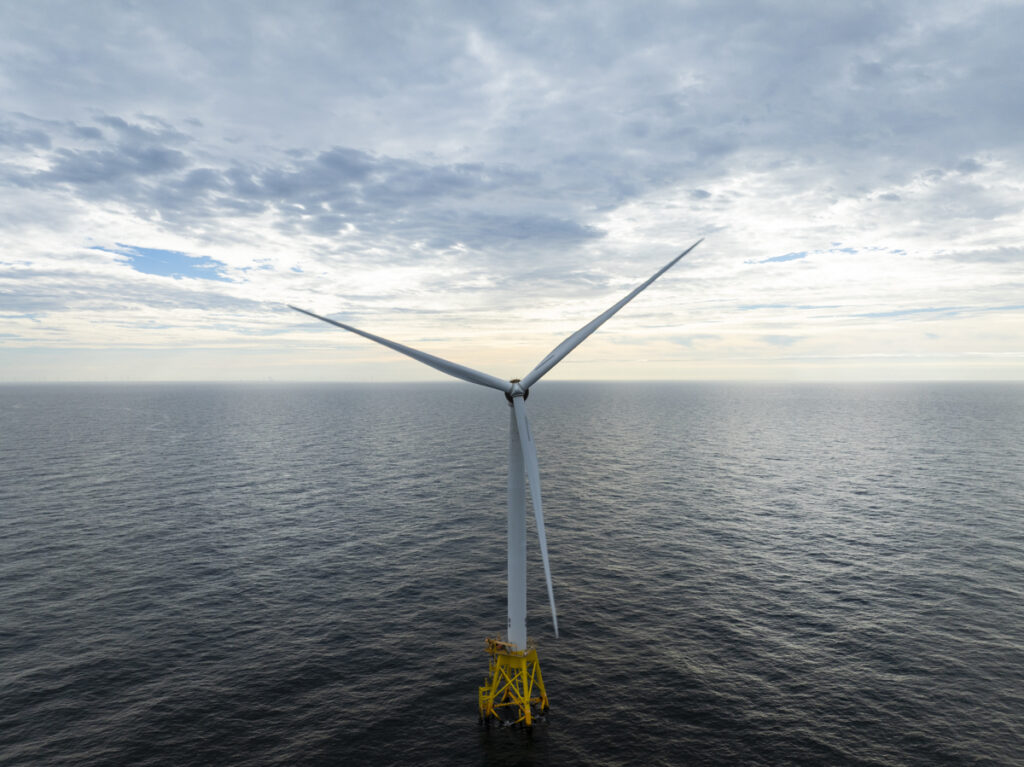
It’s also cheaper: In New England, where electricity costs have been steadily rising, one recent study showed that offshore wind in the Northeast could save people between $1.32 and $2.68 a month on their utility bill.
“Renewable energy is cleaner, more efficient, and less expensive,” Holz adds.
“The fact that we are not prioritizing these renewables means there needs to be a lot more education so people know the importance of this, and so they vote for candidates who will prioritize this.”
Next Steps
Many of the people involved in offshore wind refused to be interviewed on camera for Holz’s film. Why? Wind turbine developers couldn’t speak because of legal issues, fishermen feared being run out of town if they spoke, and even scientists feared losing grant funding if they discussed their findings.
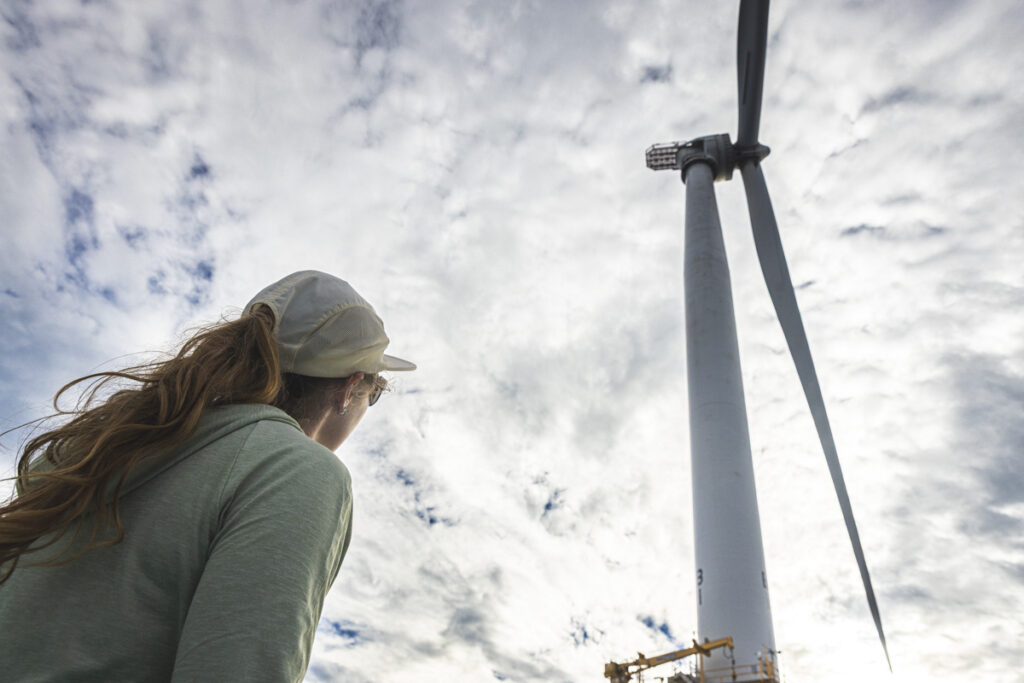
“It’s an incredibly politicized issue with so much conflicting information and strong opinions on both sides; it can be difficult to separate the facts from the narratives and get people to talk openly,” says Sarah Von Hoene, a marine ecologist featured in the film. In the end, Von Hoene went out on the streets of small towns in New England with a sign to engage people in community discussions.
“Our goal for the film is to provide facts so people can make their own decisions about offshore wind,” Holz says. “We could have done a very deep dive into the subject, but in under 20 minutes, we wanted to give viewers just enough information to develop curiosity to find out more.”
Want to go deeper? Watch “Beyond the Horizon” by POW Creative Alliance member Dan Holz. Learn more about offshore wind at Woods Hole Oceanographic Institute.
Thank you to POW Brand Alliance partner 11th Hour Racing for supporting this project


Author: Megan Michelson
Megan Michelson is a freelance journalist based in Tahoe City, California. She is a contributing editor at Outside Magazine, an editor at large at Backcountry Magazine, and a contributor to publications like the New York Times, the San Francisco Chronicle, Ski Magazine, Powder Magazine, and more.
