
The Future We Build Depends on the Democracy We Practice
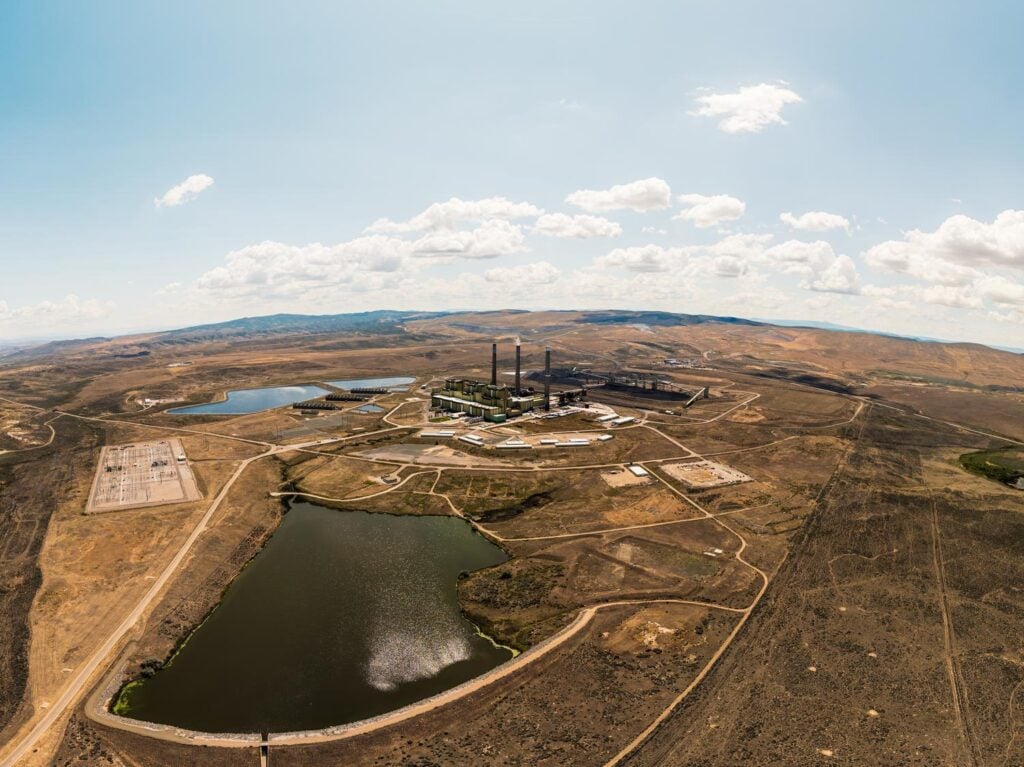
Photo by Creative Alliance member Jeremiah Watt
Climate change is often described as an environmental problem. But at its core, it is also a collective action problem, and therefore a democracy problem.
No individual caused climate change alone, no individual can stabilize the climate alone. We cannot each build an interstate transmission system, modernize the power grid or establish national pollution standards. Personal choices matter, but the scale of the crisis demands collective, systemic solutions. We need laws, public investment, and institutions capable of acting on behalf of people and places, not simply the most powerful interests in the room.
We have the solutions, but their deployment is shaped by our democratic process. Who votes, who governs, who gets heard and who is held accountable determine what climate progress is possible.
A Deliberate Destruction of Climate Action
Over the past two years, the Trump administration and this Congress have not merely slowed America’s climate progress, they have systematically worked to dismantle it.
Congress gutted some of the most important clean-energy provisions of the Inflation Reduction Act, the largest federal climate investment in U.S. history. The 2025 budget law, known as “One Big Beautiful Bill,” accelerated the expiration of wind and solar tax credits, eliminated incentives for electric vehicles and home energy improvements, and weakened other climate programs. These provisions within the budget package disrupted projects, threatened American manufacturing and made it harder to build the affordable, reliable energy system the country needs.
The administration then went further, constructing a federal obstacle course specifically for renewable energy. Wind and solar projects on public lands are now subjected to additional political review, while offshore wind leases and projects face sweeping delays and suspensions. At the same time, federal policy expanded support for oil and gas drilling, mining and coal, while at the same time eroding environmental review. This was not an “all-of-the-above” energy strategy. It placed the cheapest and fastest-growing sources of new electricity behind new barriers while giving fossil fuels a clearer path forward.
At the Environmental Protection Agency (EPA), the institution created to protect human health and the environment, Administrator Lee Zeldin has turned this critical agency against its own mission. The administration has weakened pollution safeguards, slashed enforcement and moved to erase federal limits on climate pollution from power plants. In 2025, federal civil enforcement cases against polluters fell to their lowest level in the modern history of the EPA. The administration itself subsequently celebrated what it called the “largest deregulatory action in U.S. history”.
Public lands have also been treated as inventory awaiting extraction. In July, President Trump removed protections from more than 90 percent of Bears Ears and Grand Staircase-Escalante National Monuments, stripping safeguards from millions of acres that include sacred Tribal sites, irreplaceable cultural resources and extraordinary landscapes. While in Alaska, the administration reopened the coastal plain of the Arctic National Wildlife Refuge to oil and gas leasing and eliminated protections that had restricted drilling across more than 10 million acres of the National Petroleum Reserve–Alaska (NPRA). These actions put some of the nation’s wildest remaining public lands, and the wildlife, climate and Alaska Native communities connected to them, at greater risk in order to accelerate fossil-fuel extraction.
The cumulative effect is unmistakable, higher barriers to clean energy, weaker consequences for pollution, fewer protections for public lands and a federal government increasingly organized around fossil-fuel development rather than climate responsibility.
That is destruction by design.
Our Institutions Determine What is Possible
This lost ground exposes the inextricable link between climate and democracy.
When democratic institutions function, they allow millions of people to accomplish together what none of us could do alone. They can protect clean air and water, conserve public lands, build modern infrastructure and direct public investment toward healthier and more affordable communities.
But institutions are not self-executing, and progress is not self-sustaining. Laws can be repealed. Agencies can be hollowed out. Public protections can be handed over to the industries they were created to regulate.
Good decisions come from good decision makers. Who appoints agency leaders matters. Who writes budgets, confirms judges and decides which communities receive local, state and federal investment matters. Elections establish whether climate action is possible or is torn apart.
That is why attacks on the climate and attacks on representative democracy reinforce each other. When political power becomes less accountable to the public, polluters gain greater influence over public decisions. When voting rights, fair representation and public participation are protected, communities have more power to demand clean air, affordable energy and a livable future.
Democracy is More than Election Day
Voting is indispensable, but democracy is not something we practice once every two or four years. As Dorris “Granny D” Haddock said, “democracy isn’t something you have, it’s something you do.”
Democracy happens when a community defends a watershed. When outdoor enthusiasts speak at a public hearing. When Tribal nations lead the protection of sacred landscapes. When workers, businesses and advocates demand an affordable clean-energy future. hen people travel to Washington to make sure lawmakers hear directly from those who live with the consequences of their decisions. And when people who play outside, give a shit.
We recently saw this power during POW’s trip to Washington, D.C., where members of the Outdoor State came together to introduce the Environmental Health Restoration Act (EHRA).
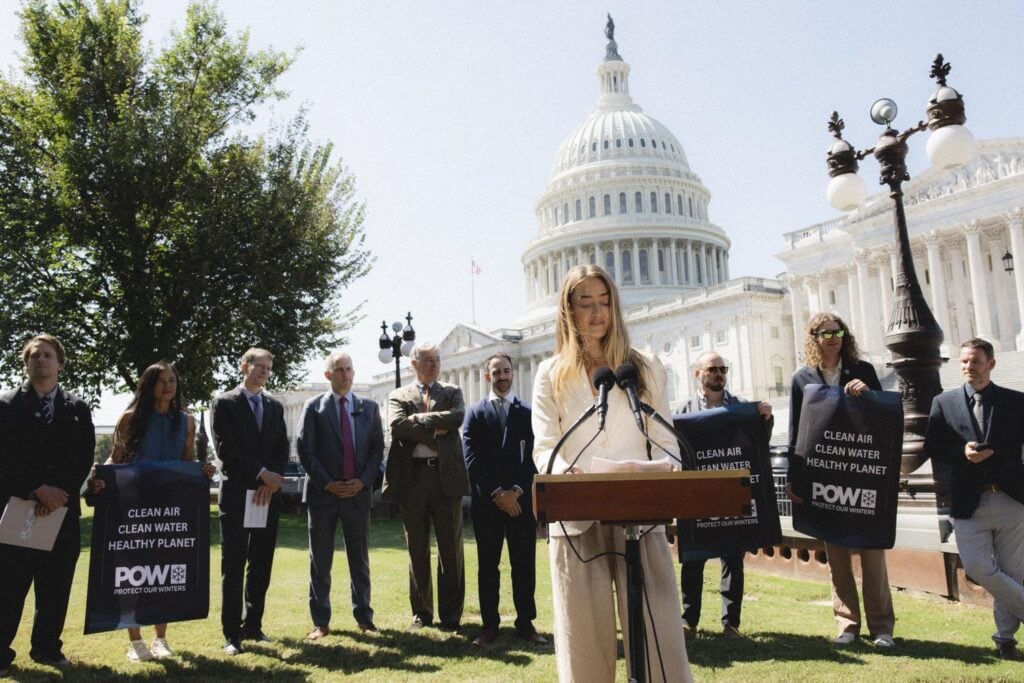
EHRA responds directly to the damage being done and is grounded in a simple principle, the Environmental Protection Agency should be able (and required) to fulfill the mission Congress created it to perform. That means protecting people from pollution, holding corporate polluters accountable and ensuring that clean air, clean water and a healthy planet are public rights rather than political bargaining chips.
The energy of that trip did not come from believing our institutions are perfect. It came from understanding that they belong to us, and that organized people can force them to work for the public again. That is the real POWer of this community. Athletes, scientists, creatives, business leaders and outdoor enthusiasts may arrive with different experiences, but we are united by what we love and what we are prepared to defend. When we act together, our individual voices become a political force.
The Midterms Can Begin a Climate Renaissance
The destruction of recent years should create urgency, but not resignation.
The last two years have demonstrated how quickly action at the local, state and federal level can be used to reverse decades of progress. The midterm elections provide voters with an opportunity to influence the direction of local, state and federal climate and public-lands policy up and down the ballot.
A climate renaissance would not simply restore everything that has been lost. We can build something more durable, a clean-energy economy that lowers costs, creates good jobs and has defenders in every part of the country. We can restore our government’s ability to follow the best available science, and thus critical regulatory bodies like EPA’s capacity to protect public health from polluters. We can recognize public lands as a shared inheritance rather than a resource reserve for private extraction, and place communities most affected by pollution and climate disruption closer to the center of public decision-making.
An election will not solve the climate crisis by itself. But elections determine local, state and federal climate and public-lands policy, and this determines which futures are possible. The good news: this is up to us. Climate change is a collective action problem. Democracy is how we answer it.
The opportunity now is to organize with the scale and determination that this moment demands. To defend what we love, build what we need, and turn out our community to vote. Let’s vote and deliver the climate future we deserve.

Author: Ben Gubits
Ben grew up exploring the red rocks of the Fountain formation and the Dakota Hogback of Jefferson County, Colorado. He spent his Colorado childhood on skis and snowboards on the mountains above the valleys where he and his family launched dry flies to rising trout. College studies took him to the San Juans of Durango, […]
